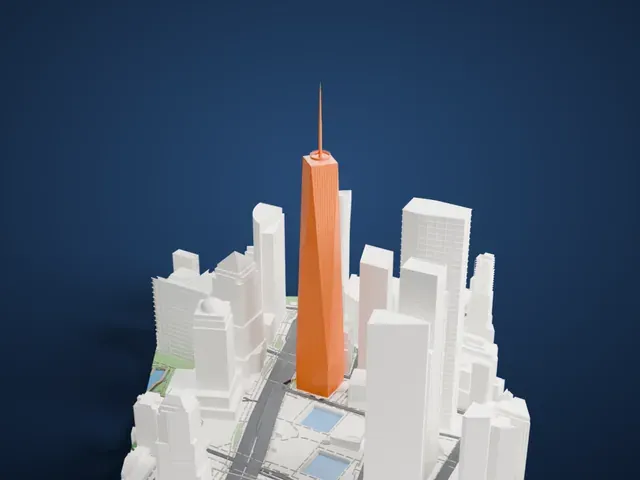
3D print E. V. Haughwout Building
A free, printable model of the E. V. Haughwout Building and the buildings around it, generated from real map data in your browser.
-
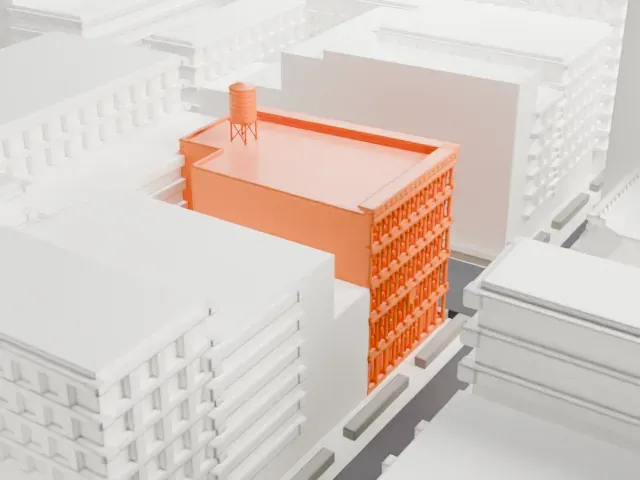 North
-
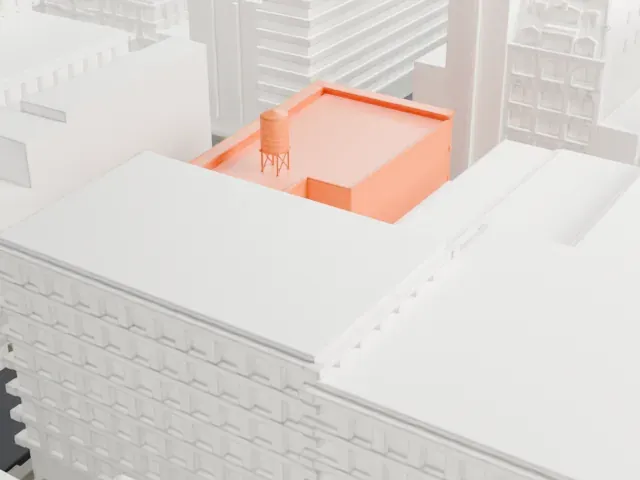 East
-
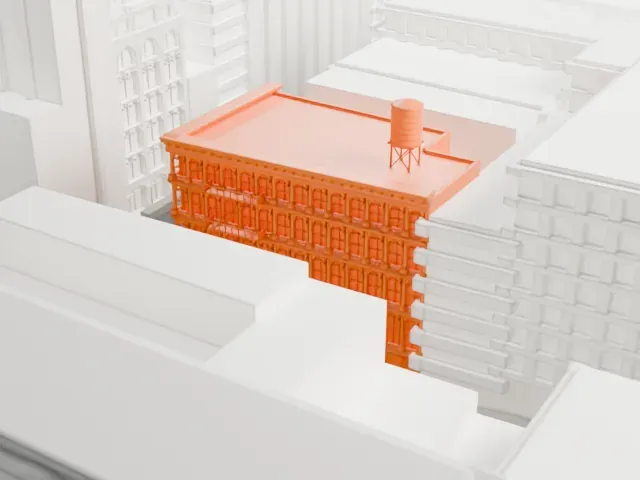 South
-
 West
The model you print
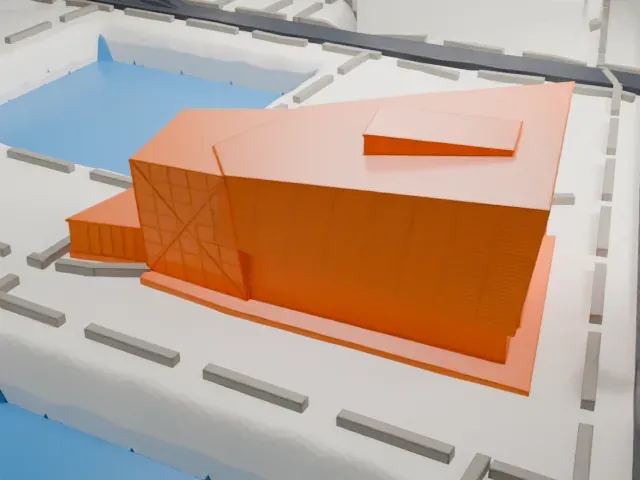
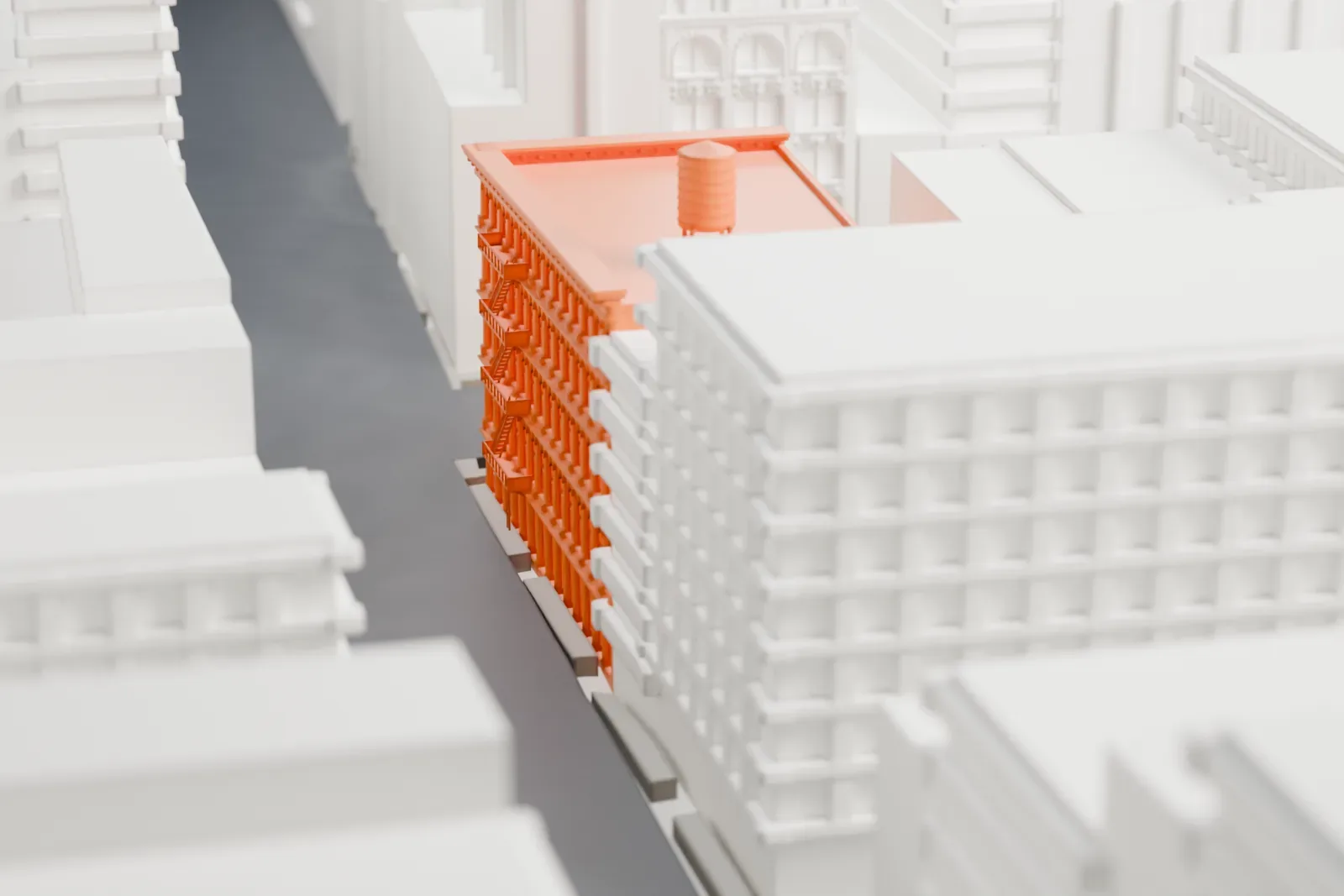
E. V. Haughwout Building in 3D
The landmark on its own, at its size on a 160 mm print. Print friendly thickens thin parts for a 0.4 mm nozzle; Full detail keeps every part.
- On a 160 mm print
- 9 mm
- Scale
- 1:3,750
9 mm tall on a 160 mm print
Make this print opens the generator on a 600 m square around the landmark. Buildings print at close to true scale, so the landmark grows with the print size.
- Fine facade columns
The arcaded facade is made of many small repeated columns. Full detail keeps them on a larger print, while Print friendly merges the finest ones at small sizes. A layer height of 0.12-0.16 mm keeps the vertical lines crisp.
- Small rooftop water tank
The thin legs of the rooftop water tank are the most delicate part of the model. Print slowly with good cooling, or print larger so the tank survives.
- One piece with the ground
E. V. Haughwout Building is joined to the ground in the exported file, and the four-side check found no floating parts, so nothing needs gluing.
- Pick the detail for your nozzle
In the Buildings settings, set Landmark detail to Print friendly to adapt thin parts and small details to the print scale. Full detail keeps every modeled feature, for larger prints or a finer nozzle.
- Colors
Buildings, roads, water and ground arrive as separate filament slots in the 3MF. E. V. Haughwout Building takes the building color.
- File format
You get a 3MF for Bambu Studio, OrcaSlicer or PrusaSlicer. Any of them can save it as STL if you need one.
About E. V. Haughwout Building
The E. V. Haughwout Building sits on a corner of Broome Street and Broadway in SoHo, Manhattan. Its five stories of commercial loft space rise 24 m (79 ft). John P. Gaynor designed it, and it went up in 1857. For its two street fronts, cast-iron facades came from Daniel Badger's Architectural Iron Works.
Eder V. Haughwout ran a fashionable emporium here. The shop offered imported cut glass and silverware, plus handpainted china of its own and fine chandeliers. Among the wealthy customers was Mary Todd Lincoln, who ordered new official White House china painted on the premises.
The facades follow an arcade pattern with two orders of columns, an idea taken from the Sansovino Library in Venice. Because two streets needed facades, the designers had the cast iron bear the load rather than hanging it from brickwork. That structural metal frame foreshadowed steel-framed skyscrapers, and some consider the building the first skyscraper. A hydraulic lift by Elisha Graves Otis, put in on March 23, 1857, was the first successful passenger elevator in the world. New York City designated the building a landmark in 1965.
About this model
E. V. Haughwout Building is one of more than 5,500 landmark models in Mini Skyline. They are made with AI, and each one is checked in its real surroundings before release. Each model is written as code from public descriptions, plans, photographs and aerial views used only as references; no image or third-party model is copied into it. Everything around it is built from OpenStreetMap and Overture map data. Rights in the building itself, its name and any brands on it are not granted by Mini Skyline; clear them separately before you sell prints. If you would rather print the shape from map data, turn off Landmark models in the Buildings settings.
Mini Skyline is not affiliated with, or endorsed by, the owners of this building or its names and marks.
Same skyline