3D print Führerbau
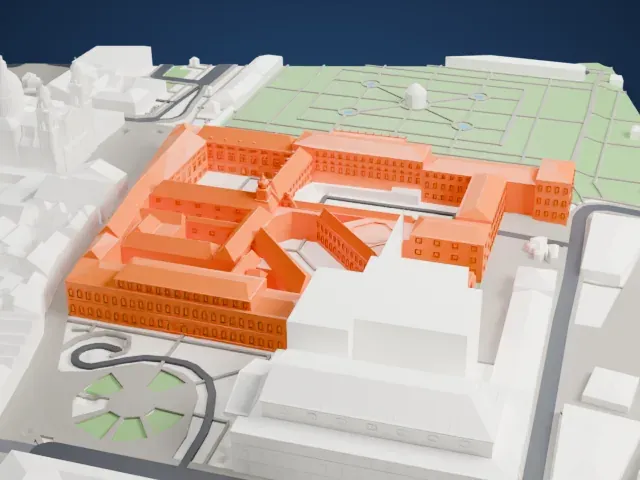
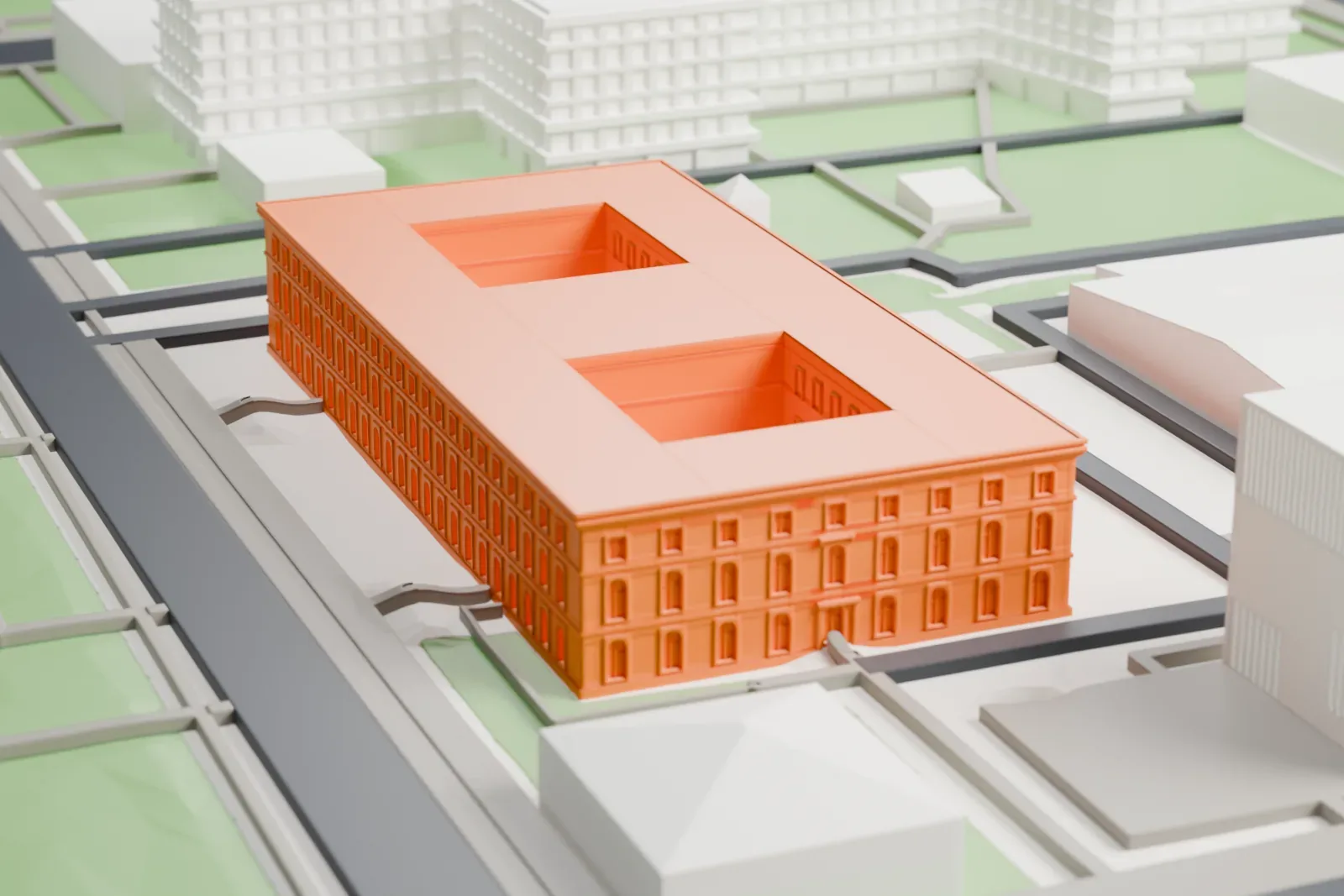
A free, printable 3D model of the Führerbau in Munich, with the surrounding streets and buildings, generated from real map data in your browser.
-
 North
-
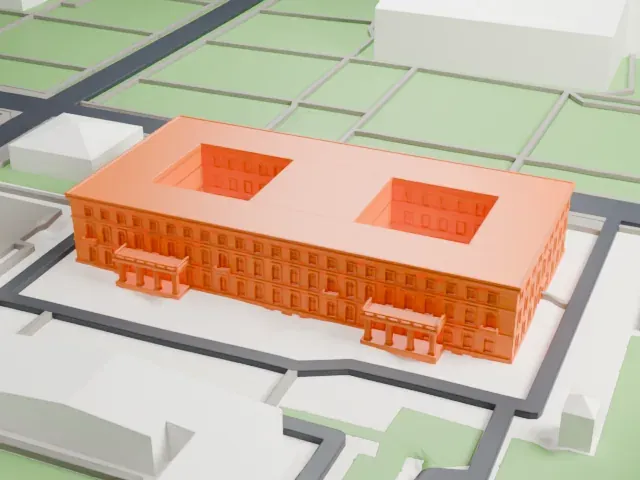 East
-
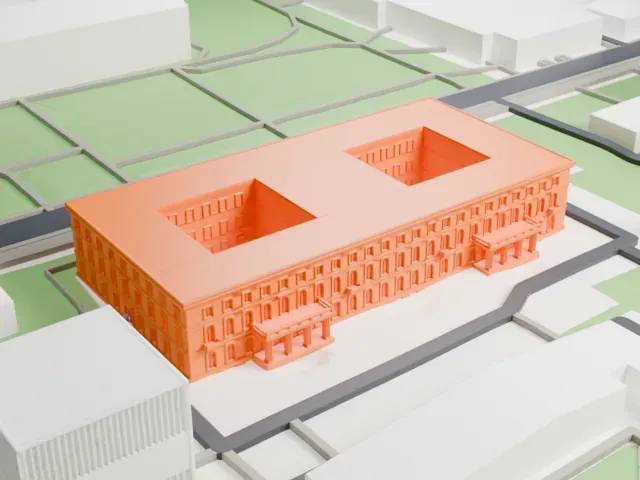 South
-
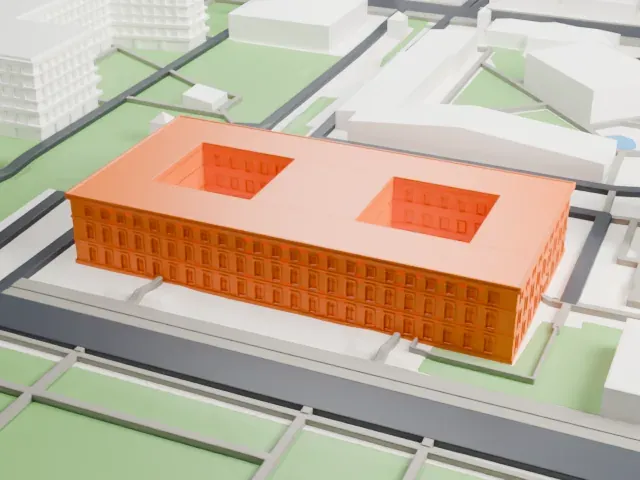 West
The model you print
Führerbau in 3D
The landmark on its own, at its size on a 160 mm print. Print friendly thickens thin parts for a 0.4 mm nozzle; Full detail keeps every part.
- On a 160 mm print
- 4 mm
- Scale
- 1:3,750
4 mm tall on a 160 mm print
Make this print opens the generator on a 600 m square around the landmark. Buildings print at close to true scale, so the landmark grows with the print size.
- Crisp facade lines
A 0.12–0.16 mm layer height keeps the lines of the walls crisp, and a larger print size keeps small details visible. Print friendly adapts thin parts to the print scale.
- One piece with the ground
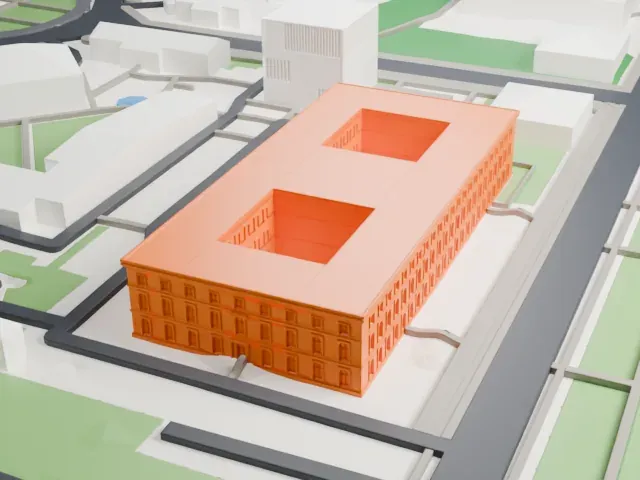
Führerbau is joined to the ground in the exported file, and the four-side check found no floating parts, so nothing needs gluing.
- Pick the detail for your nozzle
In the Buildings settings, set Landmark detail to Print friendly to adapt thin parts and small details to the print scale. Full detail keeps every modeled feature, for larger prints or a finer nozzle.
- Colors
Buildings, roads, water and ground arrive as separate filament slots in the 3MF. Führerbau takes the building color.
- File format
You get a 3MF for Bambu Studio, OrcaSlicer or PrusaSlicer. Any of them can save it as STL if you need one.
About Führerbau
The Führerbau ("the Führer's building") stands at Arcisstrasse 12 in Maxvorstadt, Munich, and is historically significant. Built between 1933 and 1937 in the Nazi period, it was used extensively by Adolf Hitler. Many buildings tied to the Nazis are gone, but this one survives. Paul Ludwig Troost drew up the plans in 1931, and after his death in 1934, Leonhard Gall carried on the work.
The building was one piece of a large-scale redesign of the Königsplatz. A nearly identical building was put up on the south side of the Brienner Strasse, opposite the Führerbau, and served as the party's Administrative Building. The Führerbau is also notable as the site where the 1938 Munich Agreement was signed, by which Czechoslovakia was made to give up the Sudetenland to Germany. A memorial in German, Czech and Slovak commemorates the event.
After the German surrender, US occupation forces used both this building and the neighboring administrative building as a "Central Collecting Point" ("Zentrale Sammelstelle"), a store for art looted by the Nazis from across Europe. Munich's University of Music and Performing Arts is housed here, and the congress hall is used as a concert venue.
About this model
Führerbau is one of more than 5,500 landmark models in Mini Skyline. They are made with AI, and each one is checked from four sides in its real surroundings before release. Each model is written as code from public descriptions, plans, photographs and aerial views used only as references; no image or third-party model is copied into it. Everything around it is built from OpenStreetMap and Overture map data. Rights in the building itself, its name and any brands on it are not granted by Mini Skyline; clear them separately before you sell prints. If you would rather print the shape from map data, turn off Landmark models in the Buildings settings.
Same skyline