3D print Graham Court
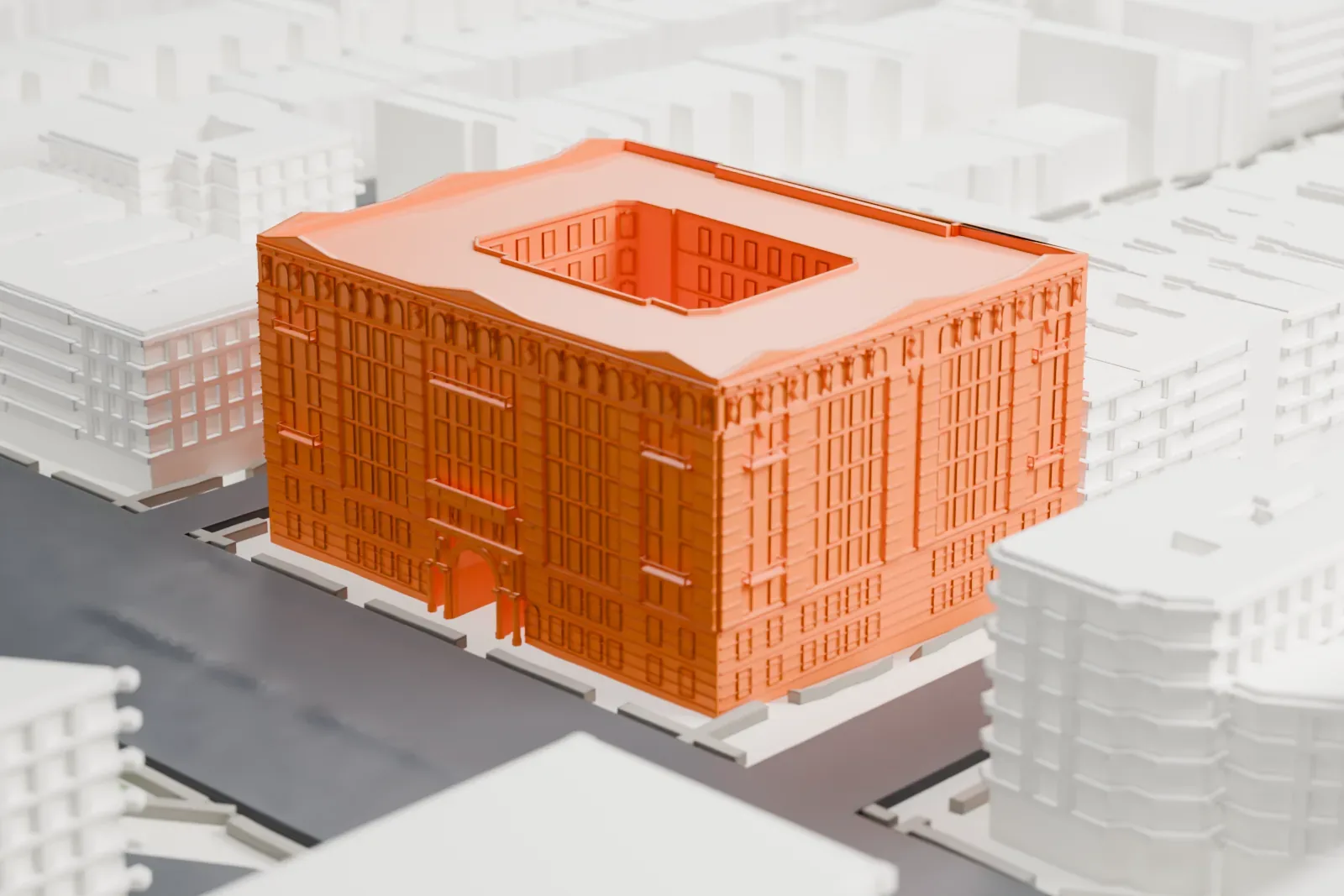
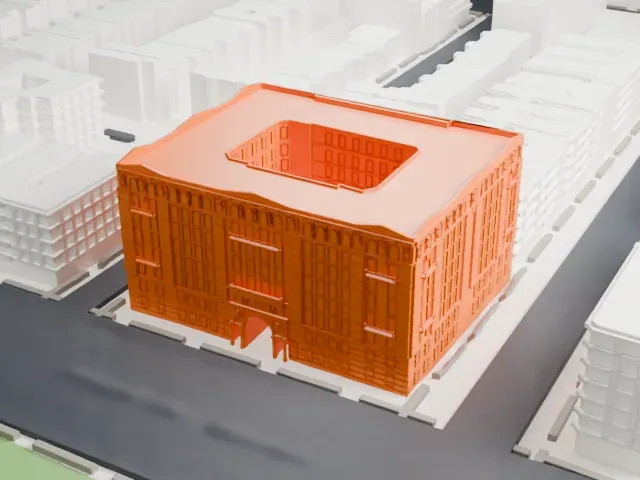
A free, printable model of Graham Court, with its open central courtyard, and the Harlem streets and buildings around it, generated from real map data in your browser.
-
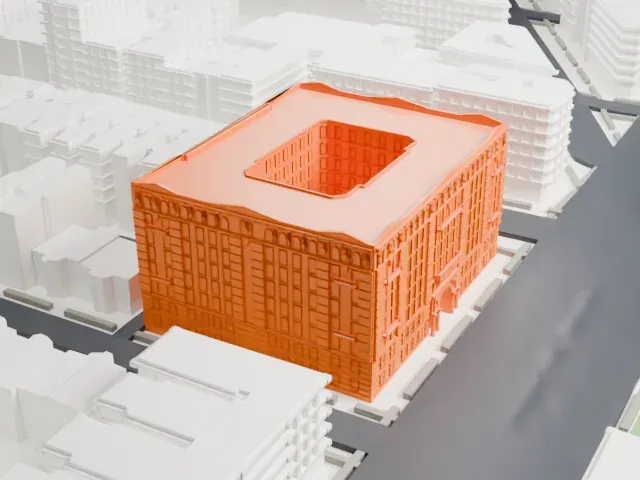 North
-
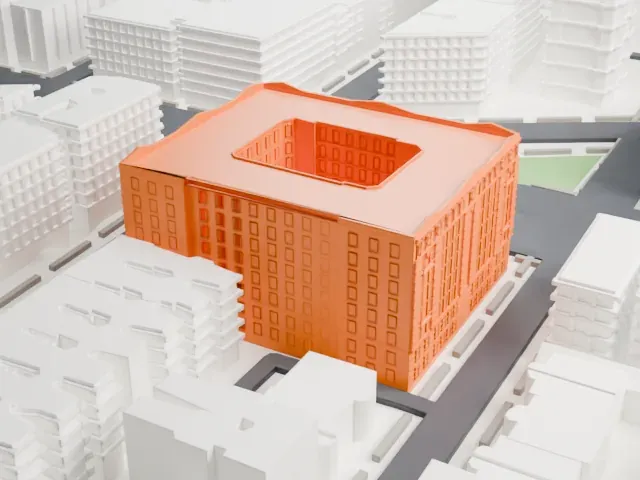 East
-
 South
-
 West
- On a 160 mm print
- 9 mm
- Scale
- 1:3,750
9 mm tall on a 160 mm print
Make this print opens the generator on a 600 m square around the landmark. Buildings print at close to true scale, so the landmark grows with the print size.
- Open courtyard and cornice
A square courtyard opens in the middle of the roof, and a decorative cornice rings the top. Print friendly adapts the thin edges to the print scale; Full detail keeps the facade relief on larger prints.
- One piece with the ground
Graham Court is joined to the ground in the exported file, and the four-side check found no floating parts, so nothing needs gluing.
- Pick the detail for your nozzle
In the Buildings settings, set Landmark detail to Print friendly to adapt thin parts and small details to the print scale. Full detail keeps every modeled feature, for larger prints or a finer nozzle.
- Colors
Buildings, roads, water and ground arrive as separate filament slots in the 3MF. Graham Court takes the building color.
- File format
You get a 3MF for Bambu Studio, OrcaSlicer or PrusaSlicer. Any of them can save it as STL if you need one.
About Graham Court
Graham Court, a historic apartment house in Harlem, stands on the stretch of Adam Clayton Powell Jr. Boulevard that runs from West 116th Street to West 117th Street. William Waldorf Astor commissioned it, the architects Clinton and Russell designed it, and it was built in 1899–1901 during Harlem's great real-estate boom.
The building is eight stories tall with eight elevators, and it spans the full block, with its side streets running back 175 feet (53 m). It has 800 rooms, grouped into 93 apartment units. The design is described as a "boxy mass" styled after an Italian palazzo: rusticated limestone on the first two floors, then tan or gray brick, then a top story of leaf-patterned terra cotta under a copper cornice.
In 1984 the city's Landmarks Preservation Commission gave the building landmark status, calling it among the best reminders of Harlem's development at the turn of the century. The New York Times floated the idea that it could be Harlem's answer to the Dakota.
About this model
Graham Court is one of more than 4,300 landmark models in Mini Skyline. They are made with AI, and each one is checked from four sides in its real surroundings before release. Everything around it is built from OpenStreetMap and Overture map data. If you would rather print the shape from map data, turn off Landmark models in the Buildings settings.
Same skyline