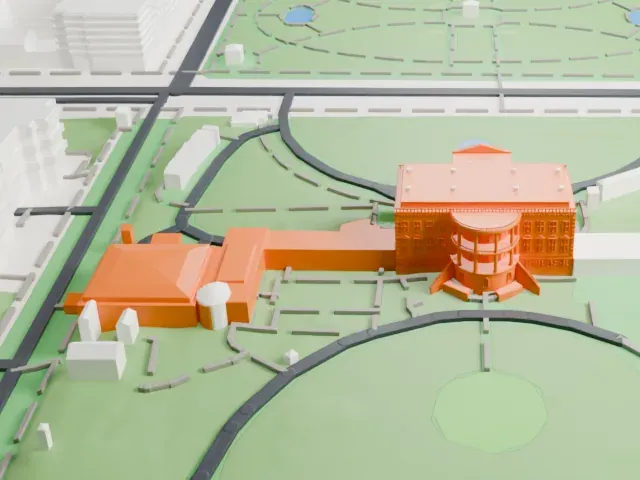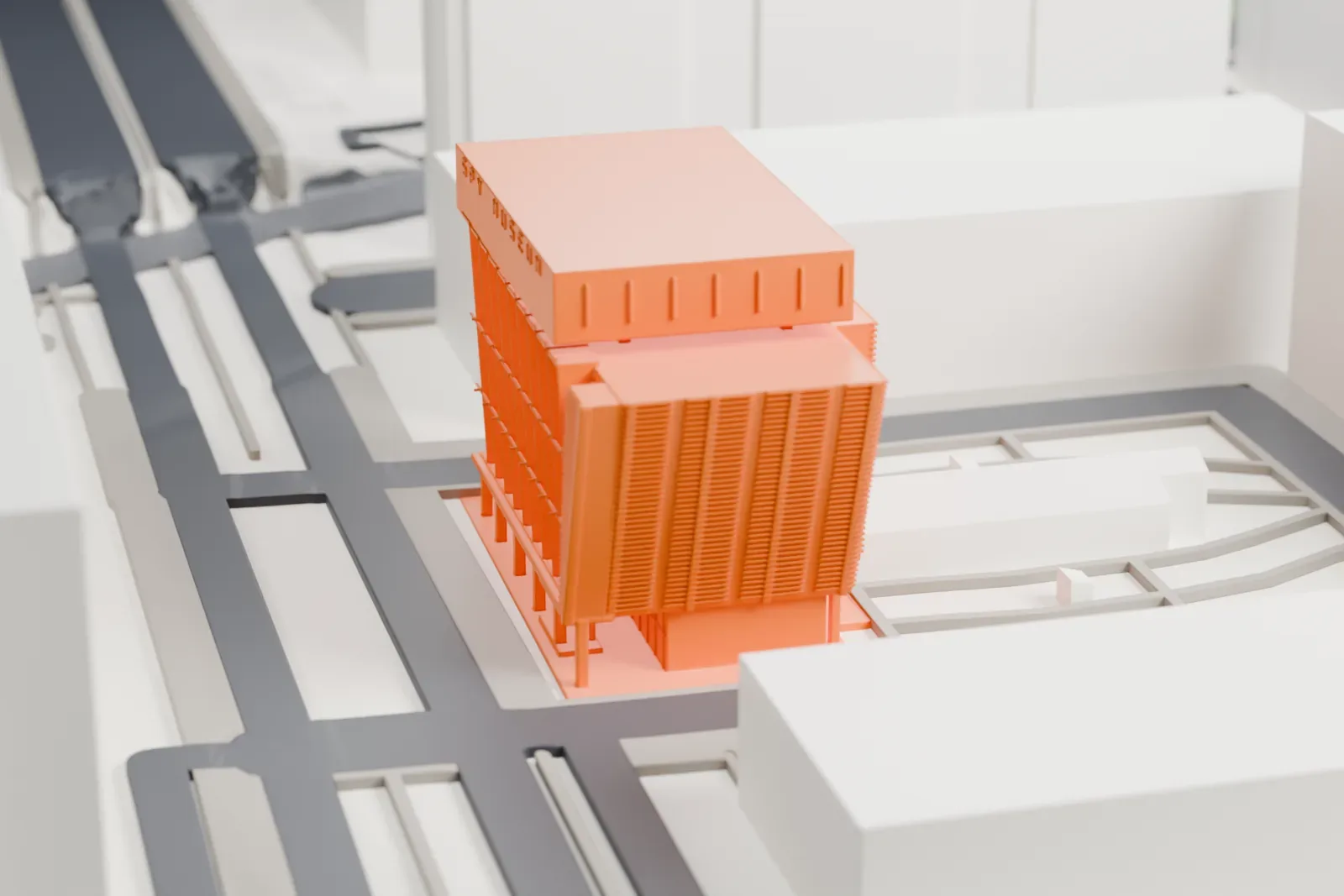
International Spy Museum in 3D
The International Spy Museum appears in city models you make here; its design may still be protected, so it isn't offered as a separate download.
-
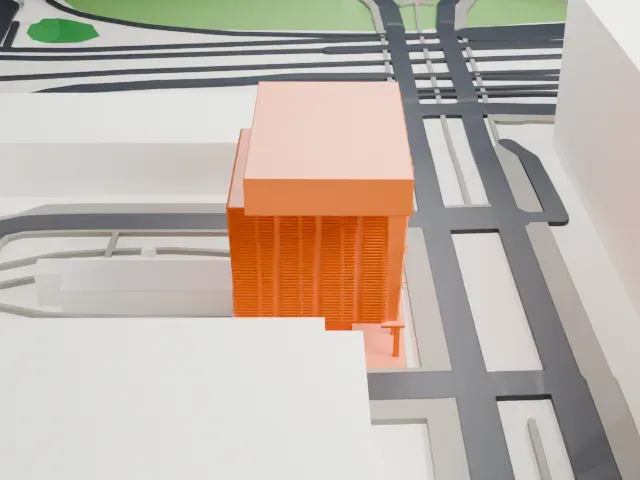 North
-
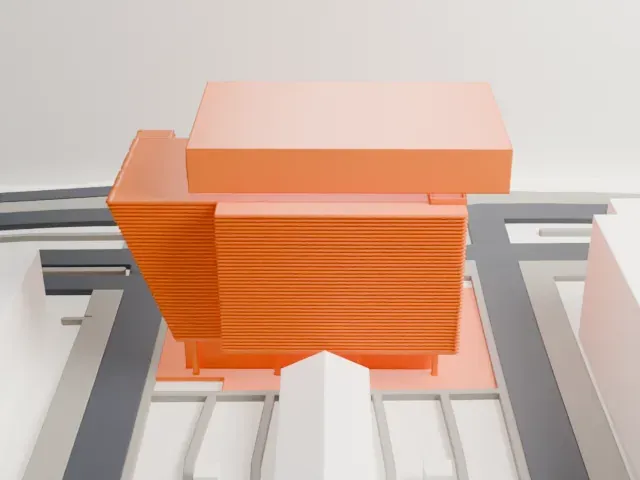 East
-
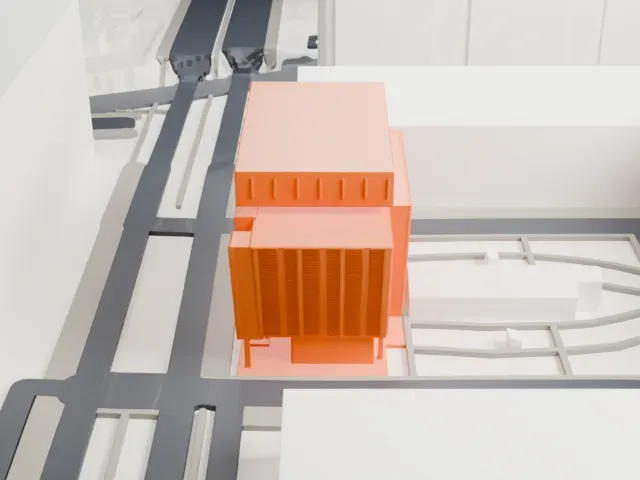 South
-
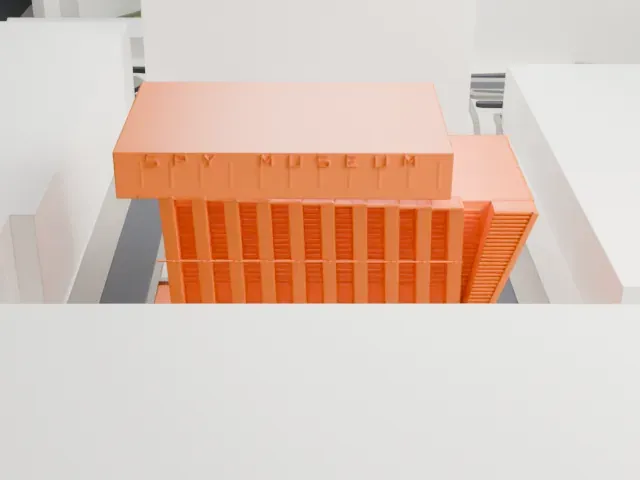 West
Copyright notice
The design of International Spy Museum may still be protected by copyright. It appears in the city models you make here, but it is not offered as a separate model.
- On a 160 mm print
- 12 mm
- Scale
- 1:3,750
12 mm tall on a 160 mm print
Make this print opens the generator on a 600 m square around the landmark. Buildings print at close to true scale, so the landmark grows with the print size.
- A block with hard edges
A museum building of this kind is wide rather than tall, so the roof edge and the straight walls carry the shape. Print it at 200 mm or larger, with layers of 0.12 to 0.16 mm to keep those edges sharp.
- One piece with the ground
The International Spy Museum is joined to the ground in the exported file, and the four-side check found no floating parts, so nothing needs gluing.
- Pick the detail for your nozzle
In the Buildings settings, set Landmark detail to Print friendly to adapt thin parts and small details to the print scale. Full detail keeps every modeled feature, for larger prints or a finer nozzle.
- Colors
Buildings, roads, water and ground arrive as separate filament slots in the 3MF. The International Spy Museum takes the building color.
- File format
You get a 3MF for Bambu Studio, OrcaSlicer or PrusaSlicer. Any of them can save it as STL if you need one.
About the International Spy Museum
Washington, D.C., is home to the International Spy Museum, an independent non-profit history museum. Its subject is the intelligence field and espionage: their history, tradecraft and place in the present. Its collection of international espionage artifacts is the largest on public display. Its first home, in the Penn Quarter neighborhood, opened in 2002; in 2019 it moved to a building at 700 L'Enfant Plaza designed by Rogers Stirk Harbour + Partners. Plans for it were released in April 2015, and the museum reopened there on May 12, 2019.
Milton Maltz, a Korean War code-breaker who founded the Malrite Communications Group in 1956, conceived it as a for-profit organization in 1996. The first building, in Penn Quarter, cost about US$40 million; Maltz built it with The House on F Street, a limited liability company. Half of the foundation cost came from the Malrite Company, and the District of Columbia supplied the other $20 million, using TIF bonds and enterprise zone bonds. The relocated museum, a non-profit enterprise, sits in a $162 million building with a 145-seat theater, a rooftop terrace, and event space on the top floor.
More than 7,000 artifacts belong to the museum, and around 1,000 are on public display, with film, video, interactive displays and photographs. Among the items are a Japanese four-rotor Enigma machine, which Germany built for Japan during World War II, the wreckage of the U-2 plane of Francis Gary Powers, a KGB coat with a buttonhole camera, a lipstick pistol, and the Aston Martin DB5 used in the movie Goldfinger. Educational and cultural programs for students, adults and families include lectures, films, book signings and hands-on workshops, and the museum charges admission.
About this model
The International Spy Museum is one of more than 5,500 landmark models in Mini Skyline. They are made with AI, and each one is checked in its real surroundings before release. Each model is written as code from public descriptions, plans, photographs and aerial views used only as references; no image or third-party model is copied into it. Everything around it is built from OpenStreetMap and Overture map data. Rights in the building itself, its name and any brands on it are not granted by Mini Skyline; clear them separately before you sell prints. If you would rather print the shape from map data, turn off Landmark models in the Buildings settings.
Mini Skyline is not affiliated with, or endorsed by, the owners of this building or its names and marks.
Same skyline