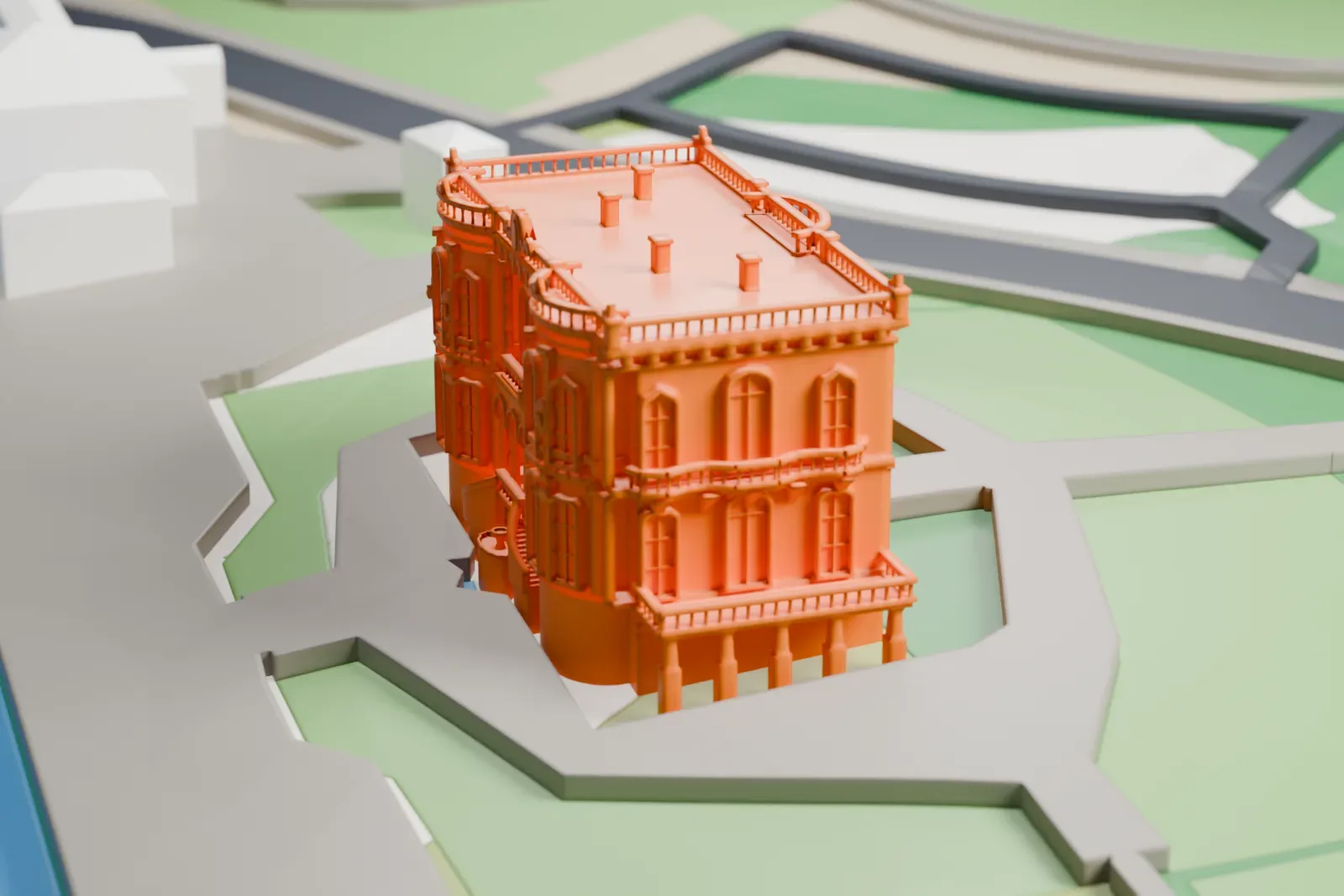
3D print the Küçüksu Pavilion
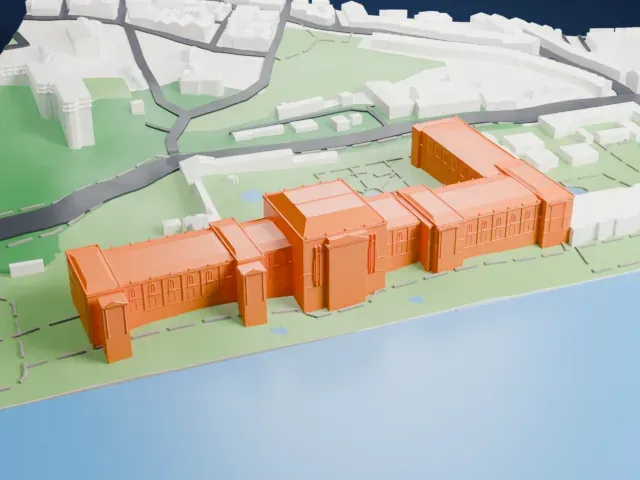
A free, printable model of the Küçüksu Pavilion on the Bosphorus's Asian shore in Istanbul, generated from real map data in your browser.
-
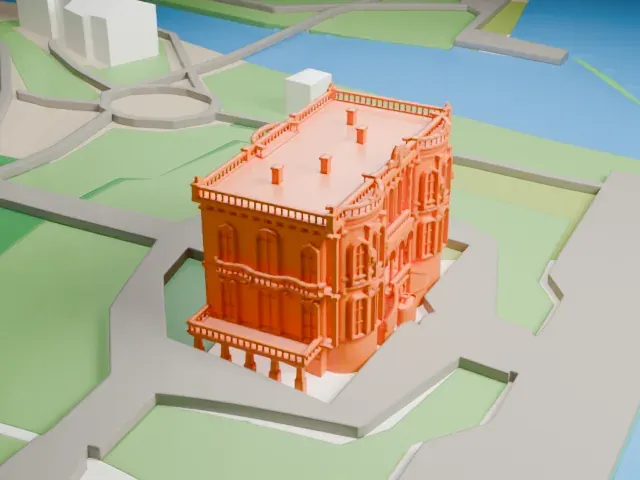 North
-
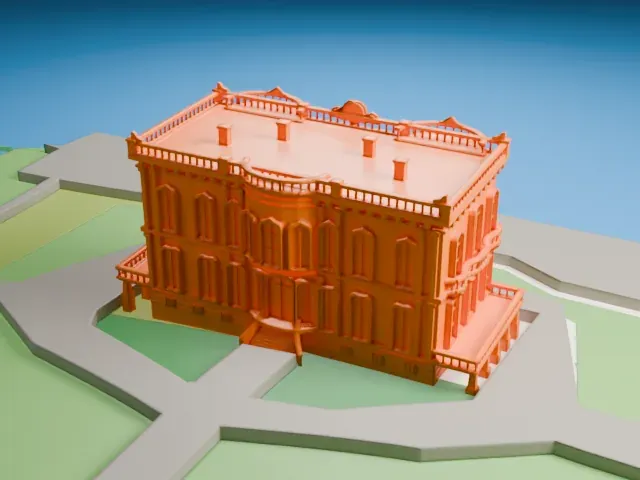 East
-
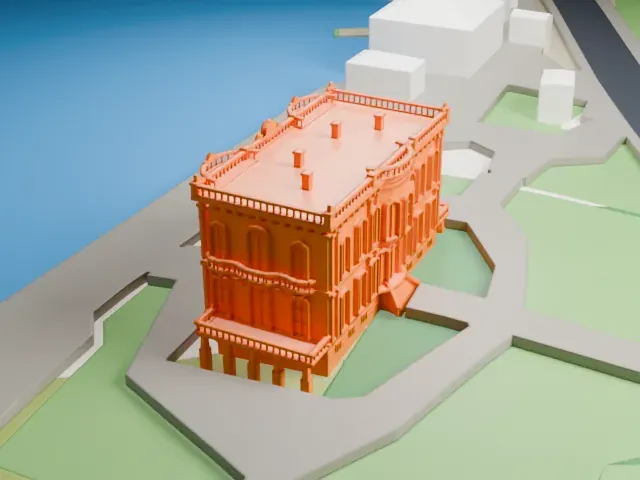 South
-
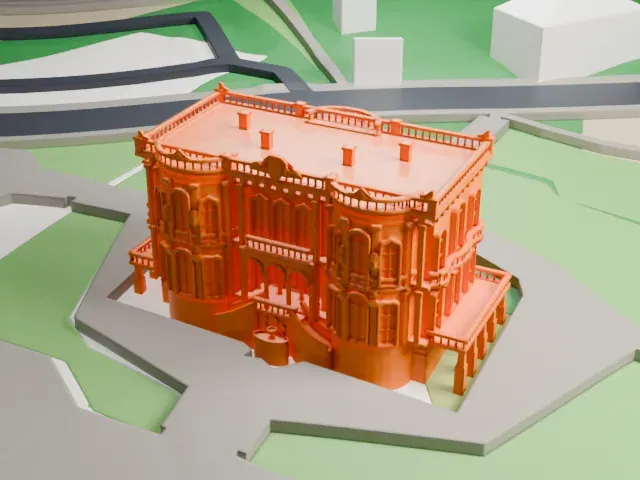 West
- On a 160 mm print
- 5 mm
- Scale
- 1:3,750
5 mm tall on a 160 mm print
Make this print opens the generator on a 600 m square around the landmark. Buildings print at close to true scale, so the landmark grows with the print size.
- Small at model scale
The pavilion is modest in size at model scale, so scale it up or choose Full detail to keep the small details legible; 0.12–0.16 mm layers help the vertical edges.
- One piece with the ground
The Küçüksu Pavilion is joined to the ground in the exported file, and the four-side check found no floating parts, so nothing needs gluing.
- Pick the detail for your nozzle
In the Buildings settings, set Landmark detail to Print friendly to adapt thin parts and small details to the print scale. Full detail keeps every modeled feature, for larger prints or a finer nozzle.
- Colors
Buildings, roads, water and ground arrive as separate filament slots in the 3MF. The Küçüksu Pavilion takes the building color.
- File format
You get a 3MF for Bambu Studio, OrcaSlicer or PrusaSlicer. Any of them can save it as STL if you need one.
About the Küçüksu Pavilion
The Küçüksu Pavilion was built as a summer pavilion in Istanbul, in the Küçüksu neighborhood of the Beykoz district. Its site is on the Bosphorus's Asian shore, with Anadoluhisarı on one side and the Fatih Sultan Mehmet Bridge on the other. Ottoman sultans used the pavilion for brief stays on hunting trips and excursions into the countryside. Instead of high walls, cast iron railings enclose the garden, with a gate on each of its four sides.
Sultan Abd-ul-Mejid I commissioned the building, and Garabet Amira Balyan, with his son Nigoğayos Balyan, designed it in the neo-baroque style. It was completed in 1857, taking the place of a two-story timber palace built under Mahmud I and later used by Selim III and Mahmud II. It has two main stories and a basement, and its footprint measures 15 x 27 m.
Inside, four corner rooms surround a central hall, following the plan of a traditional Turkish house. The waterfront rooms have two fireplaces and the others one, all made of colorful Italian marble. Bohemian crystal chandeliers hang in the rooms, and Charles Séchan, a stage designer at the Vienna State Opera, was responsible for the interior decoration. After a restoration in 1944, the pavilion opened to the public as a museum.
About this model
The Küçüksu Pavilion is one of more than 4,400 landmark models in Mini Skyline. They are made with AI, and each one is checked from four sides in its real surroundings before release. Everything around it is built from OpenStreetMap and Overture map data. If you would rather print the shape from map data, turn off Landmark models in the Buildings settings.
Same skyline