3D print Lever House
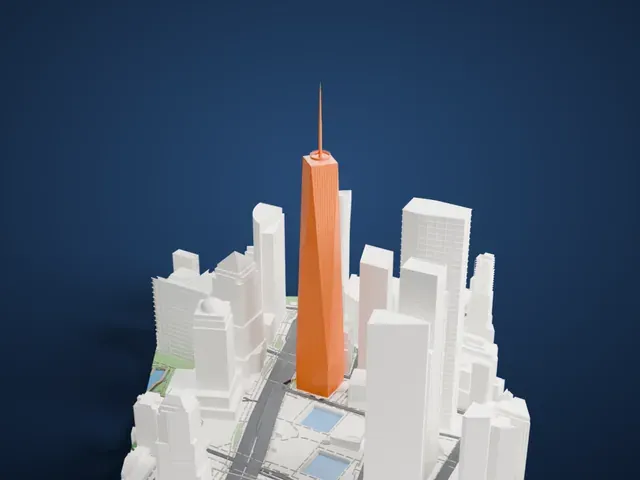
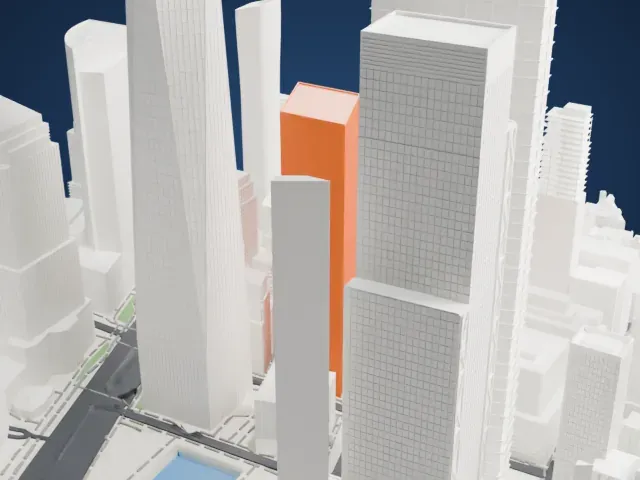
A free, printable model of Lever House, a slim slab tower above a low base, among the taller towers of Midtown Manhattan, generated from real map data in your browser.
-
 North
-
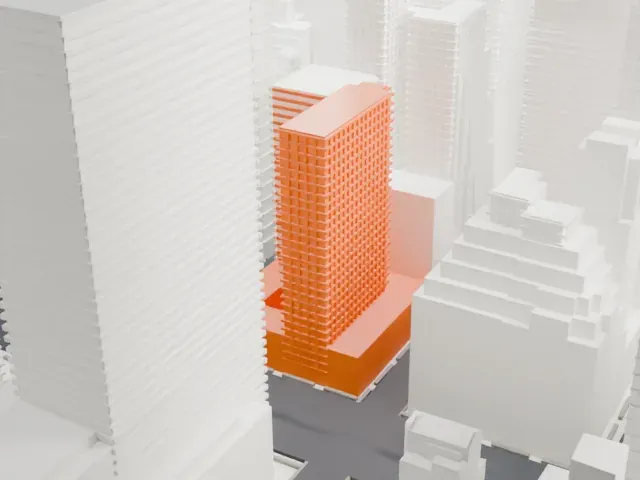 East
-
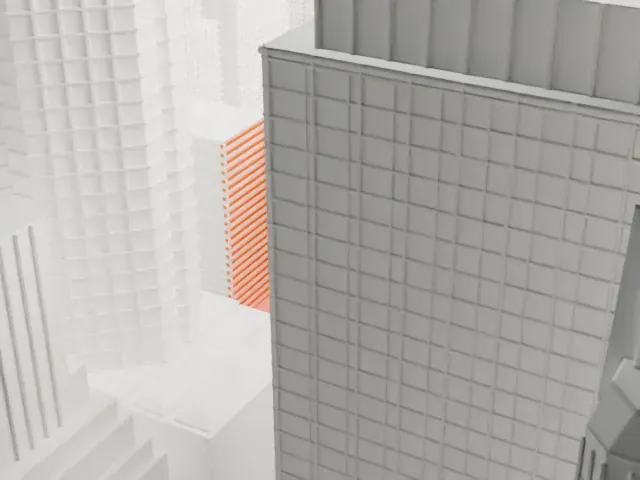 South
-
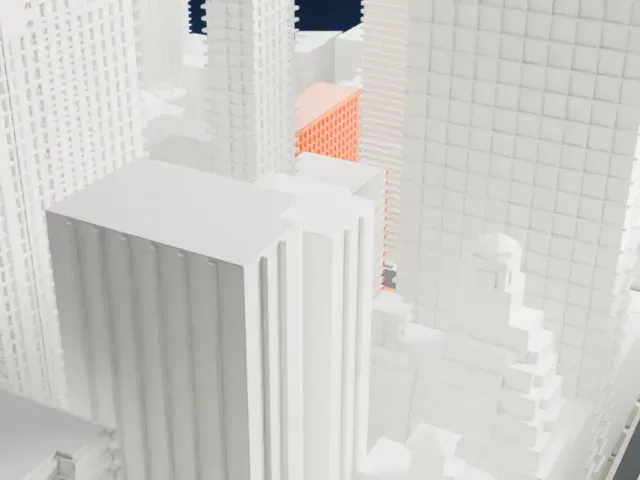 West
The model you print
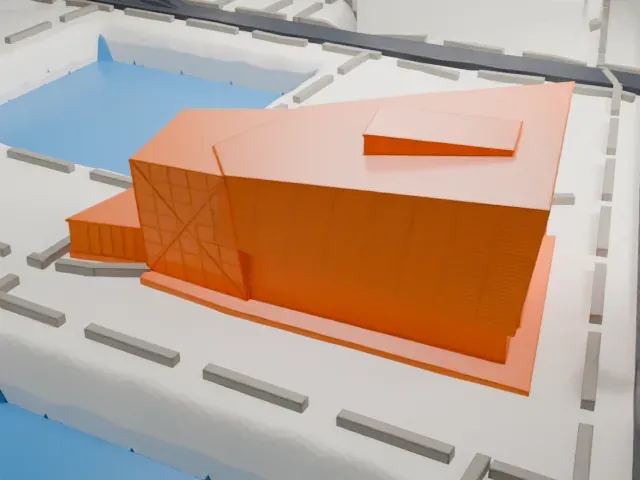
Lever House in 3D
The landmark on its own, at its size on a 160 mm print. Print friendly thickens thin parts for a 0.4 mm nozzle; Full detail keeps every part.
- Real height
- 94 m
- On a 160 mm print
- 26 mm
- Scale
- 1:3,750
94 m of Lever House, 26 mm on your shelf
Make this print opens the generator on a 600 m square around the landmark. Buildings print at close to true scale, so the landmark grows with the print size.
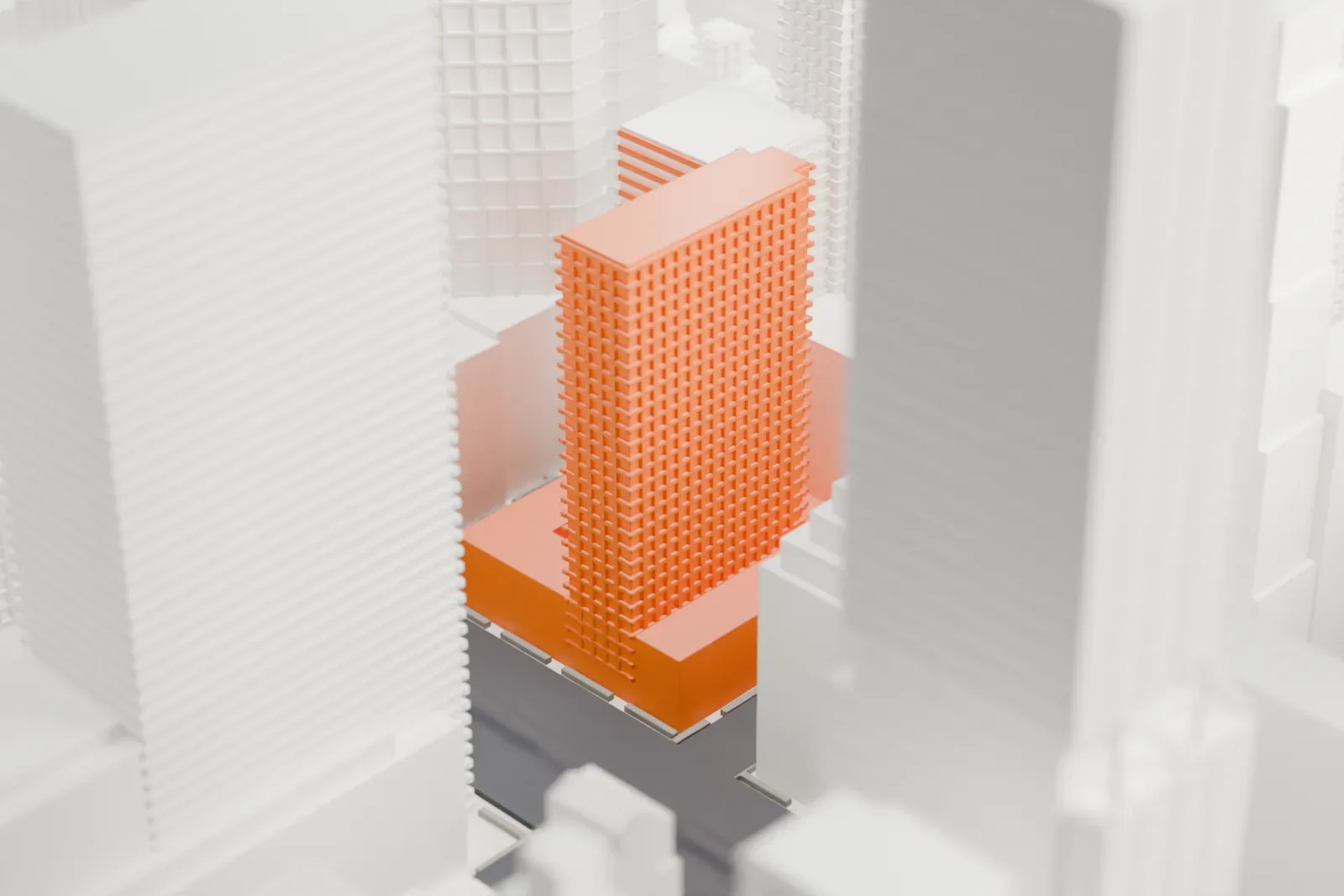
- Slim glass slab
The tower is a thin slab with a tight grid of window bands. Layers of 0.12 to 0.16 mm keep the lines crisp, and a larger print size keeps the bands from merging.
- Slender columns below
Thin columns hold the raised base. Print friendly thickens thin parts at small sizes; Full detail keeps them as modeled on a larger print.
- One piece with the ground
Lever House is joined to the ground in the exported file, and the four-side check found no floating parts, so nothing needs gluing.
- Pick the detail for your nozzle
In the Buildings settings, set Landmark detail to Print friendly to adapt thin parts and small details to the print scale. Full detail keeps every modeled feature, for larger prints or a finer nozzle.
- Colors
Buildings, roads, water and ground arrive as separate filament slots in the 3MF. Lever House takes the building color.
- File format
You get a 3MF for Bambu Studio, OrcaSlicer or PrusaSlicer. Any of them can save it as STL if you need one.
About Lever House
Lever House is a 94 m (307 ft) office building at 390 Park Avenue, on the west side of the avenue between 53rd and 54th Streets. It went up from 1950 to 1952 to designs in the International Style by Gordon Bunshaft, together with Natalie de Blois, both of Skidmore, Owings & Merrill. Lever Brothers, a soap company and a Unilever subsidiary, first used it as its headquarters. In New York City, only the United Nations Secretariat Building had a glass curtain wall on a high-rise before it.
Its ground level is mostly an open plaza of terrazzo in light and dark shades, with a planted garden and pool at the center. Stainless-steel-clad columns carry the second story, so the floors above seem to float. The third through twenty-first stories form a slab over the northern quarter of the lot. It is only 16 m (53 ft) wide along Park Avenue, which puts every office within 7.6 m (25 ft) of a window. The slab shape also met the city's 1916 Zoning Resolution without setbacks.
Its construction transformed Midtown's Park Avenue from a street of masonry apartment buildings into one of office buildings in the International style, and several other structures around the world copied its design. It nearly came down in the 1980s, after Fisher Brothers proposed a tower of 40 stories for the site. Instead, in 1982, the city narrowly approved it as a landmark, and a year later it went onto the National Register of Historic Places.
About this model
Lever House is one of more than 5,500 landmark models in Mini Skyline. They are made with AI, and each one is checked in its real surroundings before release. Each model is written as code from public descriptions, plans, photographs and aerial views used only as references; no image or third-party model is copied into it. Everything around it is built from OpenStreetMap and Overture map data. Rights in the building itself, its name and any brands on it are not granted by Mini Skyline; clear them separately before you sell prints. If you would rather print the shape from map data, turn off Landmark models in the Buildings settings.
Outside the United States this design may still be protected; check the rules where you sell.
Mini Skyline is not affiliated with, or endorsed by, the owners of this building or its names and marks.
Same skyline