3D print the Maritime Hotel
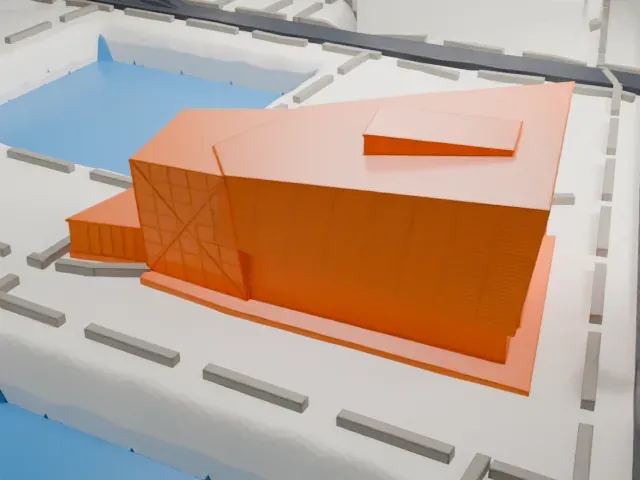
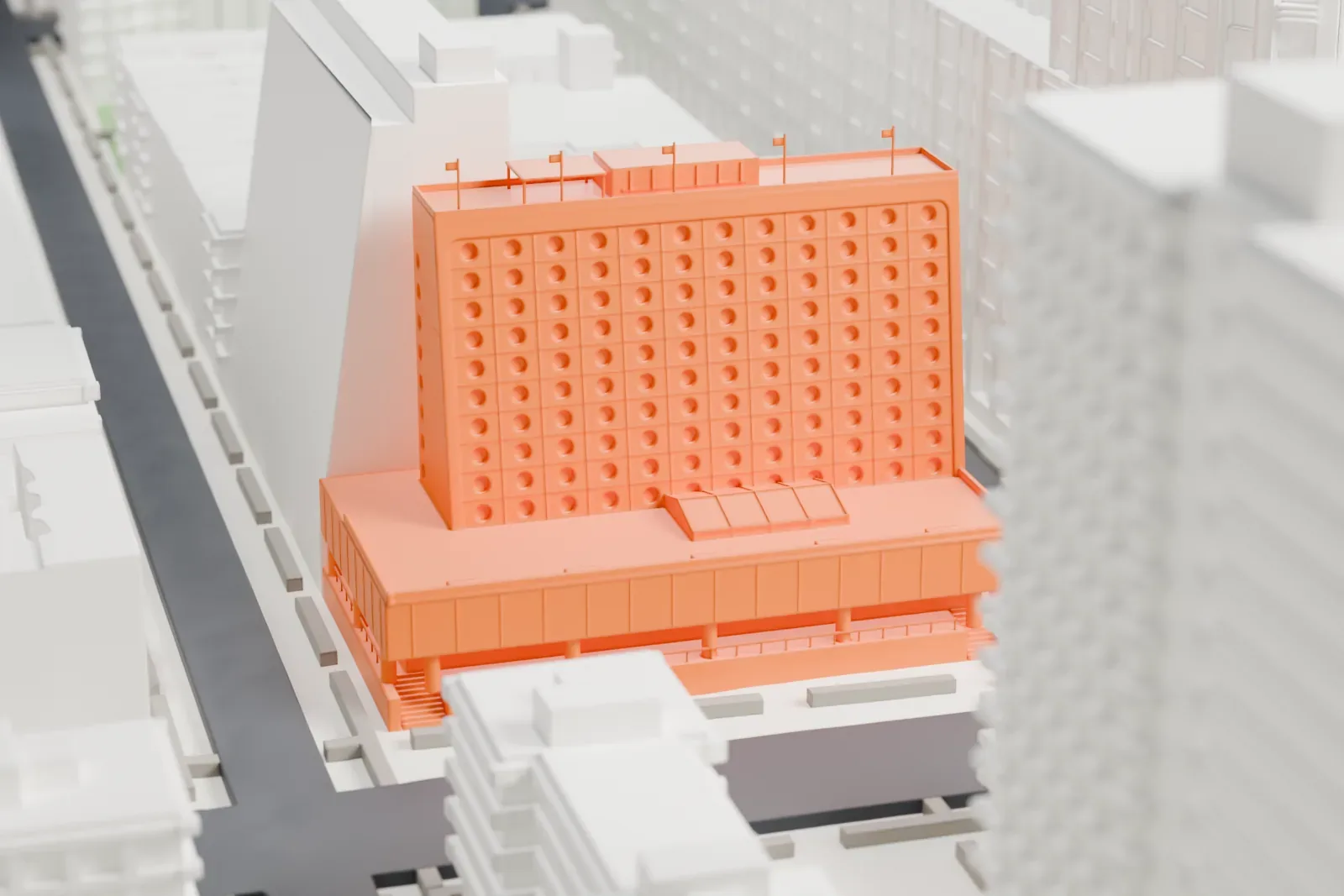
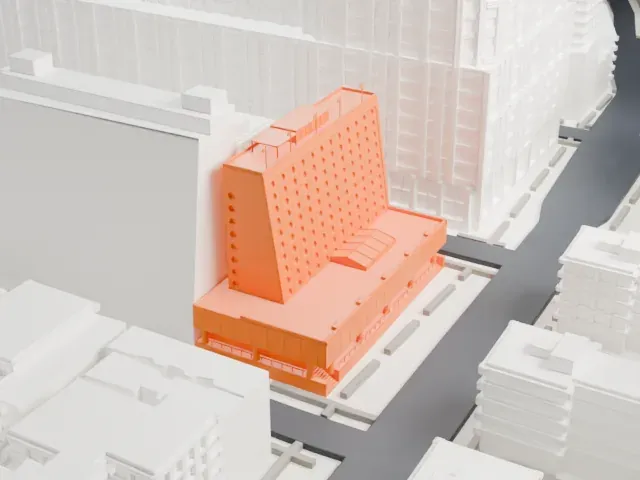
A free, printable 3D model of the Maritime Hotel, with its sloping porthole facade and wide low base, and the taller and shorter buildings around it, generated from real map data in your browser.
-
 North
-
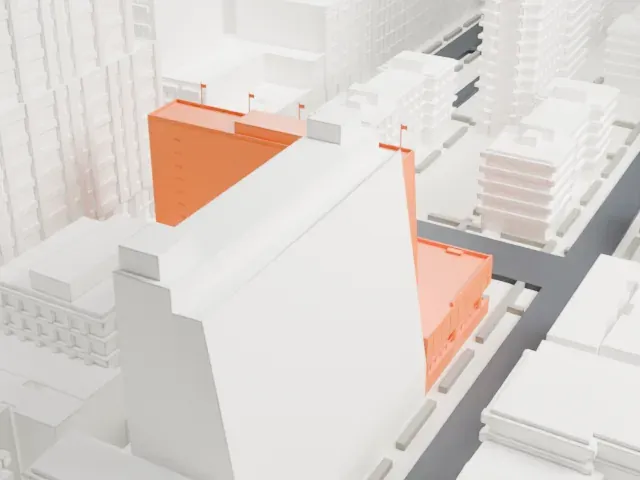 East
-
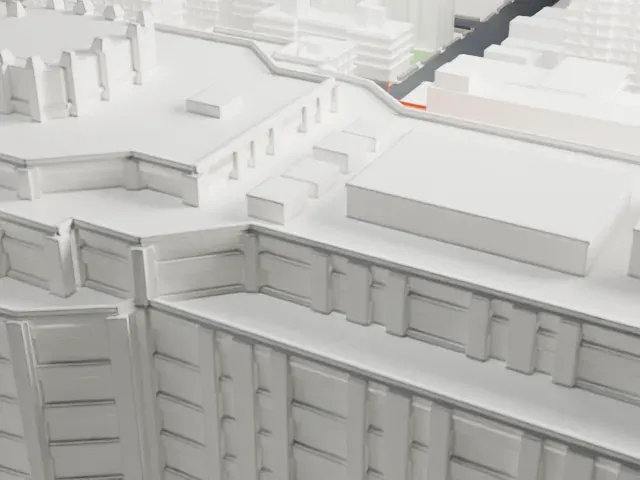 South
-
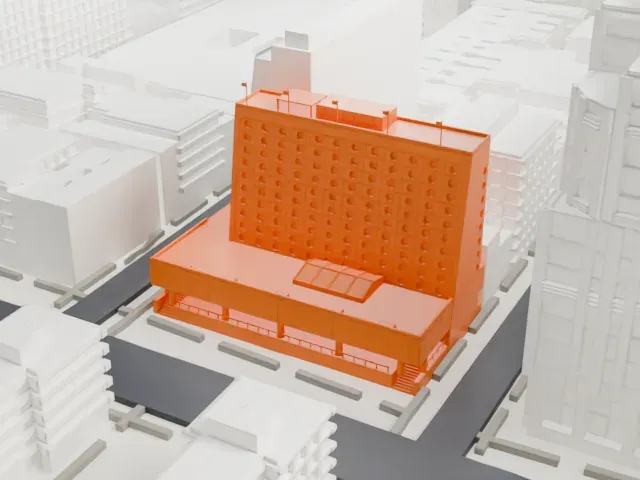 West
- On a 160 mm print
- 12 mm
- Scale
- 1:3,750
12 mm tall on a 160 mm print
Make this print opens the generator on a 600 m square around the landmark. Buildings print at close to true scale, so the landmark grows with the print size.
- Porthole grid on the facade
Dozens of small round recesses cover the sloping face. Print friendly adapts them to your print scale; Full detail keeps every one, better with a larger print and 0.12 to 0.16 mm layers.
- Slender rooftop poles
Thin poles stand on the roof. Print friendly adapts thin parts, and printing slowly with good cooling helps small tall pieces hold.
- One piece with the ground
The Maritime Hotel is joined to the ground in the exported file, and the four-side check found no floating parts, so nothing needs gluing.
- Pick the detail for your nozzle
In the Buildings settings, set Landmark detail to Print friendly to adapt thin parts and small details to the print scale. Full detail keeps every modeled feature, for larger prints or a finer nozzle.
- Colors
Buildings, roads, water and ground arrive as separate filament slots in the 3MF. The Maritime Hotel takes the building color.
- File format
You get a 3MF for Bambu Studio, OrcaSlicer or PrusaSlicer. Any of them can save it as STL if you need one.
About the Maritime Hotel
The Maritime Hotel occupies 363 West 16th Street, where it meets Ninth Avenue, in Manhattan's Chelsea neighborhood, near the Meatpacking District. Its 121 rooms and 5 suites follow a nautical theme that matches the building's maritime history and its facade inspired by portholes. The main facade faces Ninth Avenue, and the building is known as the "pizza box" building.
Architect Albert C. Ledner, based in New Orleans, designed three white buildings in the 1960s for the National Maritime Union, each with portholes as a prominent feature. The Ninth Avenue building was the last of the three. The 17th Street and Ninth Avenue buildings were named for the union's first president, Joseph Curran, and held offices, medical and training facilities, a gymnasium, a swimming pool and a 900-seat auditorium, along with dormitory rooms for seamen.
As business at the Port of New York shrank, the union's fortunes collapsed. Covenant House bought the Ninth Avenue and 17th Street buildings in 1987, and the Chinese government bought them in 1994. In 2001, nightclub and restaurant entrepreneurs Sean K. MacPherson and Eric Goode paid $19 million for the Ninth Avenue building and, joined by developers Richard Born and Ira Drukier, started turning it into a hotel, which opened in 2003.
About this model
The Maritime Hotel is one of more than 4,300 landmark models in Mini Skyline. They are made with AI, and each one is checked from four sides in its real surroundings before release. Everything around it is built from OpenStreetMap and Overture map data. If you would rather print the shape from map data, turn off Landmark models in the Buildings settings.
Same skyline