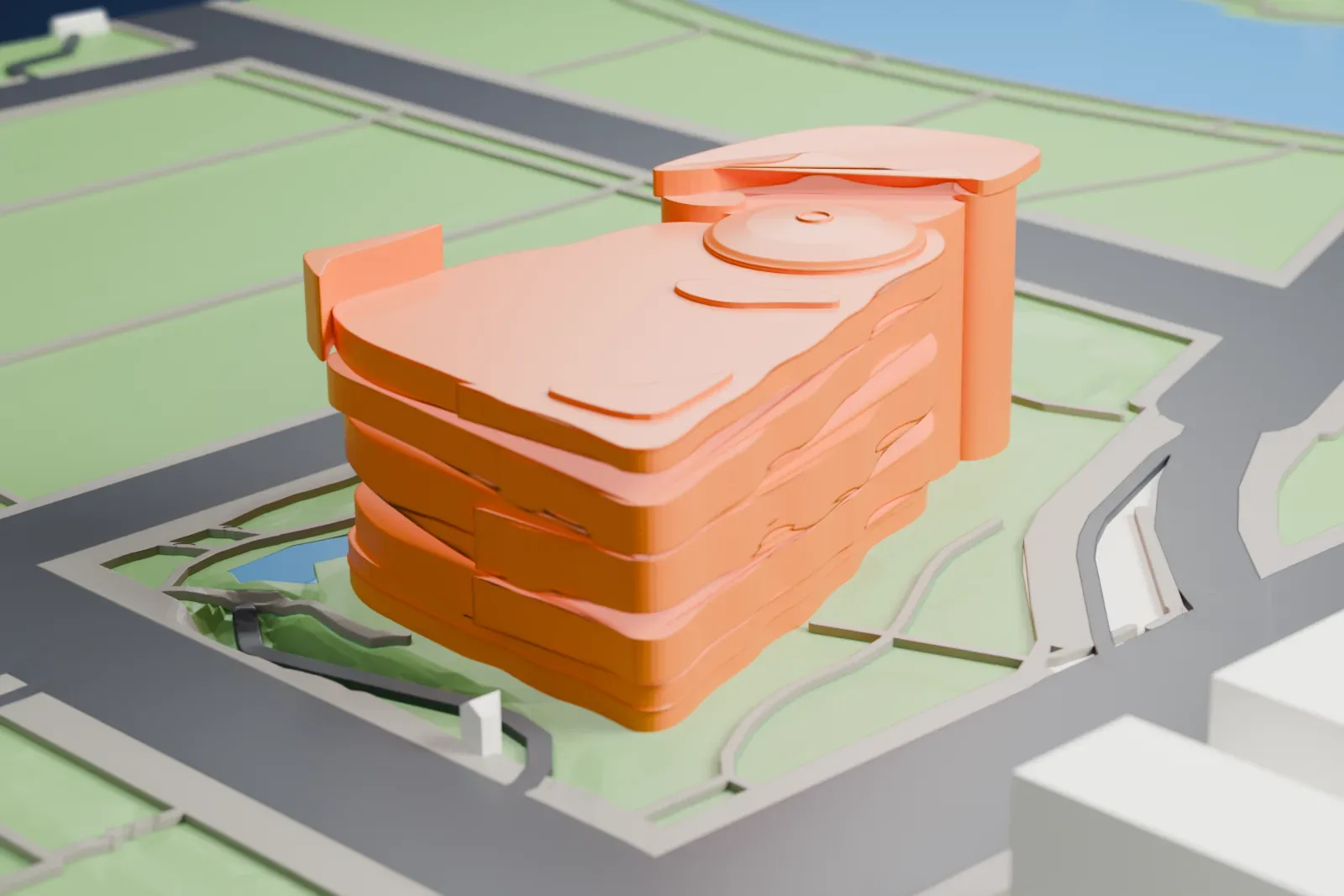
3D print the National Museum of the American Indian
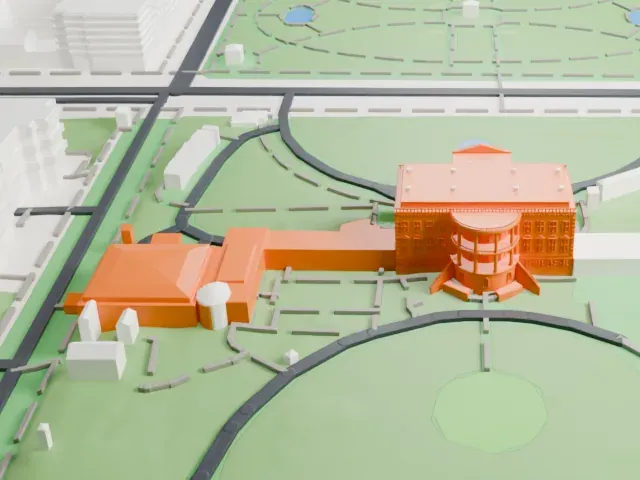
A free, printable model of the Smithsonian National Museum of the American Indian, a curving building on the National Mall, with the surrounding streets and buildings, generated from real map data in your browser.
-
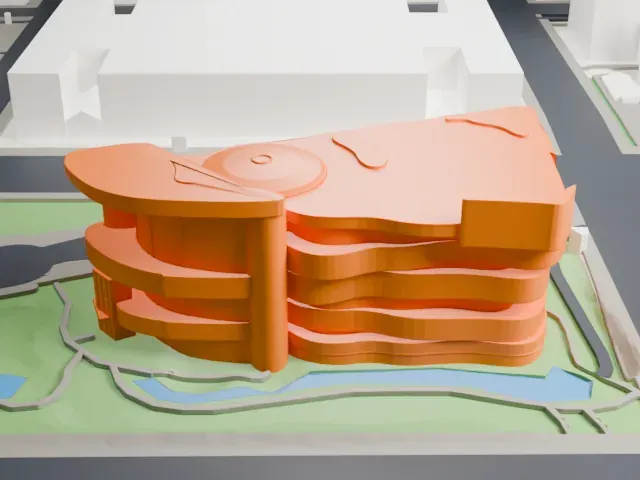 North
-
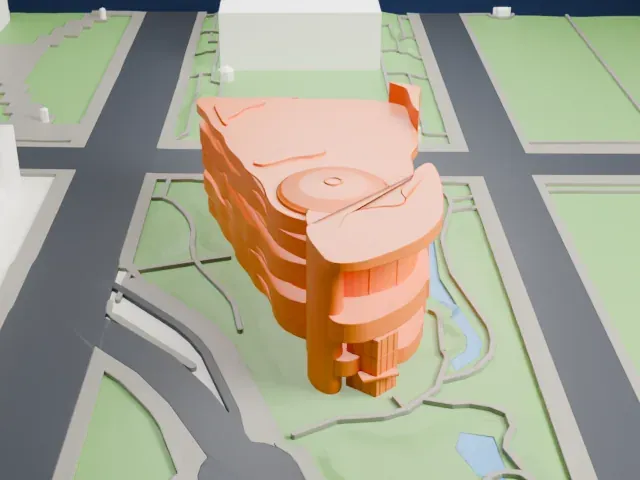 East
-
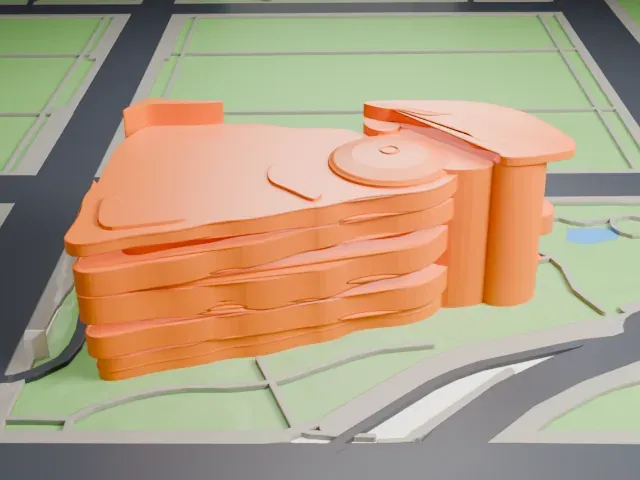 South
-
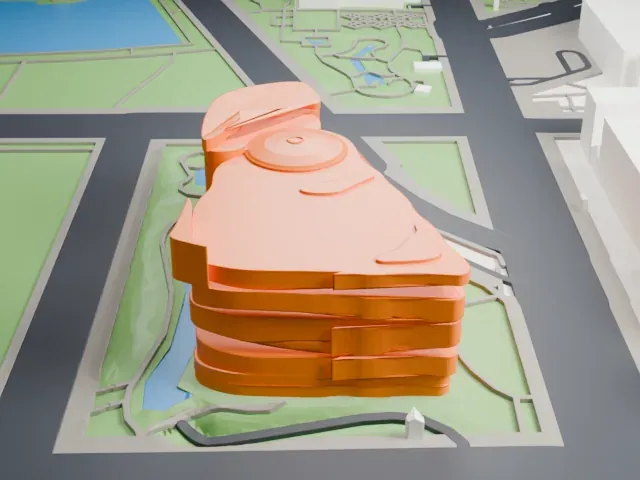 West
- On a 160 mm print
- 12 mm
- Scale
- 1:3,750
12 mm tall on a 160 mm print
Make this print opens the generator on a 600 m square around the landmark. Buildings print at close to true scale, so the landmark grows with the print size.
- A wide museum on a large site
The building covers a large footprint, so the entrance and wall surfaces shrink at the default print size. Print larger, or use Print friendly, to keep them legible.
- Layers for wall surfaces
Use 0.12–0.16 mm layers so the long wall surfaces and the entrance area stay crisp.
- One piece with the ground
The National Museum of the American Indian is joined to the ground in the exported file, and the four-side check found no floating parts, so nothing needs gluing.
- Pick the detail for your nozzle
In the Buildings settings, set Landmark detail to Print friendly to adapt thin parts and small details to the print scale. Full detail keeps every modeled feature, for larger prints or a finer nozzle.
- Colors
Buildings, roads, water and ground arrive as separate filament slots in the 3MF. The National Museum of the American Indian takes the building color.
- File format
You get a 3MF for Bambu Studio, OrcaSlicer or PrusaSlicer. Any of them can save it as STL if you need one.
About the National Museum of the American Indian
Part of the Smithsonian group of museums and research centers, this institution is given over to the cultures of Indigenous peoples across the Americas. Its Mall building stands at Fourth Street and Independence Avenue SW in Washington, D.C., and was opened on September 21, 2004. Two further facilities complete it: a permanent museum, the George Gustav Heye Center, housed in New York's Alexander Hamilton U.S. Custom House, and, in Suitland, Maryland, a Cultural Resources Center for research and collections.
The Mall building is five stories and 250,000 square feet (23,000 m2), curvilinear in plan and faced in Kasota limestone of a golden color, meant to suggest natural rock that wind and water had shaped over thousands of years. It sits on a 4.25-acre (17,200 m2) site surrounded by simulated wetlands. The east-facing entrance, a prism window and a 120-foot (37 m) space for contemporary Native performances all came out of extensive consultations with Native peoples.
Canadian architect Douglas Cardinal (Blackfoot) was the project designer, with GBQC Architects of Philadelphia and Johnpaul Jones (Cherokee/Choctaw) as design architects. Cardinal was removed from the project after disagreements during construction, though the building kept his original design intent. In 1989 Senator Daniel Inouye introduced the act that established the museum as a living memorial to Native American people and traditions. No national museum in the country had been devoted solely to Native Americans before it.
About this model
The National Museum of the American Indian is one of more than 4,400 landmark models in Mini Skyline. They are made with AI, and each one is checked from four sides in its real surroundings before release. Everything around it is built from OpenStreetMap and Overture map data. If you would rather print the shape from map data, turn off Landmark models in the Buildings settings.
Same skyline