3D print the Palazzo Farnese
A free, printable model of Palazzo Farnese and the surrounding streets of Rome, generated from real map data in your browser.
-
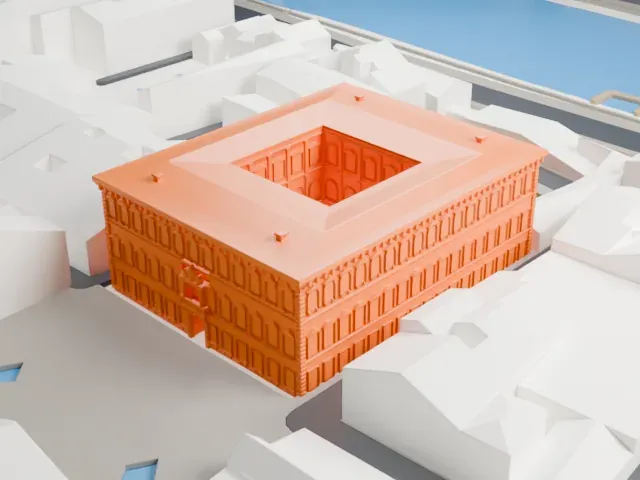 North
-
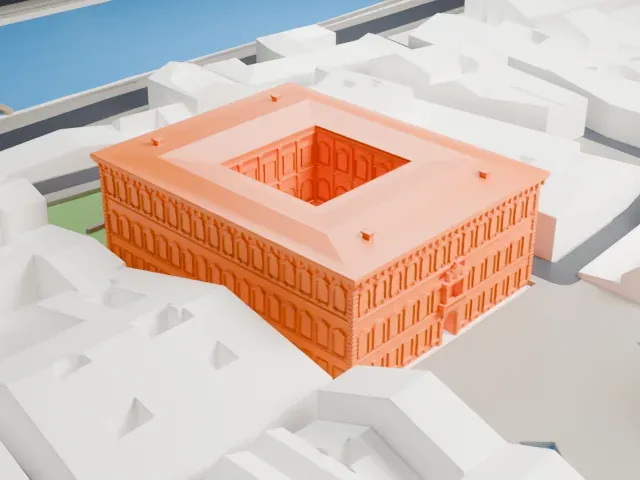 East
-
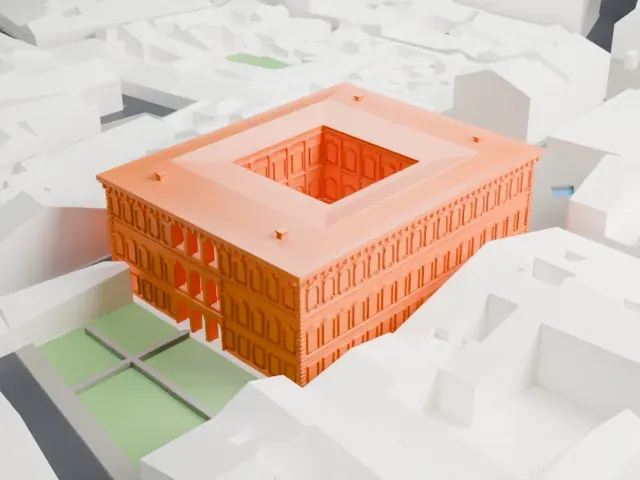 South
-
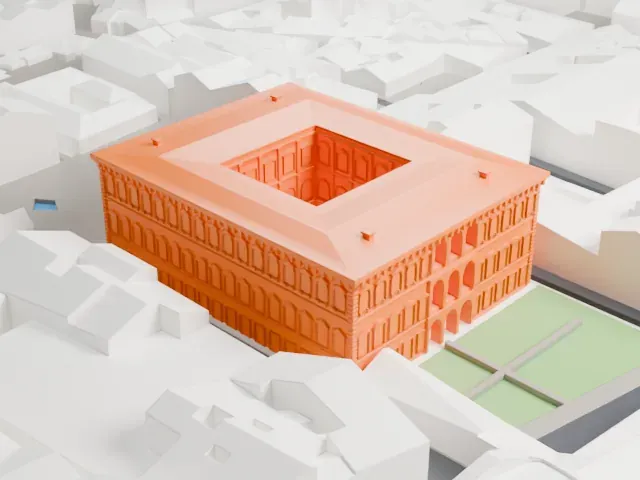 West
The model you print
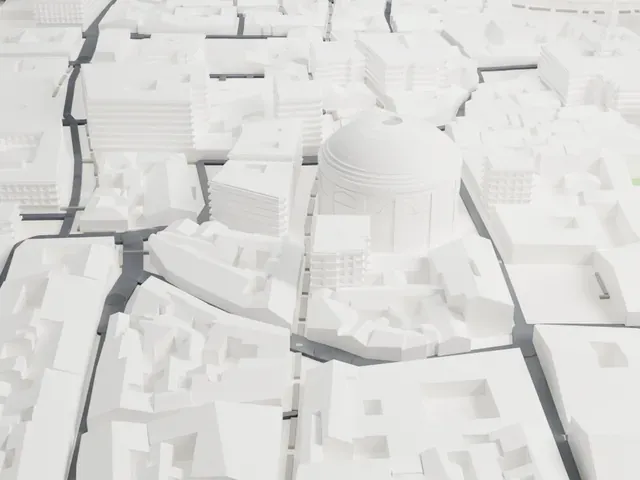
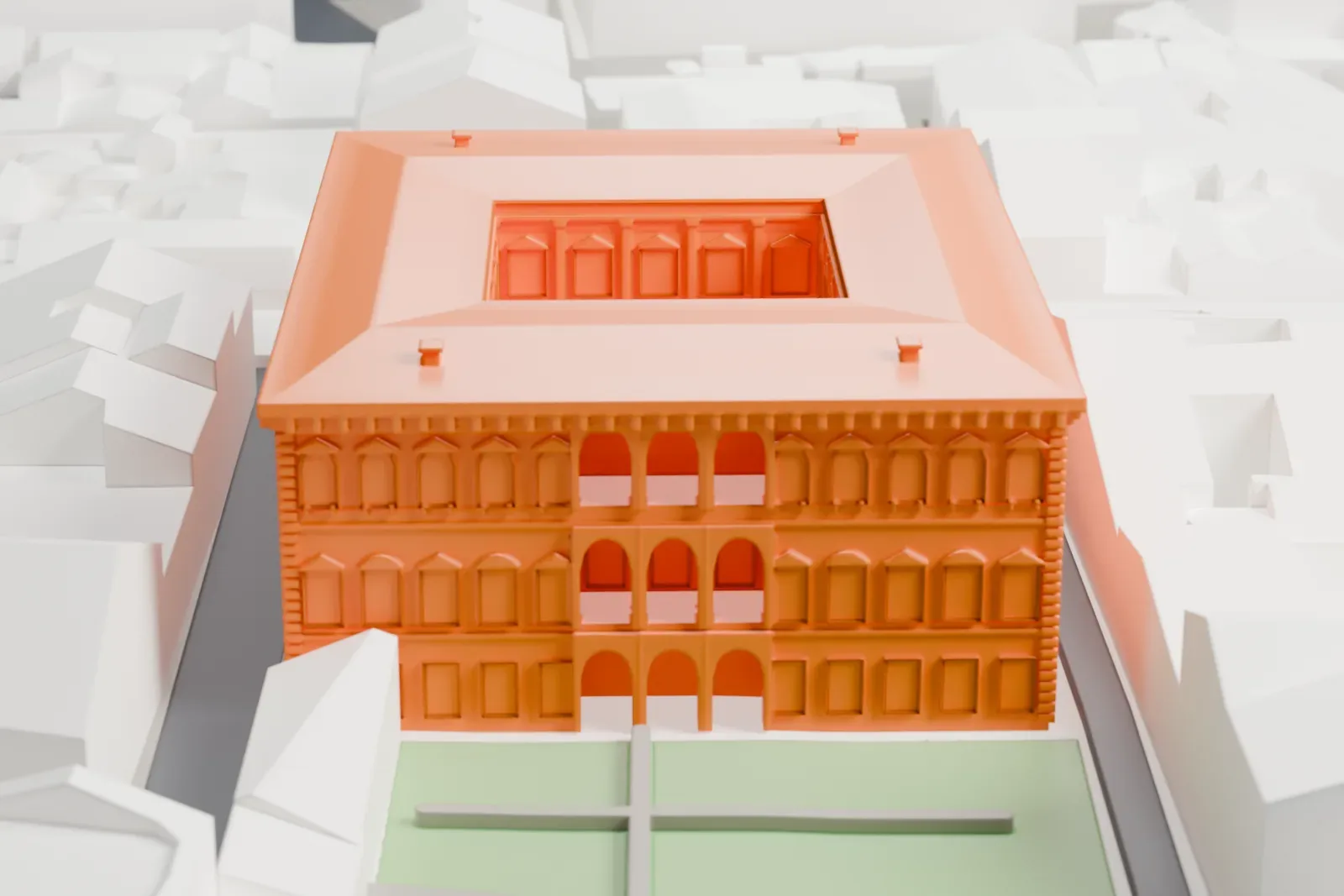
Palazzo Farnese in 3D
The landmark on its own, at its size on a 160 mm print. Print friendly thickens thin parts for a 0.4 mm nozzle; Full detail keeps every part.
- Real height
- 29 m
- On a 160 mm print
- 8 mm
- Scale
- 1:3,750
29 m of the Palazzo Farnese, 8 mm on your shelf
Make this print opens the generator on a 600 m square around the landmark. Buildings print at close to true scale, so the landmark grows with the print size.
- A large, detailed block
A palace of this size carries fine facade detail, which a larger print preserves best. Keep layers at 0.12–0.16 mm for crisp edges, or use Print friendly at small sizes.
- One piece with the ground
The Palazzo Farnese is joined to the ground in the exported file, and the four-side check found no floating parts, so nothing needs gluing.
- Pick the detail for your nozzle
In the Buildings settings, set Landmark detail to Print friendly to adapt thin parts and small details to the print scale. Full detail keeps every modeled feature, for larger prints or a finer nozzle.
- Colors
Buildings, roads, water and ground arrive as separate filament slots in the 3MF. The Palazzo Farnese takes the building color.
- File format
You get a 3MF for Bambu Studio, OrcaSlicer or PrusaSlicer. Any of them can save it as STL if you need one.
About the Palazzo Farnese
Palazzo Farnese is a palace of the High Renaissance in Rome, set on the Piazza Farnese. The Italian Republic owns it; under a 1936 arrangement it went to the French government for 99 years, and it is the French Embassy in Italy. The vast block and its facade dominate the square.
Alessandro Farnese commissioned the palace, and building began in 1515 to a design by Antonio da Sangallo the Younger. After he became Pope Paul III in 1534, the palace was enlarged; Michelangelo finished the redesigned third story, adding its deep cornice, and reworked the courtyard. Giacomo della Porta completed the facade toward the Tiber in 1589.
Annibale Carracci painted the Farnese Gallery's Loves of the Gods cycle at the close of the 16th century. The palace once housed the Farnese sculpture collection, which is held by the National Archeological Museum of Naples, and it contains the scholarly library of the École française de Rome. The library concentrates on Italian archaeology and medieval papal history.
About this model
The Palazzo Farnese is one of more than 5,500 landmark models in Mini Skyline. They are made with AI, and each one is checked in its real surroundings before release. Each model is written as code from public descriptions, plans, photographs and aerial views used only as references; no image or third-party model is copied into it. Everything around it is built from OpenStreetMap and Overture map data. Rights in the building itself, its name and any brands on it are not granted by Mini Skyline; clear them separately before you sell prints. If you would rather print the shape from map data, turn off Landmark models in the Buildings settings.
Mini Skyline is not affiliated with, or endorsed by, the owners of this building or its names and marks.
Same skyline