3D print Pupin Hall
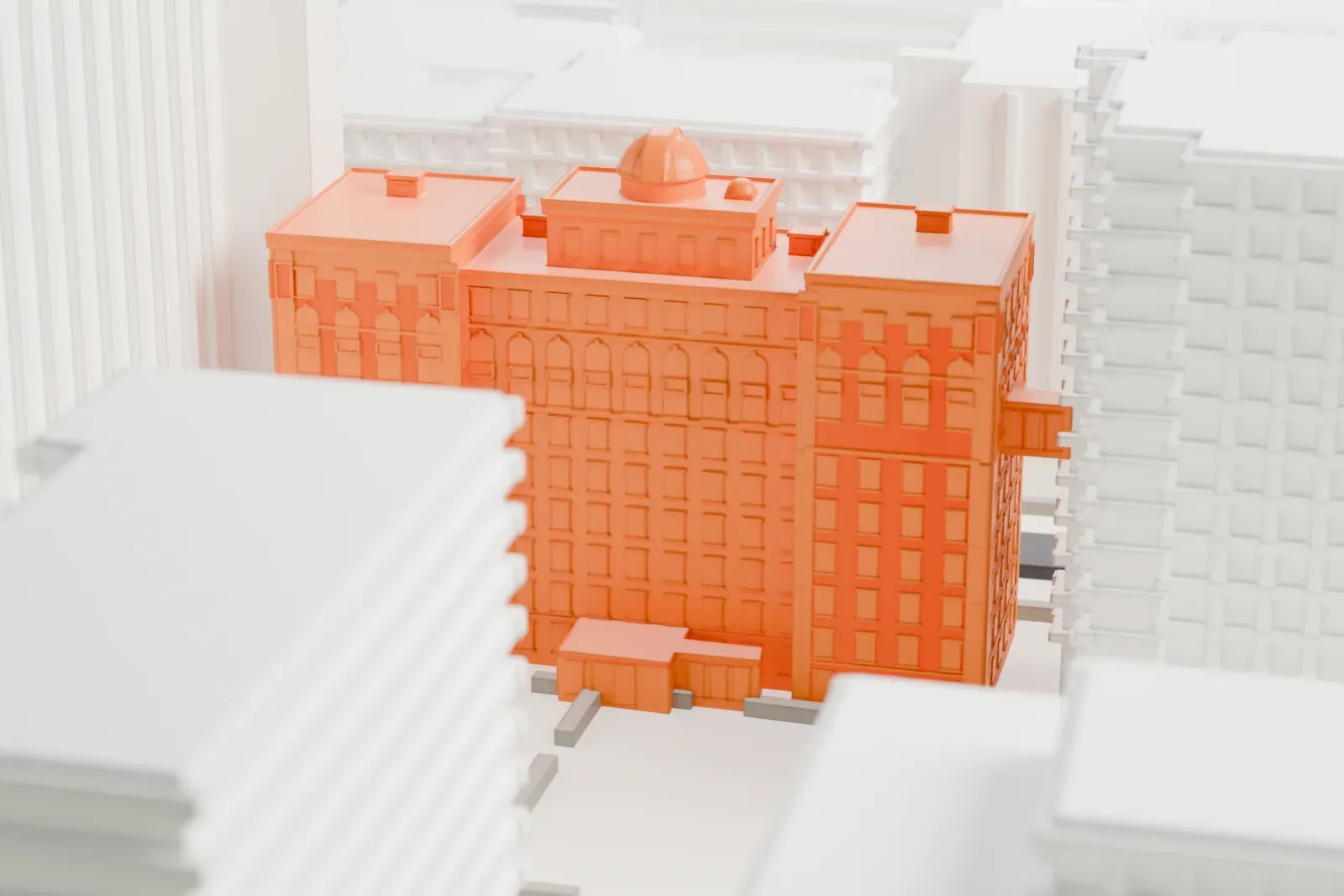
A free, printable model of Pupin Hall, a multi-wing building with a small rooftop dome, and the neighboring buildings, generated from real map data in your browser.
-
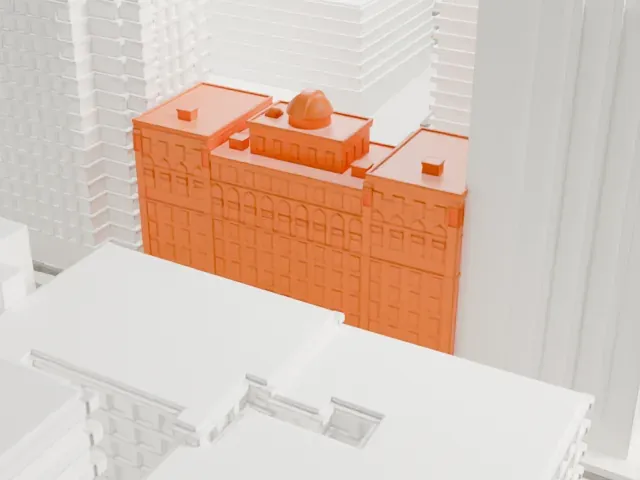 North
-
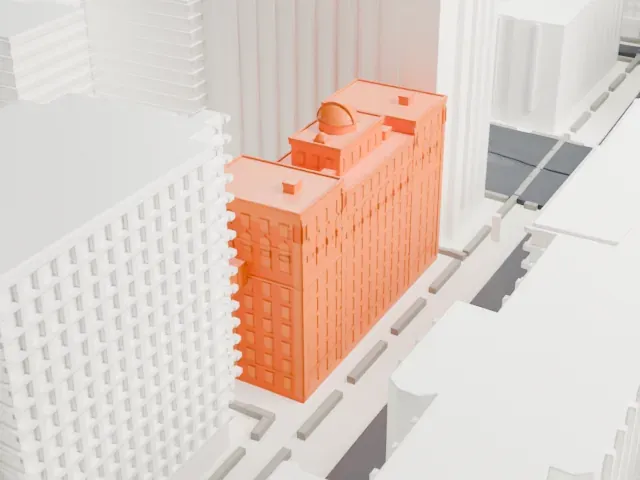 East
-
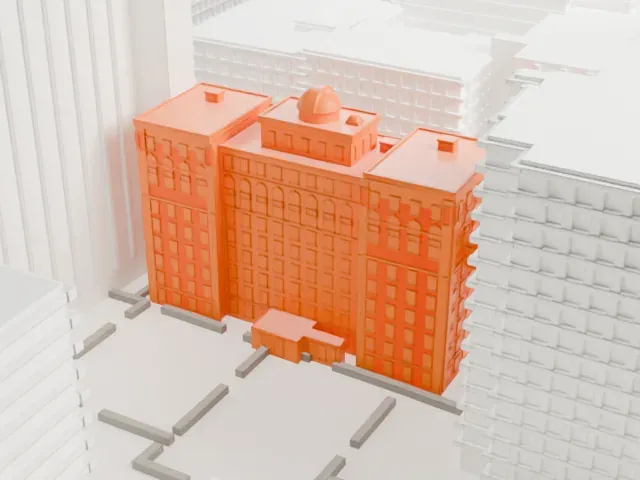 South
-
 West
- On a 160 mm print
- 12 mm
- Scale
- 1:3,750
12 mm tall on a 160 mm print
Make this print opens the generator on a 600 m square around the landmark. Buildings print at close to true scale, so the landmark grows with the print size.
- Small rooftop dome
A little dome sits on the roof among several stepped wings. Print friendly adapts small parts like this to the print scale; Full detail keeps it, which suits a larger print.
- Detailed facade among taller blocks
Rows of windows and decorative bands cover the walls, with larger buildings close by. A layer height of 0.12–0.16 mm and a bigger print size keep them crisp.
- One piece with the ground
Pupin Hall is joined to the ground in the exported file, and the four-side check found no floating parts, so nothing needs gluing.
- Pick the detail for your nozzle
In the Buildings settings, set Landmark detail to Print friendly to adapt thin parts and small details to the print scale. Full detail keeps every modeled feature, for larger prints or a finer nozzle.
- Colors
Buildings, roads, water and ground arrive as separate filament slots in the 3MF. Pupin Hall takes the building color.
- File format
You get a 3MF for Bambu Studio, OrcaSlicer or PrusaSlicer. Any of them can save it as STL if you need one.
About Pupin Hall
Columbia University's physics and astronomy departments are based in Pupin Physics Laboratories, also called Pupin Hall, in New York City. Its site is the south side of 120th Street, a short distance east of Broadway. In 1965 it earned National Historic Landmark status because of experiments there on splitting the atom. In 2009, the American Physical Society designated it a historic site, honoring Isidor Isaac Rabi's work on magnetic resonance.
The building was erected in 1925–1927 to give the Physics Department more room; the department had first been housed in Fayerweather Hall. Following the 1935 death of Mihajlo Idvorski Pupin, or Michael I. Pupin, a scientist from Serbia who graduated from Columbia, the trustees named it for him. Pupin helped establish the department of electrical engineering and developed methods for rapid x-ray photography.
By 1931 the building was a leading research center, and Harold Urey, a Nobel laureate in Chemistry, discovered deuterium there. John R. Dunning built one of the first cyclotrons in the country in the basement, and it stayed there until 2007. On January 25, 1939, Enrico Fermi carried out the first uranium atom split in the United States, in Pupin Hall, just 10 days after the first successful experiment of its kind, in Copenhagen, Denmark.
About this model
Pupin Hall is one of more than 4,300 landmark models in Mini Skyline. They are made with AI, and each one is checked from four sides in its real surroundings before release. Everything around it is built from OpenStreetMap and Overture map data. If you would rather print the shape from map data, turn off Landmark models in the Buildings settings.
Same skyline