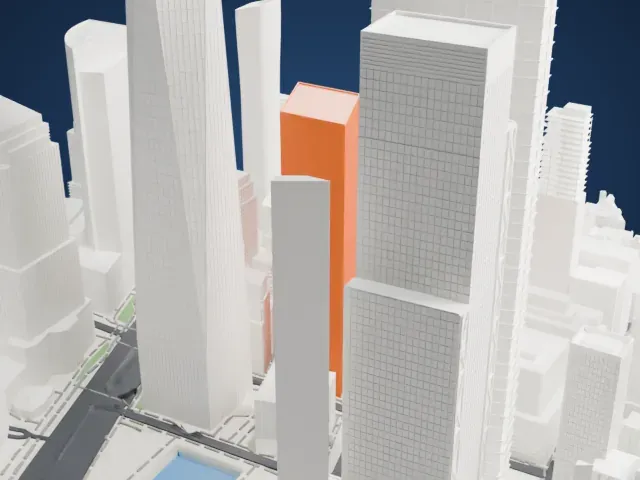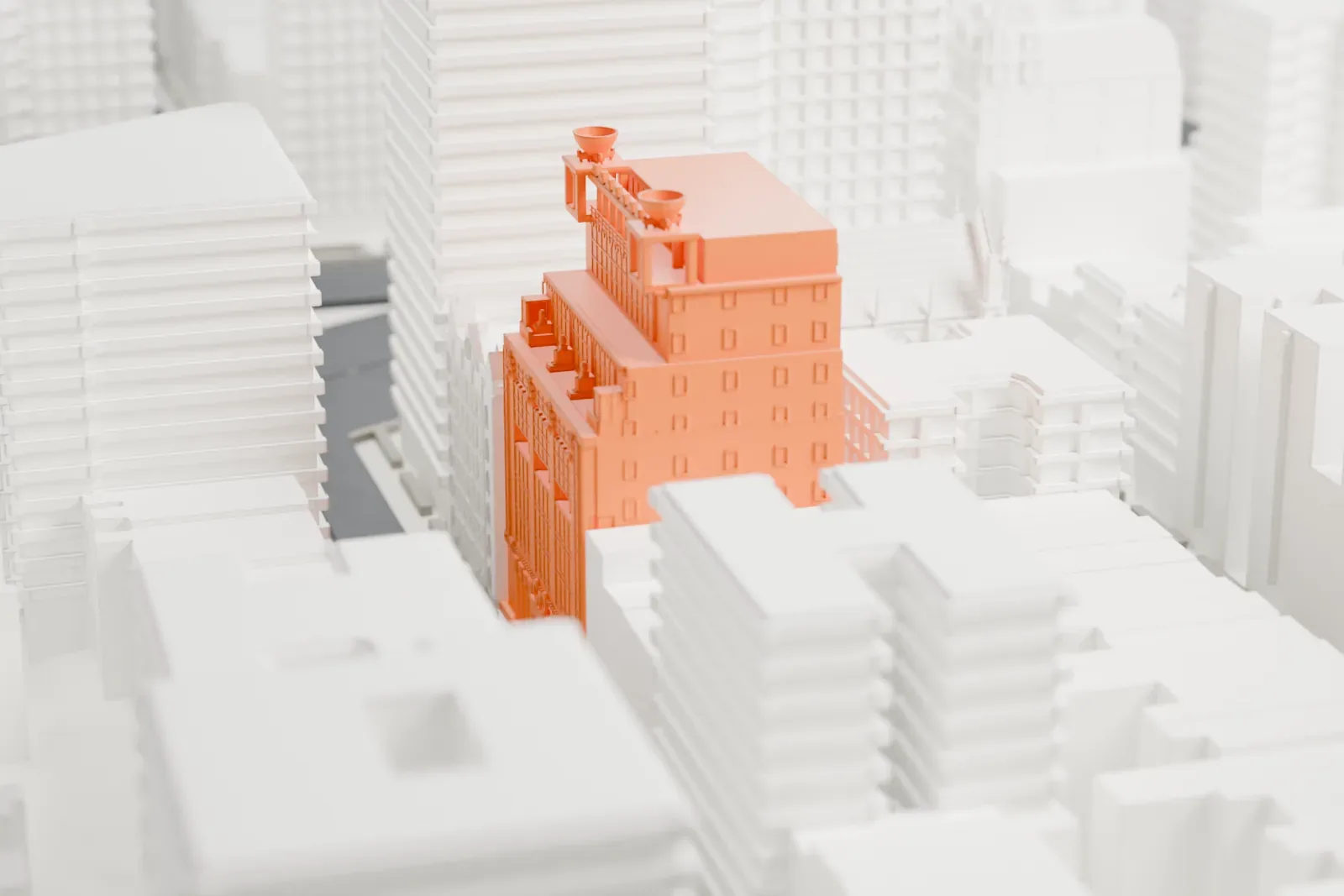
3D print the Pythian Temple
A free, printable model of the Pythian Temple, a stepped, windowed tower topped with two urns and set among taller mid-rise blocks, generated from real map data in your browser.
-
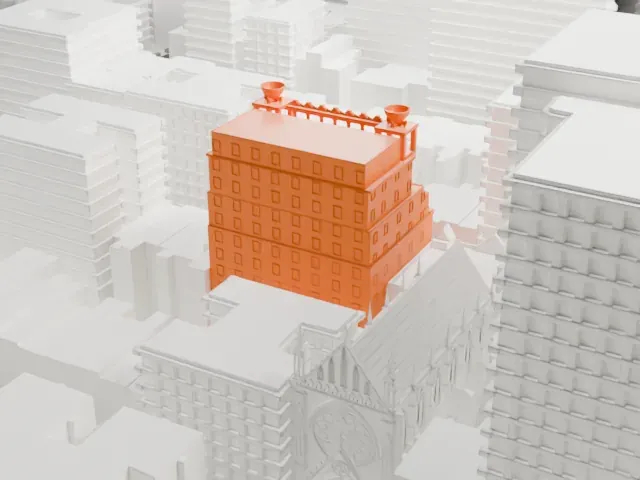 North
-
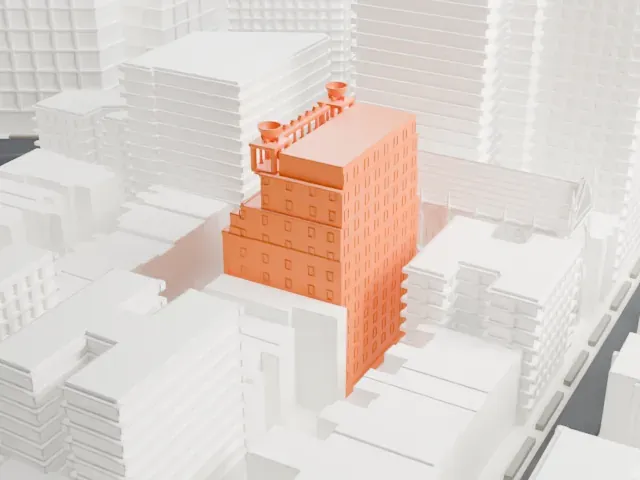 East
-
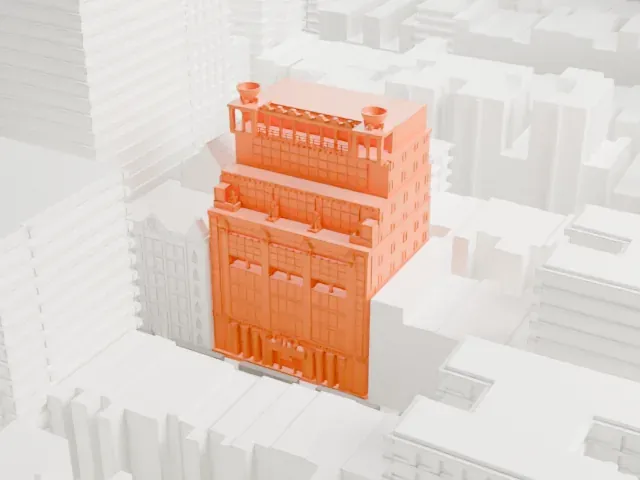 South
-
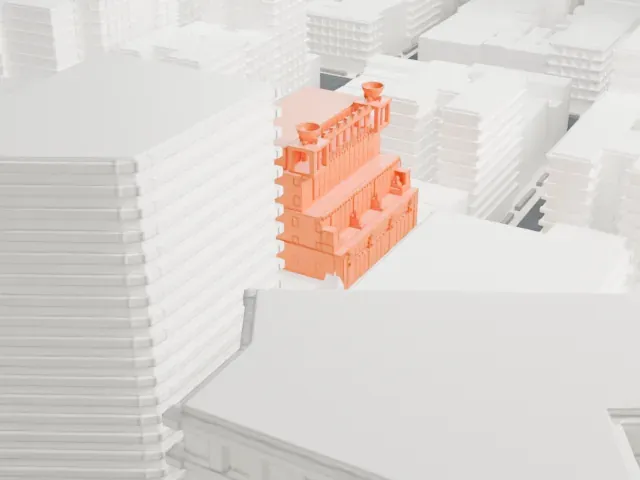 West
- On a 160 mm print
- 15 mm
- Scale
- 1:3,750
15 mm tall on a 160 mm print
Make this print opens the generator on a 600 m square around the landmark. Buildings print at close to true scale, so the landmark grows with the print size.
- Urns and rooftop colonnade
Two bowl-shaped urns and a row of slim columns crown the top. Print friendly adapts these thin parts to the print scale; Full detail keeps them for larger prints. Print slowly near the top.
- Setbacks and relief on the facade
The stepped front carries small figures and fine relief, so a layer height of 0.12–0.16 mm helps keep the steps and carved detail crisp. A bigger print size gives them more room.
- One piece with the ground
The Pythian Temple is joined to the ground in the exported file, and the four-side check found no floating parts, so nothing needs gluing.
- Pick the detail for your nozzle
In the Buildings settings, set Landmark detail to Print friendly to adapt thin parts and small details to the print scale. Full detail keeps every modeled feature, for larger prints or a finer nozzle.
- Colors
Buildings, roads, water and ground arrive as separate filament slots in the 3MF. The Pythian Temple takes the building color.
- File format
You get a 3MF for Bambu Studio, OrcaSlicer or PrusaSlicer. Any of them can save it as STL if you need one.
About the Pythian Temple
Between Columbus Avenue and Broadway, at 135 West 70th Street in Manhattan's Lincoln Square neighborhood, stands the Pythian Temple, a historic Knights of Pythias building. Built in 1927, it gave the 120 Pythian lodges across New York City a place to meet. Later it housed a recording studio for many years. Thomas W. Lamb, an architect with a reputation for theaters, drew it up as a flamboyant Egyptian Revival temple in the Art Deco style.
The midblock facade has Egyptian forms, seated Pharaonic figures, colored columns and a series of setbacks. Architectural historian Christopher Gray described a ground-floor colonnade centered on a glazed blue terra-cotta entry pavilion, and a windowless middle section that steps back about 100 feet up. Two more setbacks rise to a bright Egyptian-style colonnade and giant urns held up by teams of oxen in yellow, red and green. Inside were 13 lodge rooms, an auditorium and a theater with Broadway-quality staging, plus a bowling alley and a gym.
In the early 1940s, as the order lost popularity, the Pythians leased space to Decca Records, which turned a large third-floor auditorium into a recording studio. Bill Haley and His Comets recorded "Rock Around the Clock" there on April 12, 1954. Buddy Holly's final studio sessions took place at the Pythian on October 21, 1958. In 1986 the architect David Gura converted the building to residential use, and its facade was restored in 2008–9.
About this model
The Pythian Temple is one of more than 4,300 landmark models in Mini Skyline. They are made with AI, and each one is checked from four sides in its real surroundings before release. Everything around it is built from OpenStreetMap and Overture map data. If you would rather print the shape from map data, turn off Landmark models in the Buildings settings.
Same skyline