3D print the Santa Apolónia railway station
A free, printable model of Santa Apolónia railway station, a long building beside the waterfront, with its tracks, roads and the surrounding streets, generated from real map data in your browser.
-
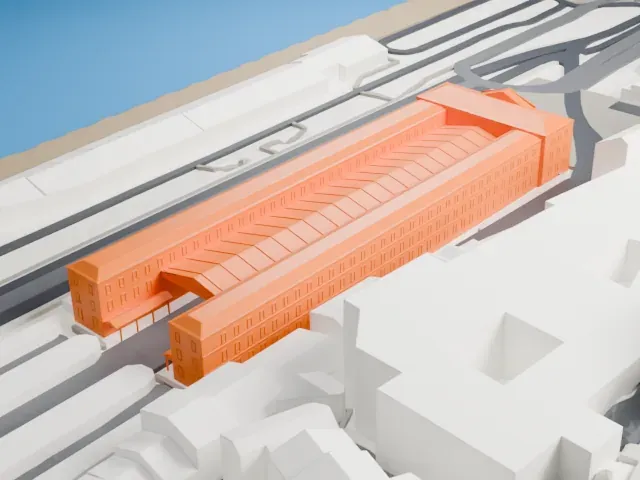 North
-
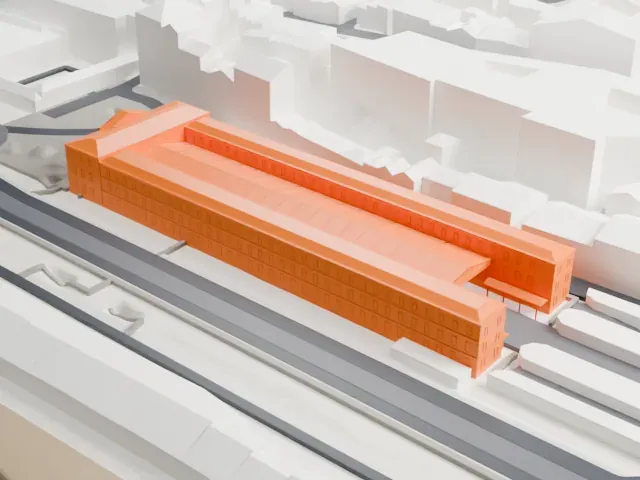 East
-
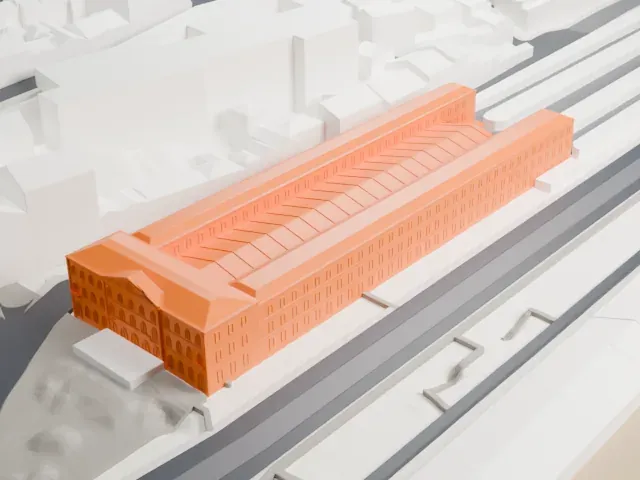 South
-
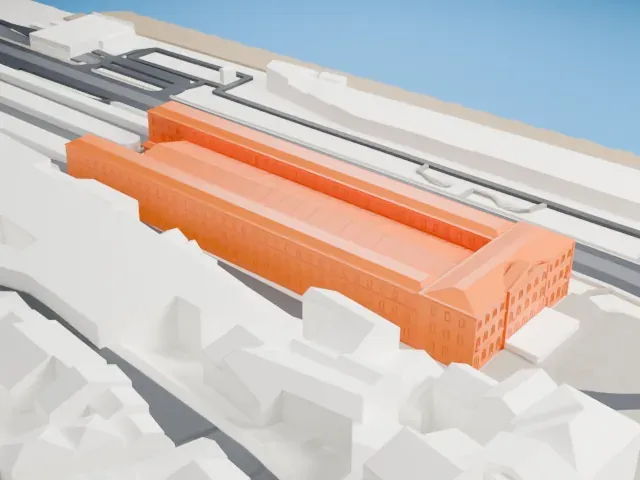 West
The model you print
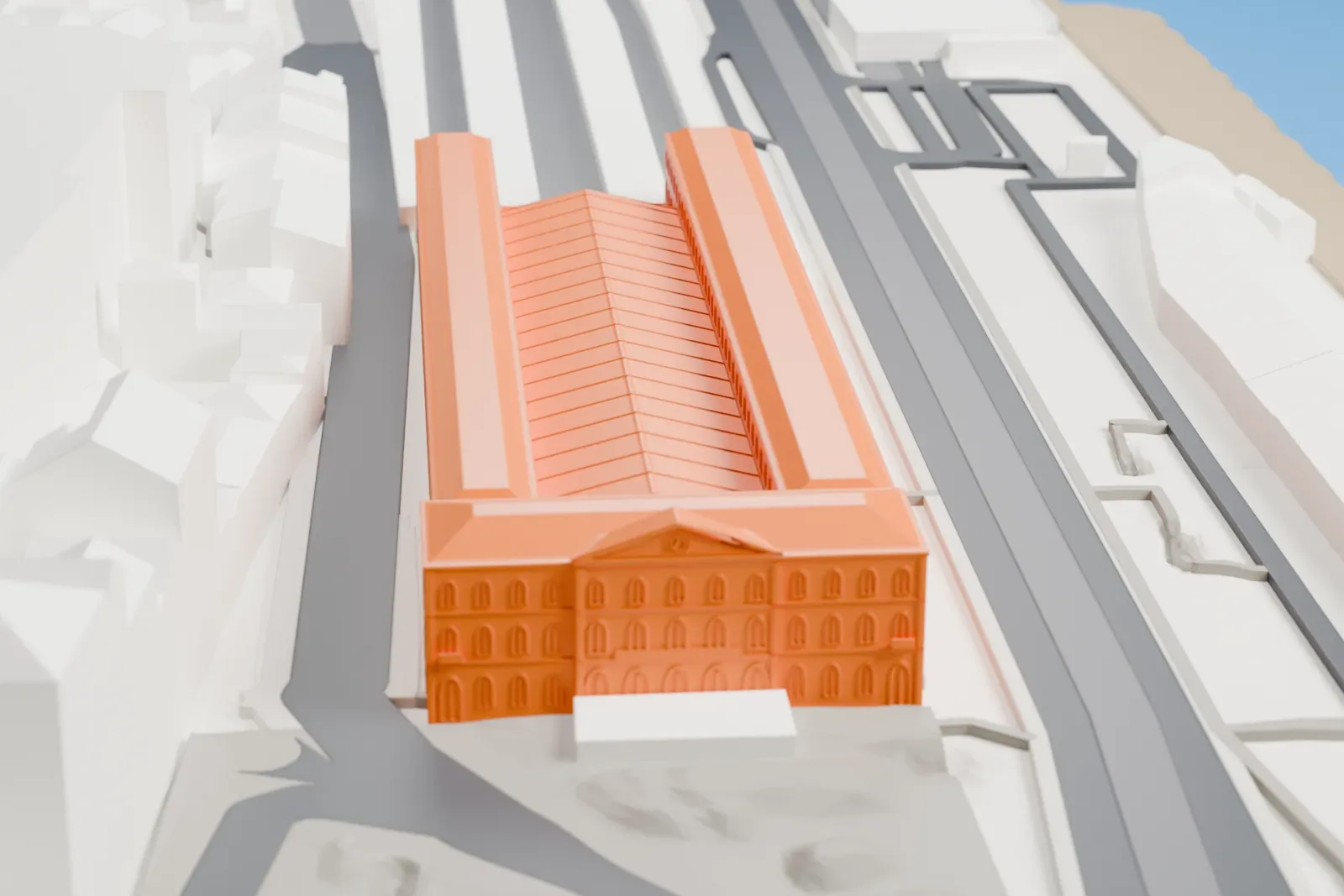
Santa Apolónia railway station in 3D
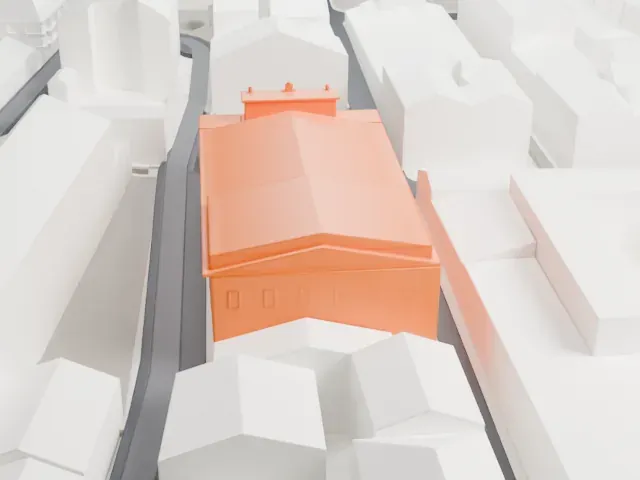
The landmark on its own, at its size on a 160 mm print. Print friendly thickens thin parts for a 0.4 mm nozzle; Full detail keeps every part.
- On a 160 mm print
- 6 mm
- Scale
- 1:3,750
6 mm tall on a 160 mm print
Make this print opens the generator on a 600 m square around the landmark. Buildings print at close to true scale, so the landmark grows with the print size.
- Long, ridged train shed
The long roof carries a fine ridged pattern along the whole building. A 0.12–0.16 mm layer height keeps it crisp, and a larger print size keeps the ridges from blurring.
- Low, wide model
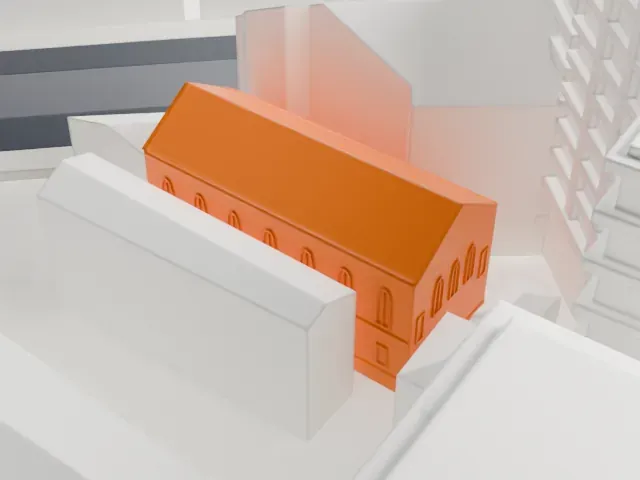
Because the station is long and low, a larger print size helps the façade windows and doorways stay readable. Print friendly adapts small details; Full detail keeps them.
- One piece with the ground
The Santa Apolónia railway station is joined to the ground in the exported file, and the four-side check found no floating parts, so nothing needs gluing.
- Pick the detail for your nozzle
In the Buildings settings, set Landmark detail to Print friendly to adapt thin parts and small details to the print scale. Full detail keeps every modeled feature, for larger prints or a finer nozzle.
- Colors
Buildings, roads, water and ground arrive as separate filament slots in the 3MF. The Santa Apolónia railway station takes the building color.
- File format
You get a 3MF for Bambu Studio, OrcaSlicer or PrusaSlicer. Any of them can save it as STL if you need one.
About the Santa Apolónia railway station
Portugal's oldest railway terminus, Santa Apolónia lies in central Lisbon, in São Vicente civil parish, on the north bank of the Tagus River in the historic Alfama district. The station was inaugurated on May 1, 1865. Angel Arribas Ugarte designed it, with João Evangelista de Abreu as director, Lecrenier as chief engineer, and the company Oppermann as builder.
The story goes back to December 1844, when Companhia das Obras Públicas was founded to build a rail line from Lisbon to Spain, together with a station linking rail and sea services. It went by the names Cais da América and Cais da Europa. For the passenger terminal the government bought the old Convent of Santa Apolónia, and the former army arsenal was demolished. Land had to be reclaimed along the Tagus from the start.
The building is U-shaped, with a short façade on Rua Texeira Lopes and long parallel wings around the rail platforms. The symmetrical neoclassical front has five large rounded doorways and a triangular pediment with a clock. Behind it, the great nave is approximately 117 m (384 ft) long, 24.6 m (81 ft) wide and 13 m (43 ft) tall, a wrought-iron and glass lattice of a type common in the 19th century.
About this model
The Santa Apolónia railway station is one of more than 6,500 landmark models in Mini Skyline. They are made with AI, and each one is checked in its real surroundings before release. Each model is written as code from public descriptions, plans, photographs and aerial views used only as references; no image or third-party model is copied into it. Everything around it is built from OpenStreetMap and Overture map data. Rights in the building itself, its name and any brands on it are not granted by Mini Skyline; clear them separately before you sell prints. If you would rather print the shape from map data, turn off Landmark models in the Buildings settings.
Mini Skyline is not affiliated with, or endorsed by, the owners of this building or its names and marks.
Same skyline