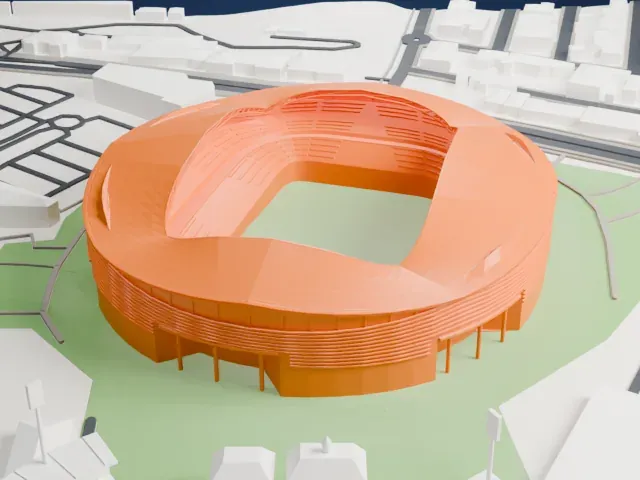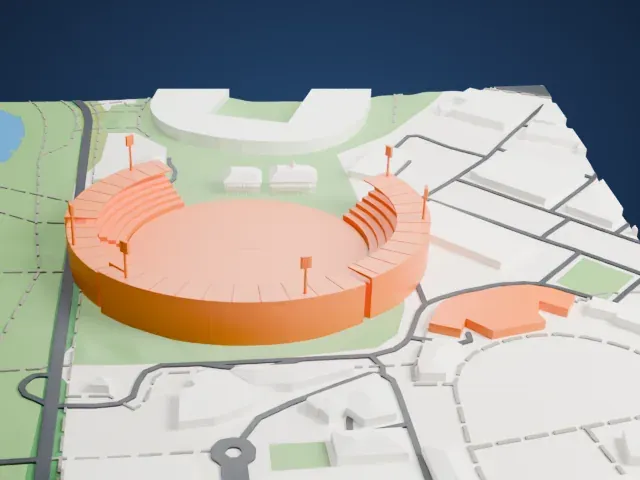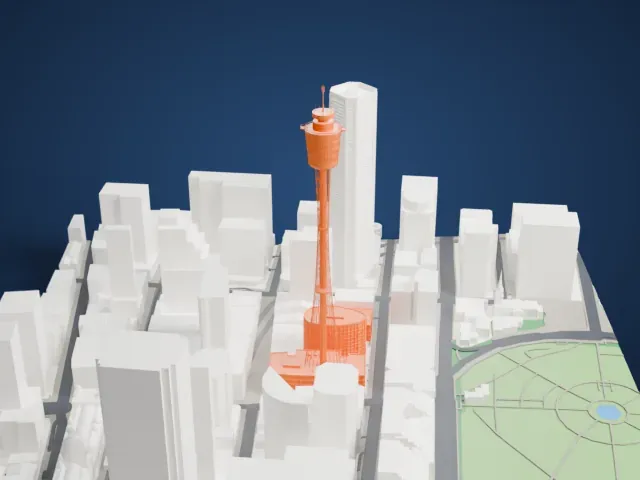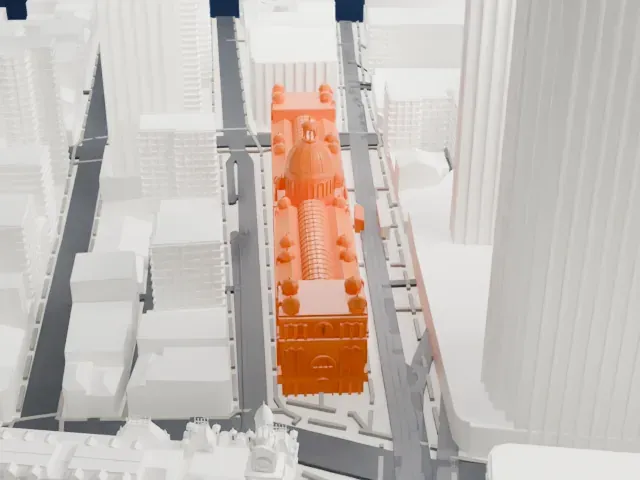
Sydney Opera House in 3D
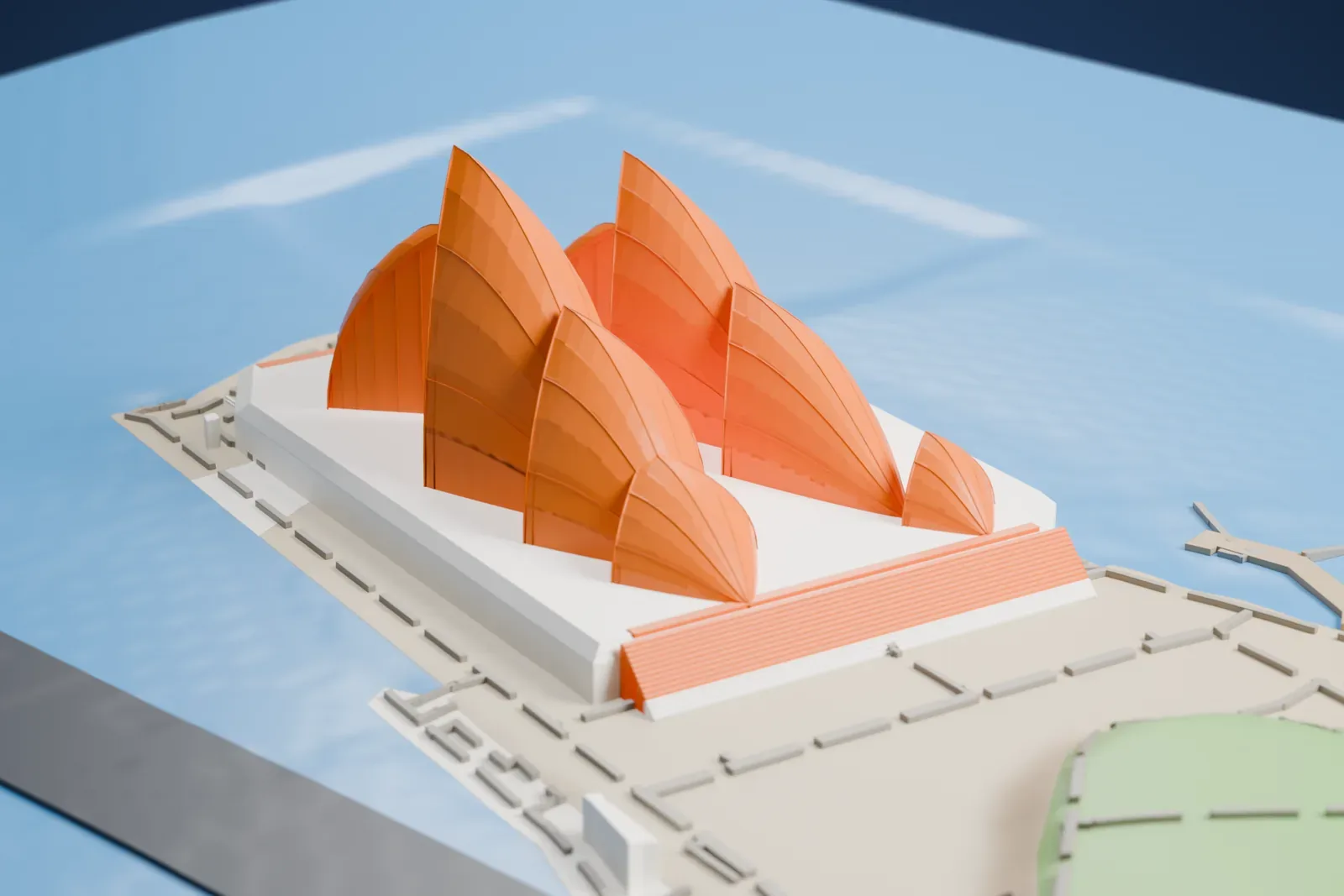
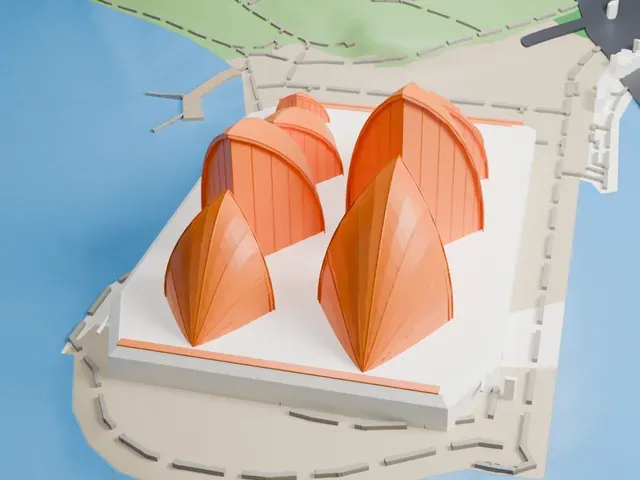
The Sydney Opera House appears in city models you make here; its design may still be protected, so it isn't offered as a separate download.
-
 North
-
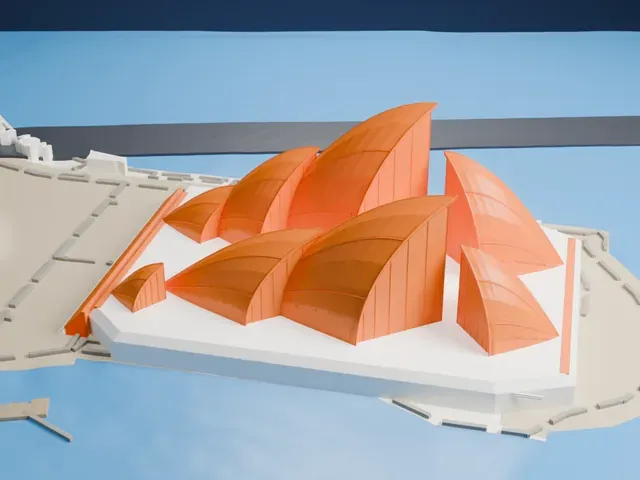 East
-
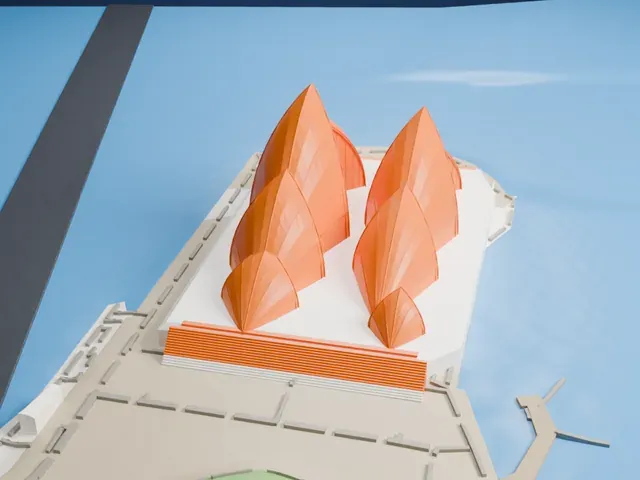 South
-
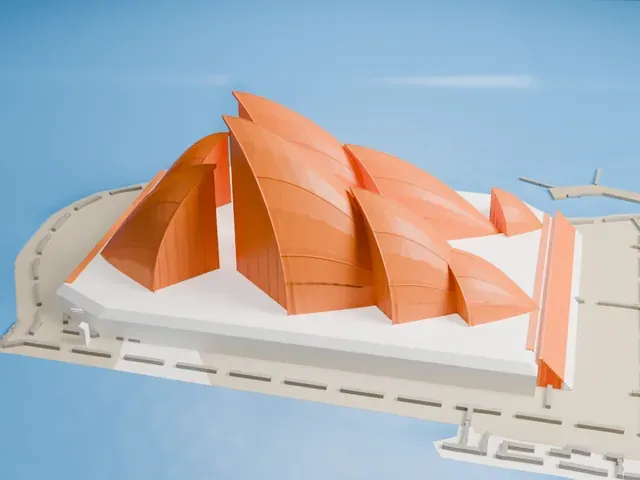 West
Copyright notice
The design of Sydney Opera House may still be protected by copyright. It appears in the city models you make here, but it is not offered as a separate model.
- On a 160 mm print
- 18 mm
- Scale
- 1:3,750
18 mm tall on a 160 mm print
Make this print opens the generator on a 600 m square around the landmark. Buildings print at close to true scale, so the landmark grows with the print size.
- Sharp sail peaks
The shells rise to thin, curved ridges. Layers of 0.12 to 0.16 mm keep the peaks crisp, and a larger print keeps the thin edges distinct.
- Smooth curved surfaces
Tall curved shells can show stepping between layers. Thin layers soften it, and Print friendly adapts the narrow gaps between shells to your print scale.
- One piece with the ground
The Sydney Opera House is joined to the ground in the exported file, and the four-side check found no floating parts, so nothing needs gluing.
- Pick the detail for your nozzle
In the Buildings settings, set Landmark detail to Print friendly to adapt thin parts and small details to the print scale. Full detail keeps every modeled feature, for larger prints or a finer nozzle.
- Colors
Buildings, roads, water and ground arrive as separate filament slots in the 3MF. The Sydney Opera House takes the building color.
- File format
You get a 3MF for Bambu Studio, OrcaSlicer or PrusaSlicer. Any of them can save it as STL if you need one.
About the Sydney Opera House
The Sydney Opera House is a performing arts center with multiple venues, in New South Wales, Australia. It takes up all of Bennelong Point on Sydney Harbour, which lies between Sydney Cove and Farm Cove, next to downtown Sydney and the Royal Botanic Garden. It is widely regarded as a masterpiece of 20th-century architecture. Danish architect Jørn Utzon designed it, and an Australian team headed by Peter Hall completed it. Queen Elizabeth II formally opened the building on October 20, 1973. Utzon had won the international design competition 16 years earlier, in 1957.
A monumental podium carries the roofs, which are large precast concrete "shells," each made from sections of a sphere with a 75.2 m (246 ft 8.6 in) radius. Its footprint is 1.8 hectares (4.4 acres), with a length of 183 m (600 ft) and a width of 120 m (394 ft) at the widest point. It rests on 588 concrete piers, reaching 25 m (82 ft) beneath sea level, and its highest roof point is 67 m above sea level. The shells look uniformly white from a distance, but they are tiled in a chevron pattern made from 1,056,006 tiles, some glossy white and some matte cream.
Several performance venues share the building and together host over 1,800 performances a year for more than 1.4 million people. The Concert Hall, home of the Sydney Symphony Orchestra, has 2,679 seats and a Grand Organ with over 10,000 pipes. Utzon drew on palm leaves, rivers, walnuts, shells, clouds and bird wings, among other natural shapes. In 2007 the building gained UNESCO World Heritage Site status.
About this model
The Sydney Opera House is one of more than 5,500 landmark models in Mini Skyline. They are made with AI, and each one is checked in its real surroundings before release. Each model is written as code from public descriptions, plans, photographs and aerial views used only as references; no image or third-party model is copied into it. Everything around it is built from OpenStreetMap and Overture map data. Rights in the building itself, its name and any brands on it are not granted by Mini Skyline; clear them separately before you sell prints. If you would rather print the shape from map data, turn off Landmark models in the Buildings settings.
Mini Skyline is not affiliated with, or endorsed by, the owners of this building or its names and marks.
Same skyline