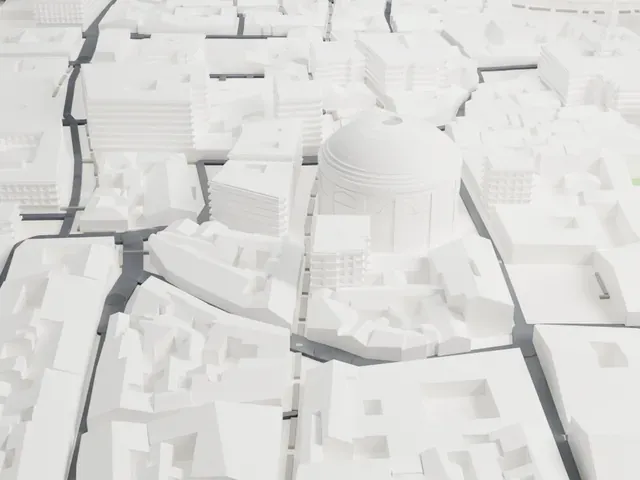
3D print Teatro dell'Opera di Roma
A free, printable 3D model of Teatro dell'Opera di Roma and the surrounding streets and buildings, generated from real map data in your browser.
-
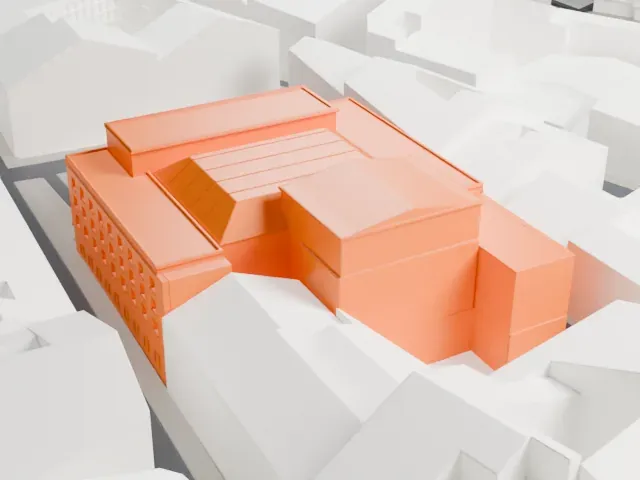 North
-
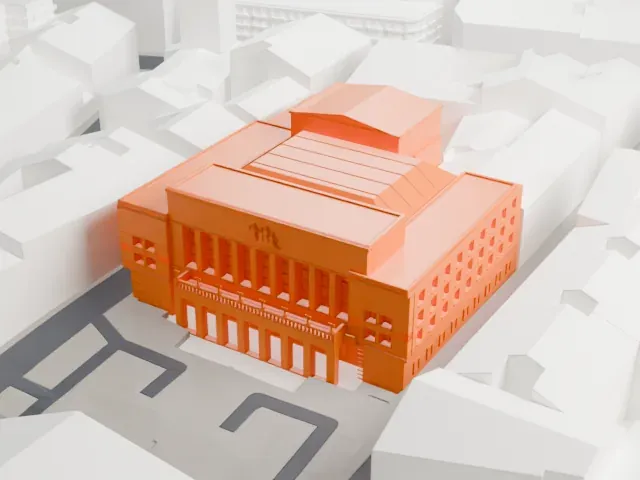 East
-
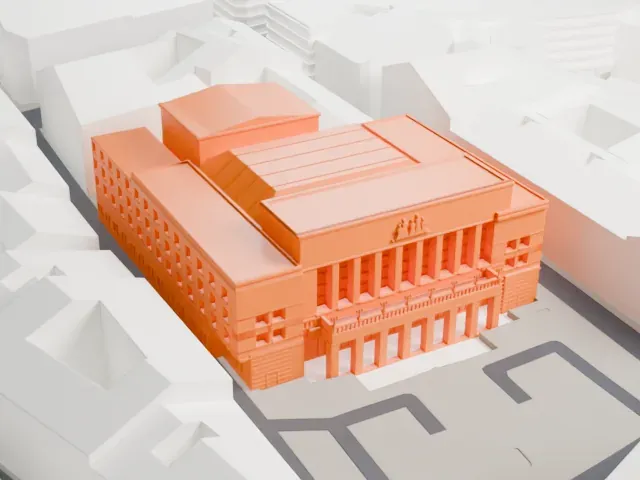 South
-
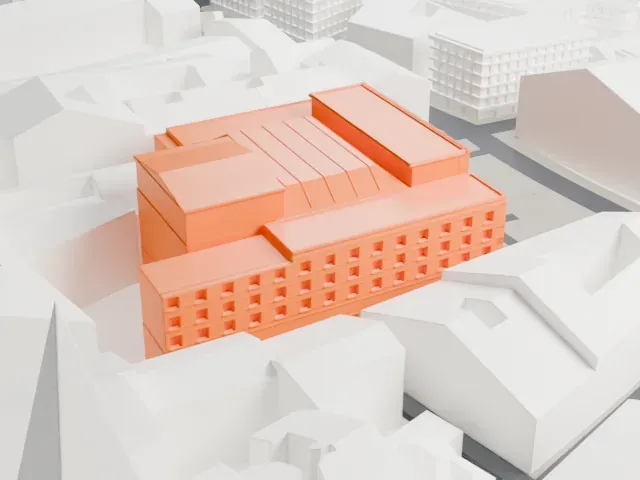 West
The model you print
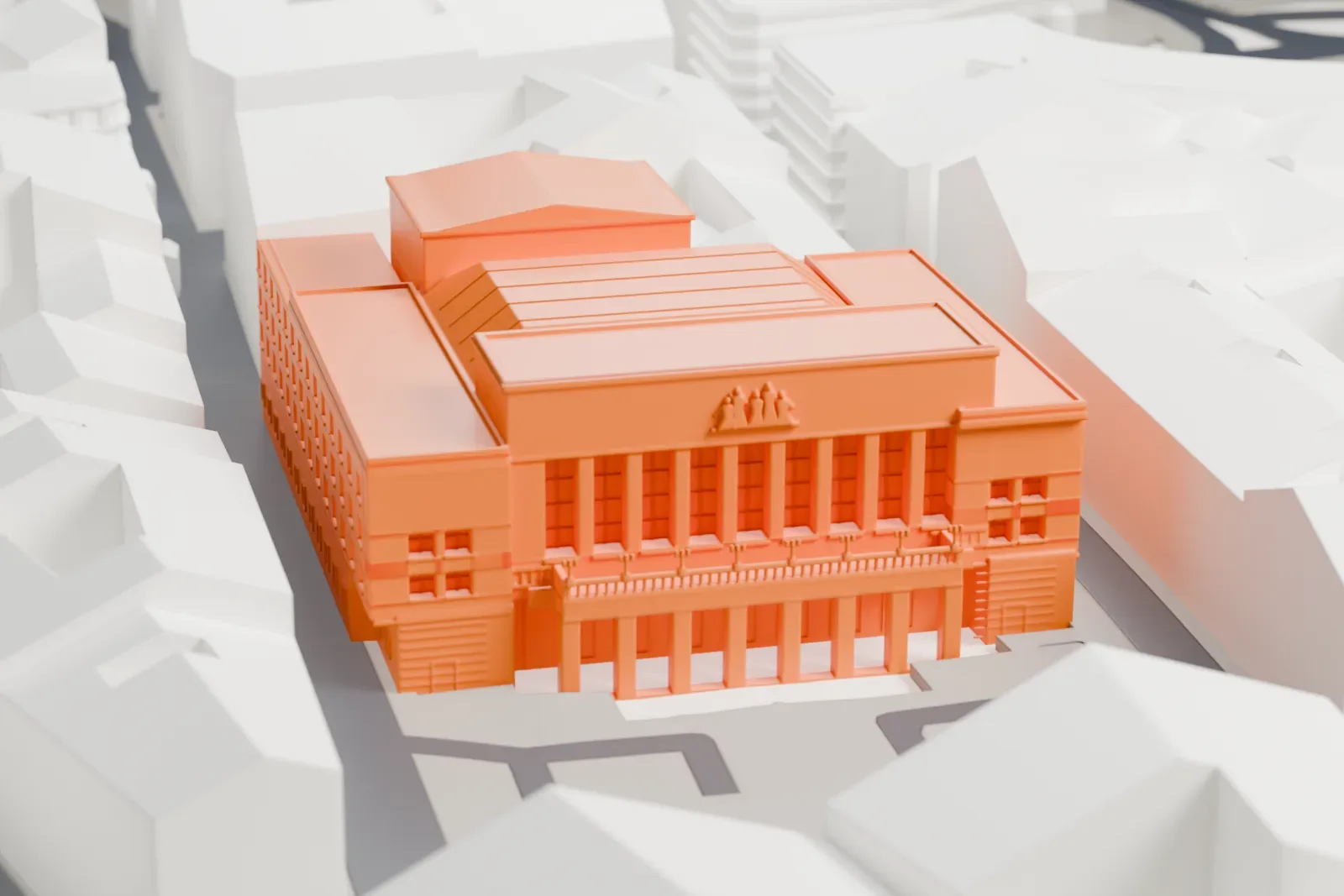
Teatro dell'Opera di Roma in 3D
The landmark on its own, at its size on a 160 mm print. Print friendly thickens thin parts for a 0.4 mm nozzle; Full detail keeps every part.
- On a 160 mm print
- 8 mm
- Scale
- 1:3,750
8 mm tall on a 160 mm print
Make this print opens the generator on a 600 m square around the landmark. Buildings print at close to true scale, so the landmark grows with the print size.
- Roofline and facade detail
Roof edges and facade details can blur at small print sizes. Full detail with a larger print size and a 0.12–0.16 mm layer height keeps more of them crisp.
- One piece with the ground
Teatro dell'Opera di Roma is joined to the ground in the exported file, and the four-side check found no floating parts, so nothing needs gluing.
- Pick the detail for your nozzle
In the Buildings settings, set Landmark detail to Print friendly to adapt thin parts and small details to the print scale. Full detail keeps every modeled feature, for larger prints or a finer nozzle.
- Colors
Buildings, roads, water and ground arrive as separate filament slots in the 3MF. Teatro dell'Opera di Roma takes the building color.
- File format
You get a 3MF for Bambu Studio, OrcaSlicer or PrusaSlicer. Any of them can save it as STL if you need one.
About Teatro dell'Opera di Roma
The Teatro dell'Opera di Roma (the Rome Opera House) stands in Rome, Italy. It opened on November 27, 1880, as the Costanzi Theatre, named for the contractor Domenico Costanzi, who financed it. He commissioned the Milanese architect Achille Sfondrini, a specialist in theaters. The building took eighteen months to complete and occupies ground that held the house of Heliogabalus in ancient times. The first performance was Rossini's Semiramide.
Sfondrini focused on acoustics and designed the interior as a "resonance chamber", most evident in its horseshoe shape. The original house seated 2,212, with three tiers of boxes, an amphitheater and two separate galleries, beneath a dome decorated with frescoes by Annibale Brugnoli. The theater staged world premieres including Pietro Mascagni's Cavalleria rusticana on May 17, 1890, and Giacomo Puccini's Tosca on January 14, 1900.
The Rome City Council bought the theater in November 1926 and renamed it Teatro Reale dell'Opera. The architect Marcello Piacentini led a partial rebuilding, and the house reopened on February 27, 1928. Piacentini was commissioned again for a remodeling in 1958, which radically altered the style of the facade, entrance and foyer. The present house seats 1,560, and the company stages its summer performances at the outdoor theater at the Baths of Caracalla.
About this model
Teatro dell'Opera di Roma is one of more than 5,500 landmark models in Mini Skyline. They are made with AI, and each one is checked from four sides in its real surroundings before release. Each model is written as code from public descriptions, plans, photographs and aerial views used only as references; no image or third-party model is copied into it. Everything around it is built from OpenStreetMap and Overture map data. Rights in the building itself, its name and any brands on it are not granted by Mini Skyline; clear them separately before you sell prints. If you would rather print the shape from map data, turn off Landmark models in the Buildings settings.
Same skyline