3D print Yonghe Temple
A free, printable model of Yonghe Temple's tiled-roof hall and the dense streets and buildings around it in Beijing, generated from real map data in your browser.
-
 North
-
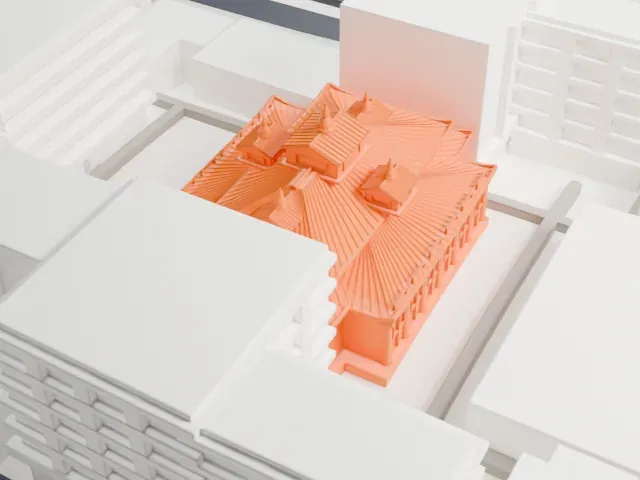 East
-
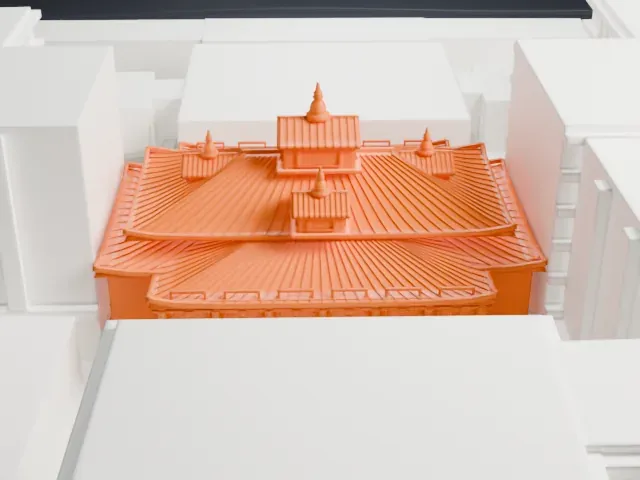 South
-
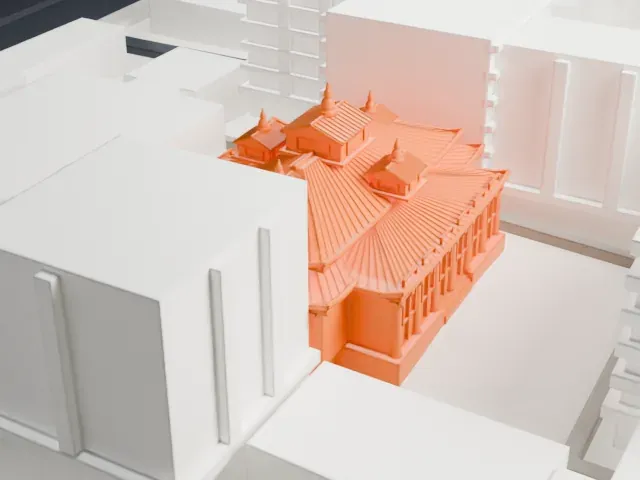 West
The model you print
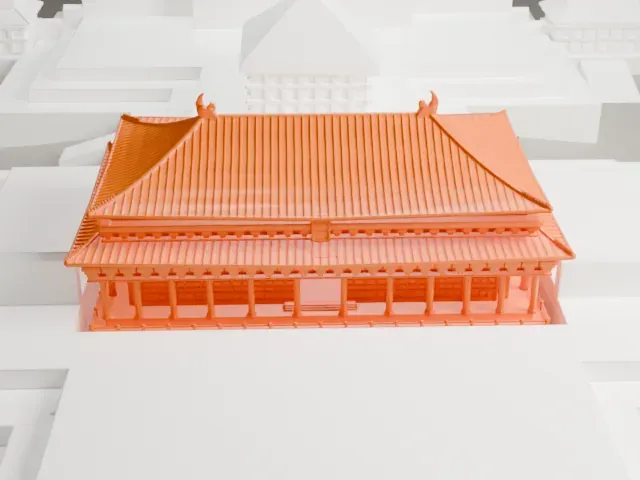
Yonghe Temple in 3D
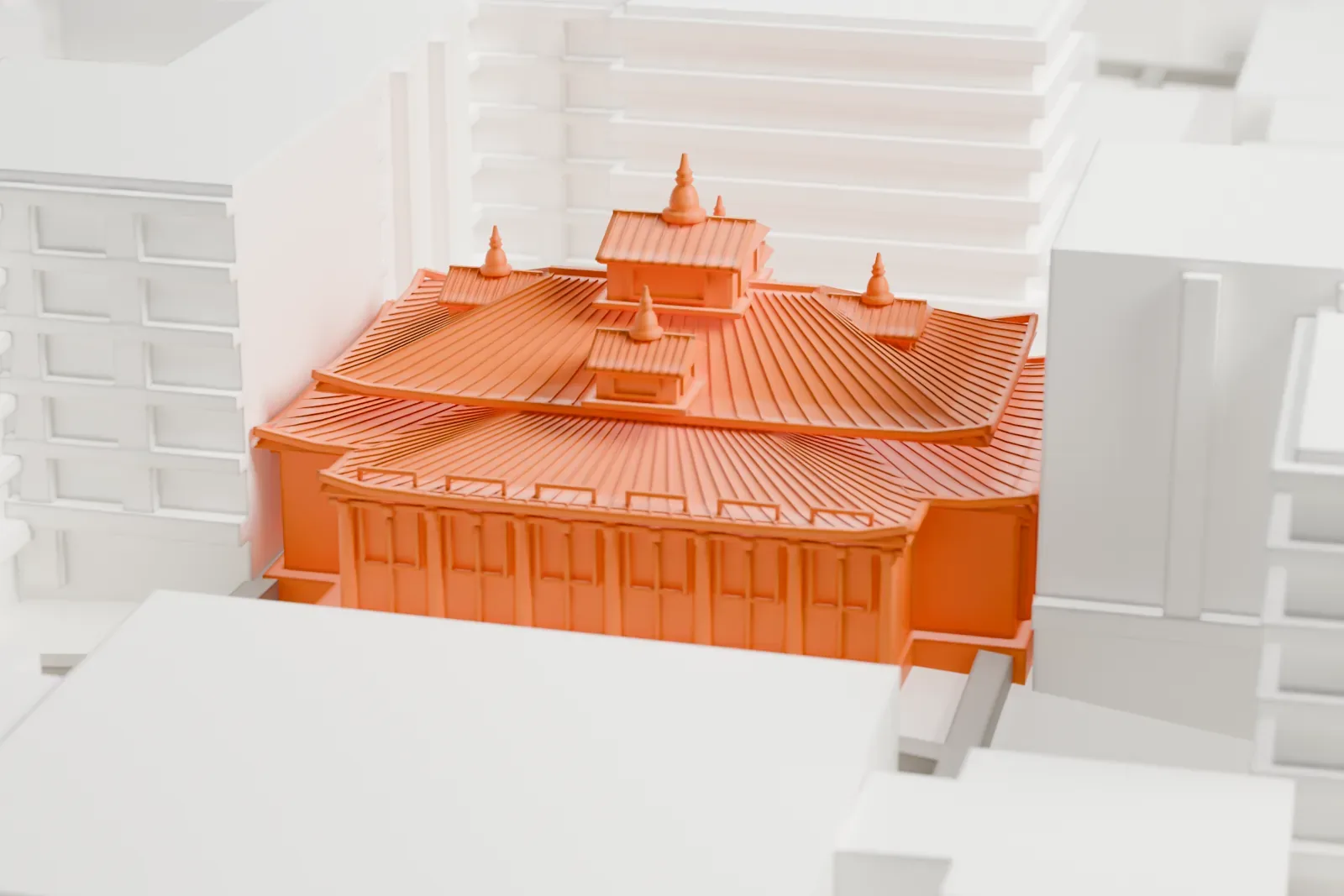
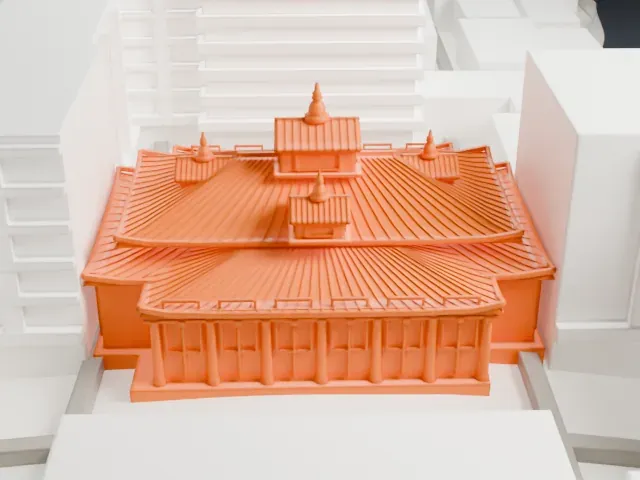
The landmark on its own, at its size on a 160 mm print. Print friendly thickens thin parts for a 0.4 mm nozzle; Full detail keeps every part.
- On a 160 mm print
- 6 mm
- Scale
- 1:3,750
6 mm tall on a 160 mm print
Make this print opens the generator on a 600 m square around the landmark. Buildings print at close to true scale, so the landmark grows with the print size.
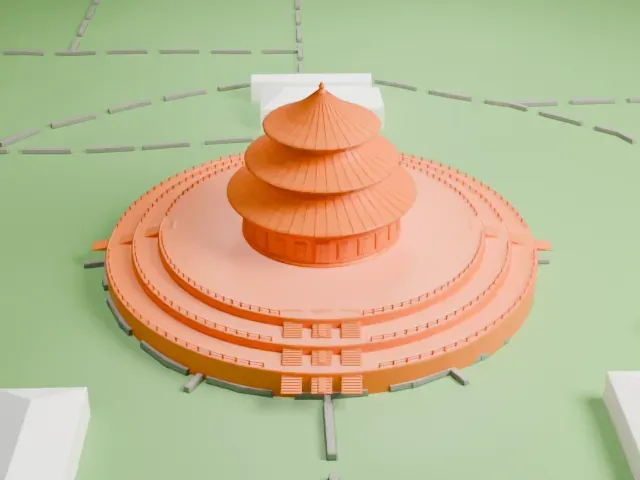
- Layered tiled roofs
The stacked, ribbed roofs and the small pointed finials on top are fine details. Print friendly adapts them; Full detail keeps them at larger sizes, ideally with 0.12-0.16 mm layers.
- One piece with the ground
Yonghe Temple is joined to the ground in the exported file, and the four-side check found no floating parts, so nothing needs gluing.
- Pick the detail for your nozzle
In the Buildings settings, set Landmark detail to Print friendly to adapt thin parts and small details to the print scale. Full detail keeps every modeled feature, for larger prints or a finer nozzle.
- Colors
Buildings, roads, water and ground arrive as separate filament slots in the 3MF. Yonghe Temple takes the building color.
- File format
You get a 3MF for Bambu Studio, OrcaSlicer or PrusaSlicer. Any of them can save it as STL if you need one.
About Yonghe Temple
Yonghe Temple is a Gelug-school Tibetan Buddhist temple and monastery at 12 Yonghegong Street in Beijing's Dongcheng District, China. It is also called the Yonghe Lamasery or the Lama Temple. Its buildings and artwork combine Han Chinese and Tibetan styles, and it is among the biggest monasteries of Tibetan Buddhism in China proper. In the middle and late Qing dynasty no Buddhist temple in the country ranked higher.
Building work began in 1694, under the Qing dynasty, on ground once occupied by a Ming dynasty official residence for court eunuchs. Yinzhen (Prince Yong), the Kangxi Emperor's fourth son, lived there, and he ascended in 1722 as the Yongzheng Emperor. The Qianlong Emperor gave the temple imperial status by swapping its turquoise tiles for yellow ones, a color kept for the emperor. In 1744 he issued an edict converting it into a lamasery.
The temple follows a north–south central axis 480 meters (1,570 ft) long, with five main halls separated by courtyards. Following the end of the Chinese Civil War in 1949, it became a national monument and stayed shut for 32 years, reopening to the public in 1981.
About this model
Yonghe Temple is one of more than 6,500 landmark models in Mini Skyline. They are made with AI, and each one is checked in its real surroundings before release. Each model is written as code from public descriptions, plans, photographs and aerial views used only as references; no image or third-party model is copied into it. Everything around it is built from OpenStreetMap and Overture map data. Rights in the building itself, its name and any brands on it are not granted by Mini Skyline; clear them separately before you sell prints. If you would rather print the shape from map data, turn off Landmark models in the Buildings settings.
Mini Skyline is not affiliated with, or endorsed by, the owners of this building or its names and marks.
Same skyline