3D print the Ateshgah of Baku
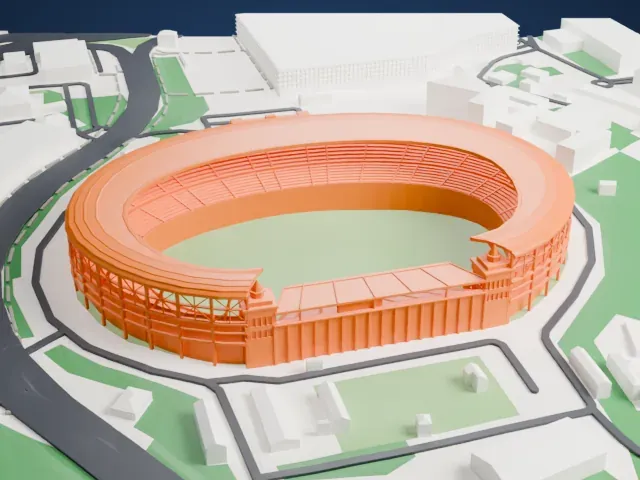
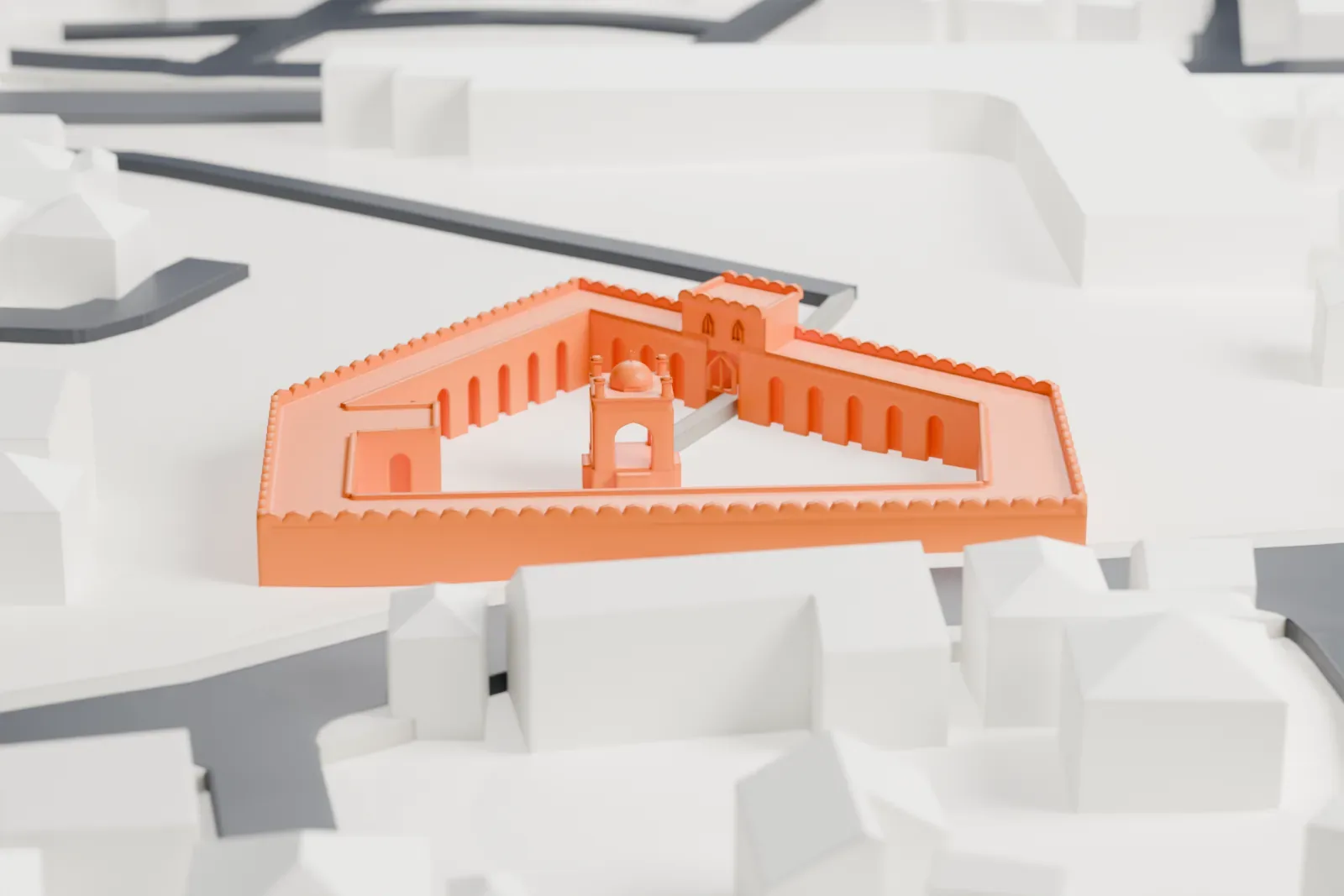
A free, printable model of the Ateshgah of Baku, a walled pentagonal courtyard with a central pavilion, set among the surrounding houses and roads, generated from real map data in your browser.
-
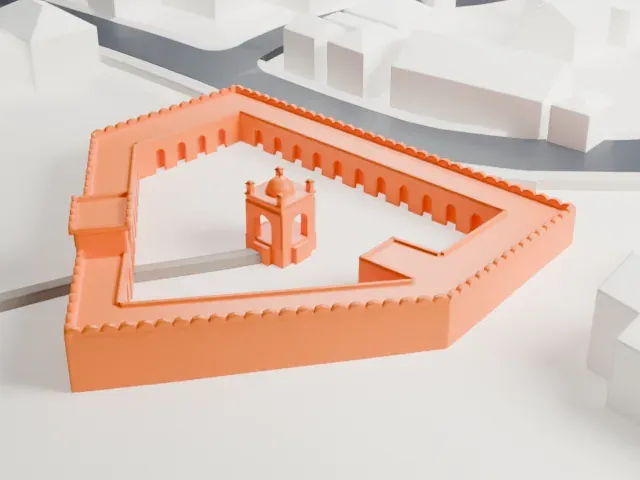 North
-
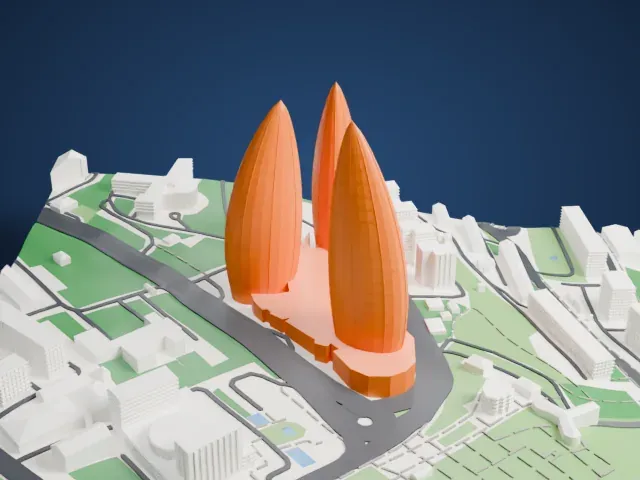
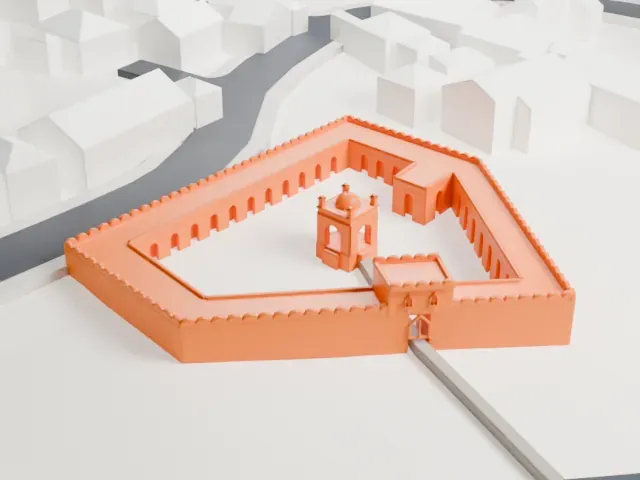 East
-
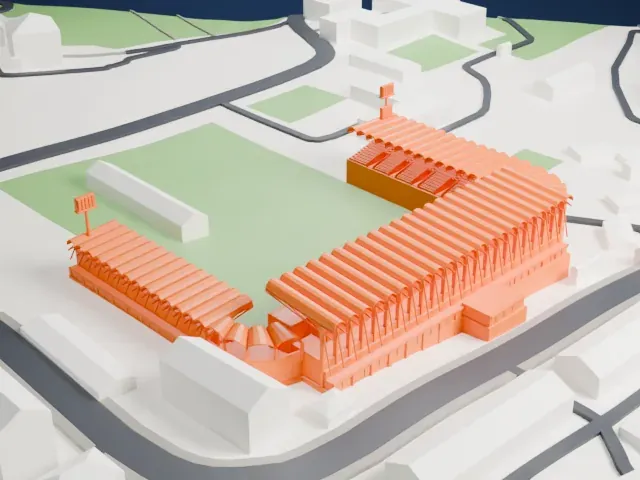
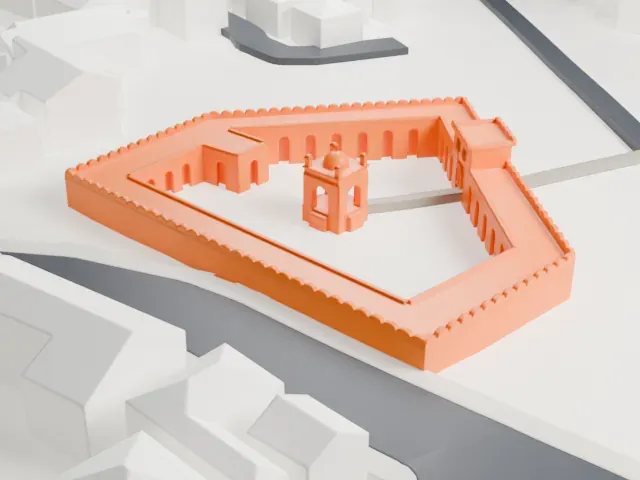 South
-
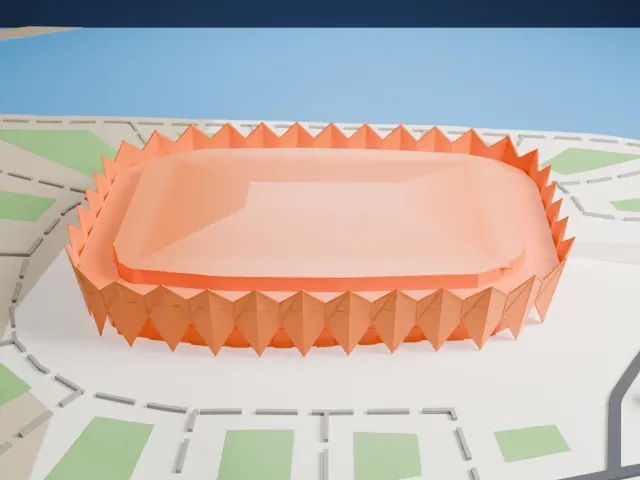
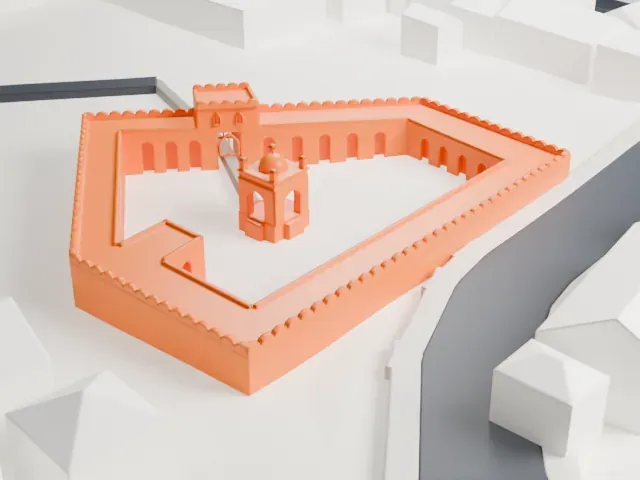 West
The model you print
Ateshgah of Baku in 3D
The landmark on its own, at its size on a 160 mm print. Print friendly thickens thin parts for a 0.4 mm nozzle; Full detail keeps every part.
- On a 160 mm print
- 3 mm
- Scale
- 1:3,750
3 mm tall on a 160 mm print
Make this print opens the generator on a 600 m square around the landmark. Buildings print at close to true scale, so the landmark grows with the print size.
- Thin battlements and arches
The walls are topped with a row of tiny battlements, and the courtyard has a small open pavilion with arches. These are fine details, so use a larger print size or Full detail with a fine nozzle.
- One piece with the ground
The Ateshgah of Baku is joined to the ground in the exported file, and the four-side check found no floating parts, so nothing needs gluing.
- Pick the detail for your nozzle
In the Buildings settings, set Landmark detail to Print friendly to adapt thin parts and small details to the print scale. Full detail keeps every modeled feature, for larger prints or a finer nozzle.
- Colors
Buildings, roads, water and ground arrive as separate filament slots in the 3MF. The Ateshgah of Baku takes the building color.
- File format
You get a 3MF for Bambu Studio, OrcaSlicer or PrusaSlicer. Any of them can save it as STL if you need one.
About the Ateshgah of Baku
Surakhany town is home to the Ateshgah of Baku, a syncretic temple that many call the Fire Temple of Baku. Its name comes from Persian words meaning house or place of fire. Five sides enclose the complex, with monks' cells around a central courtyard that holds a four-pillared altar. Its construction spans the 17th and 18th centuries.
The site sits on top of a natural gas field that is now exhausted. Natural fires once burned there as gas escaped from seven vents at the surface. The complex lay abandoned from the late 19th century, and the natural eternal flame went out in 1969, following almost a hundred years of oil and gas extraction around it.
It also became a place of pilgrimage and philosophy for Zoroastrians from the northwestern Indian subcontinent; they traded with the Caspian area. It became a museum in 1975, was nominated for UNESCO's World Heritage list in 1998, and received the status of a state historical-architectural reserve on December 19, 2007.
About this model
The Ateshgah of Baku is one of more than 6,500 landmark models in Mini Skyline. They are made with AI, and each one is checked in its real surroundings before release. Each model is written as code from public descriptions, plans, photographs and aerial views used only as references; no image or third-party model is copied into it. Everything around it is built from OpenStreetMap and Overture map data. Rights in the building itself, its name and any brands on it are not granted by Mini Skyline; clear them separately before you sell prints. If you would rather print the shape from map data, turn off Landmark models in the Buildings settings.
Mini Skyline is not affiliated with, or endorsed by, the owners of this building or its names and marks.
Same skyline