3D print the Gateway of India
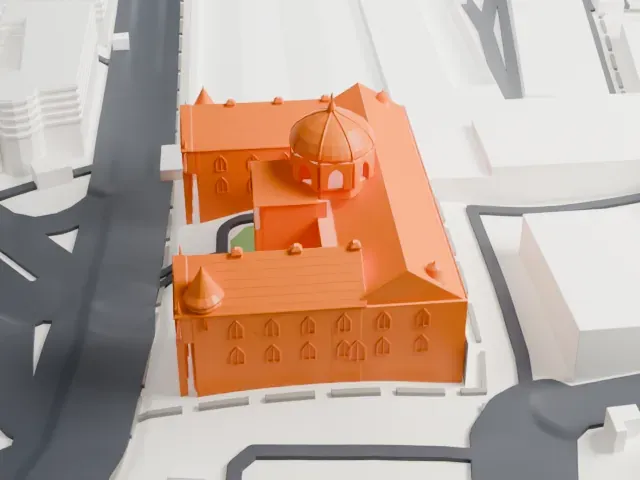
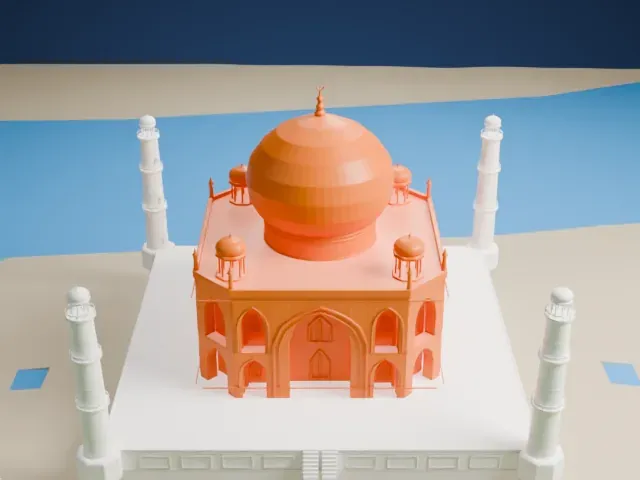
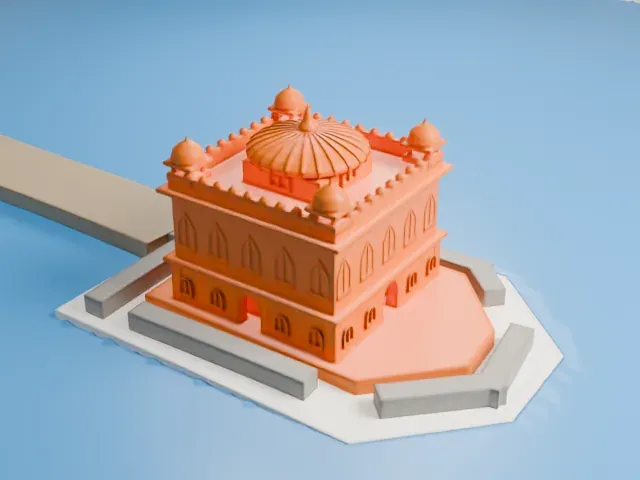
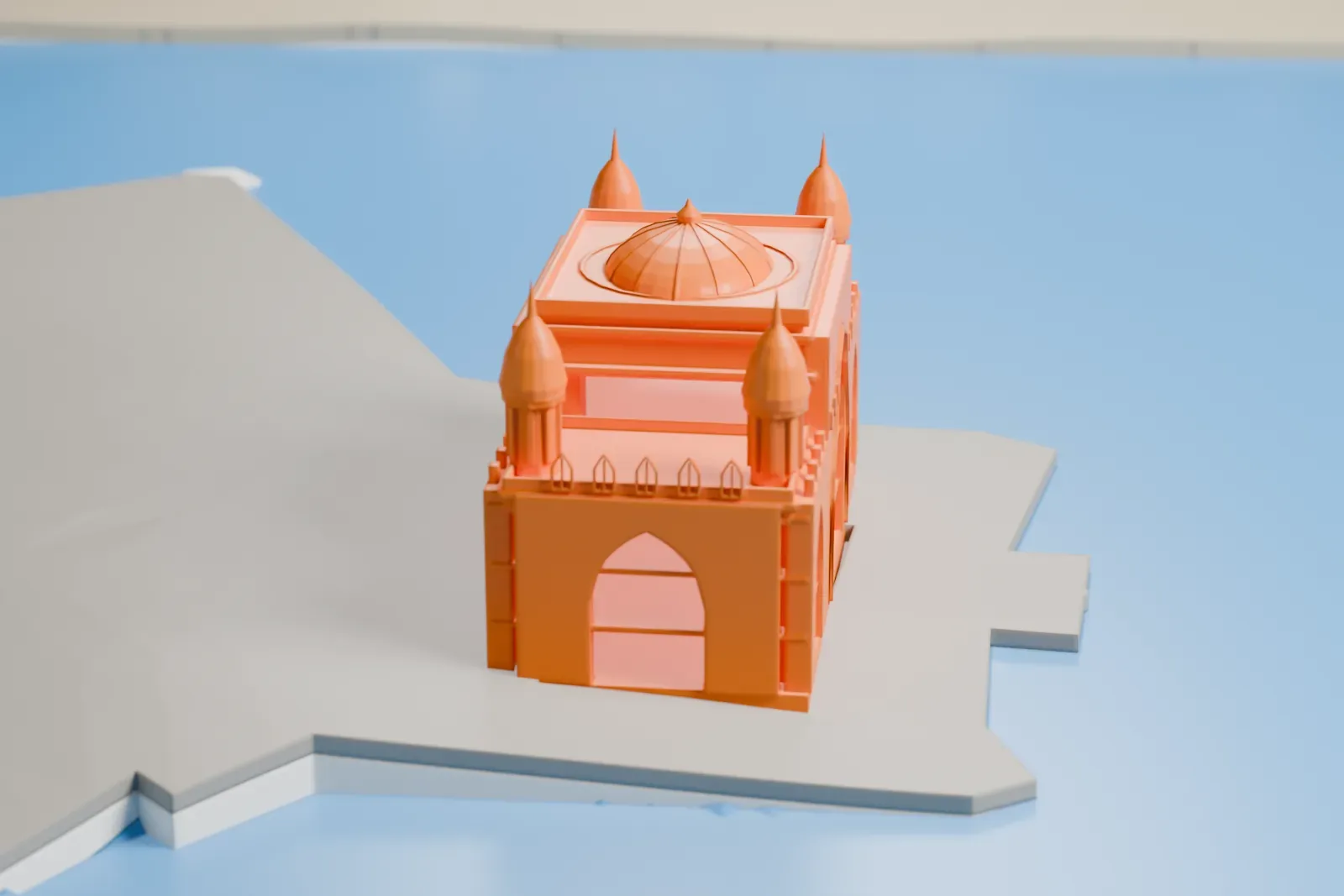
A free, printable model of the Gateway of India, its central dome and four turrets, with the waterfront and open water around it, generated from real map data in your browser.
-
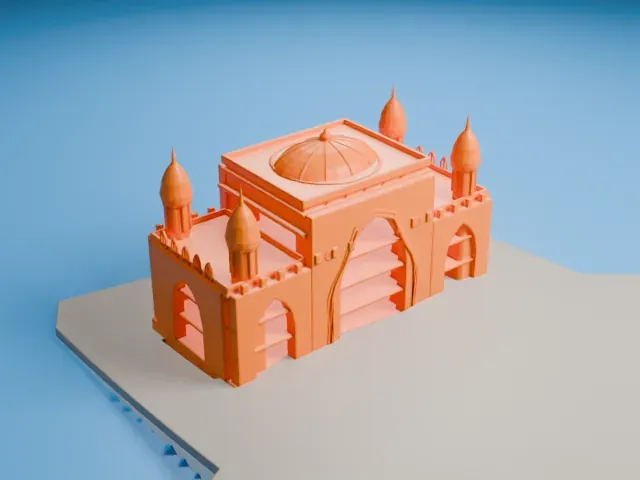 North
-
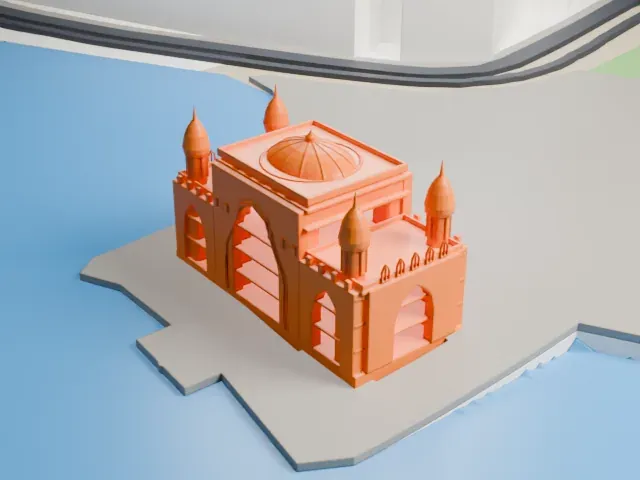 East
-
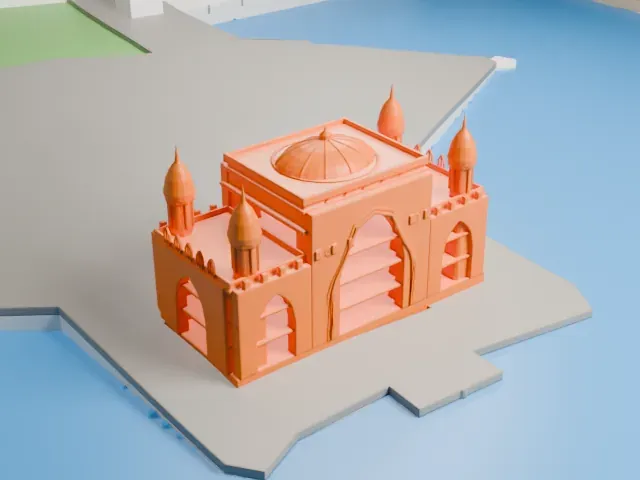 South
-
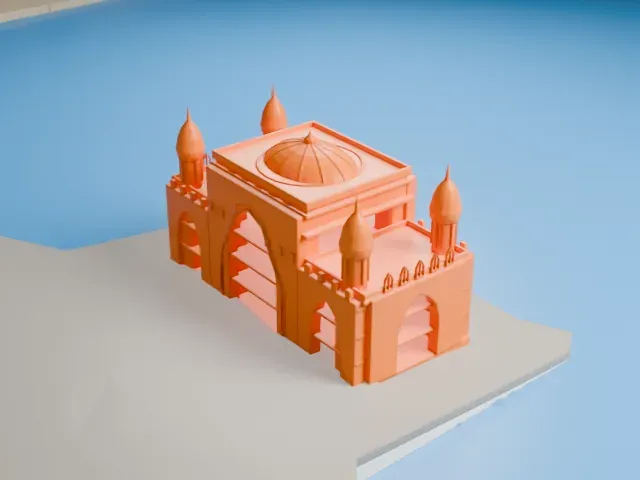 West
- Real height
- 26 m
- On a 160 mm print
- 7 mm
- Scale
- 1:3,750
26 m of the Gateway of India, 7 mm on your shelf
Make this print opens the generator on a 600 m square around the landmark. Buildings print at close to true scale, so the landmark grows with the print size.
- Pointed turret tips
Four turrets rise from the roof, each capped with a thin point. Print friendly adapts thin parts like these to your print scale; Full detail keeps them, best printed slowly with 0.12 to 0.16 mm layers.
- Deep arches and a compact footprint
The tall arched openings are recessed with fine inner detail, and the whole monument is compact. A larger print keeps the arches and ornament crisper.
- One piece with the ground
The Gateway of India is joined to the ground in the exported file, and the four-side check found no floating parts, so nothing needs gluing.
- Pick the detail for your nozzle
In the Buildings settings, set Landmark detail to Print friendly to adapt thin parts and small details to the print scale. Full detail keeps every modeled feature, for larger prints or a finer nozzle.
- Colors
Buildings, roads, water and ground arrive as separate filament slots in the 3MF. The Gateway of India takes the building color.
- File format
You get a 3MF for Bambu Studio, OrcaSlicer or PrusaSlicer. Any of them can save it as STL if you need one.
About the Gateway of India
The Gateway of India is a memorial arch on the Mumbai waterfront, at Apollo Bunder. It was raised to mark the arrival of King George V and Mary of Teck, his Empress Consort, on December 2, 1911, the first visit to India by a British monarch. The couple saw nothing but a cardboard model, since building work began in 1915. The foundation stone was laid on March 31, 1913, George Wittet's final design was sanctioned in August 1914, and the arch opened to the public on December 4, 1924.
Yellow basalt and reinforced concrete make up the structure, which rises 26 meters (85 feet). Its style is Indo-Saracenic, with many details borrowed from Gujarati regional architecture. The middle arch is taller and broader than the rest, topped by an extra story from which four turrets rise, and the central dome is 15 meters (49 feet) across. Intricate stone latticework, known as jali work, decorates the monument; the stone came from nearby, while the perforated screens were brought from Gwalior.
Once built, the Gateway was a ceremonial point of entry to India, symbolic in nature, for key government personnel. On February 28, 1948, the Somerset Light Infantry's First Battalion, the final British troops to depart India, went through it with a 21-gun salute. The monument faces Mumbai Harbour, with steps behind the arch leading down to the Arabian Sea. Funds ran short and the approach road was never built, so the monument sits at a slant to the road approaching it.
About this model
The Gateway of India is one of more than 4,400 landmark models in Mini Skyline. They are made with AI, and each one is checked from four sides in its real surroundings before release. Everything around it is built from OpenStreetMap and Overture map data. If you would rather print the shape from map data, turn off Landmark models in the Buildings settings.
Keep exploring