3D print Guangxiao Temple (Guangzhou)
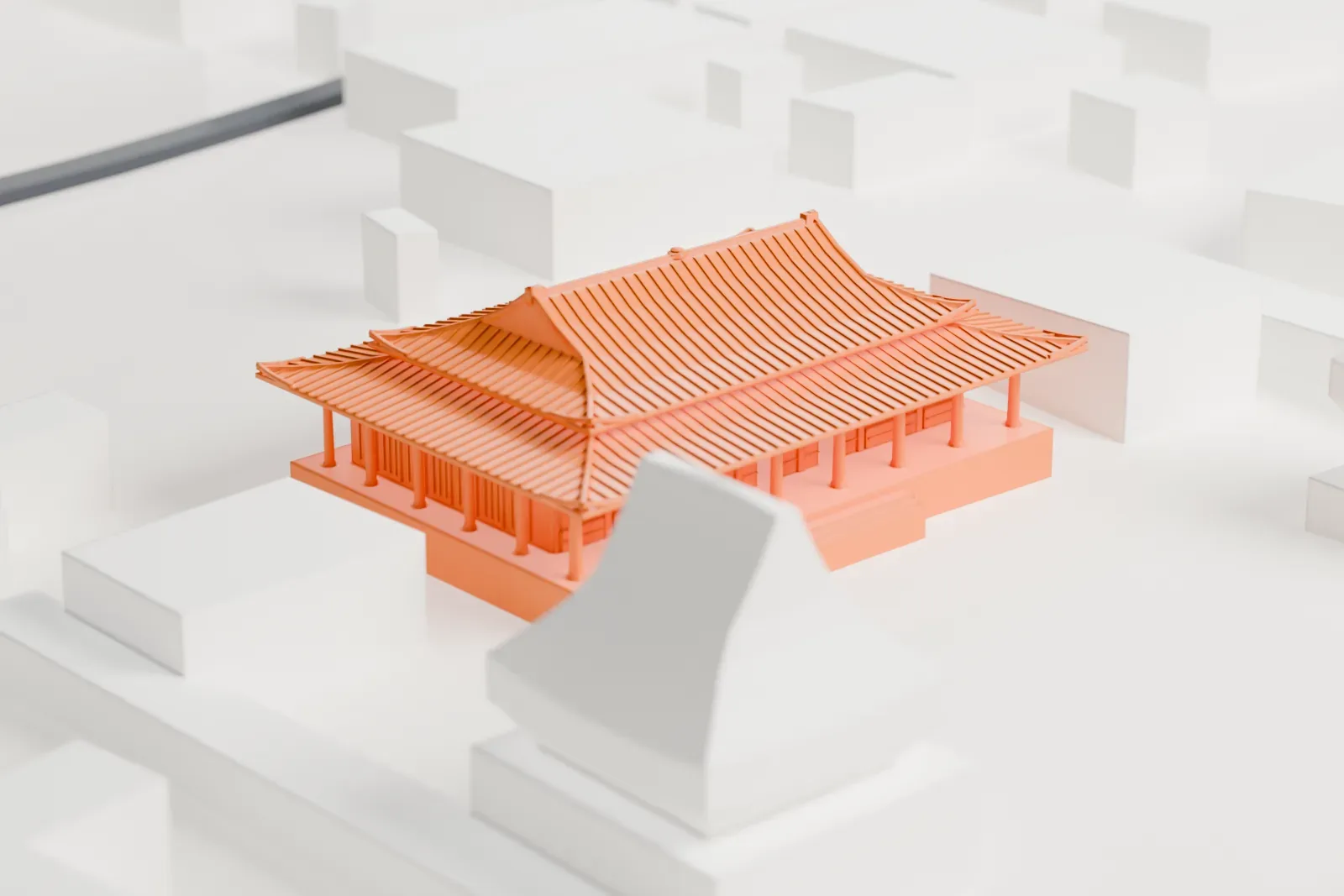
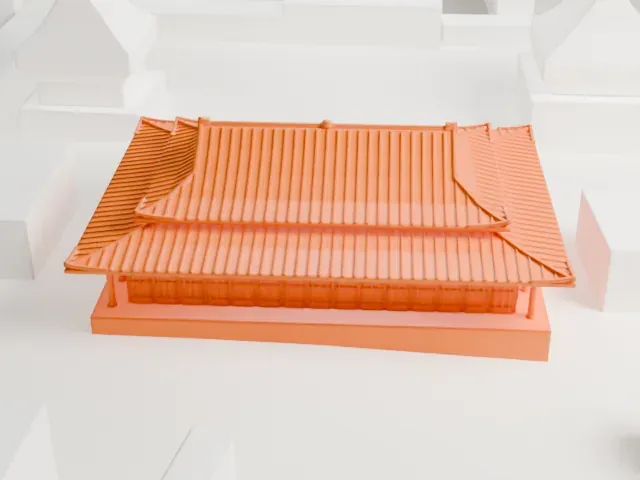
A free, printable model of one hall of Guangxiao Temple, with a broad hipped roof and wide eaves, set among small buildings in a dense city district, generated from real map data in your browser.
-
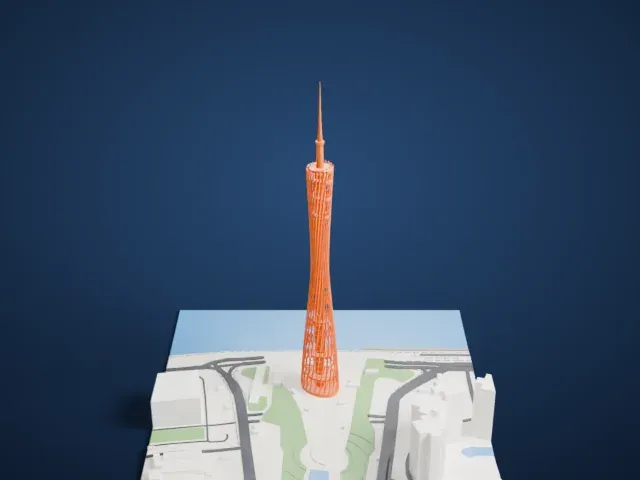
 North
-
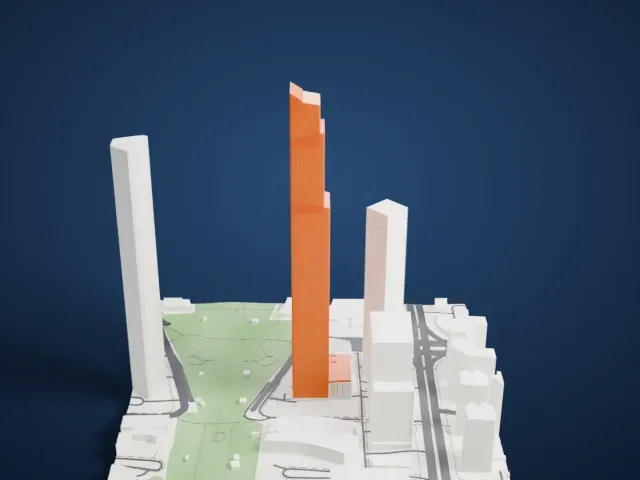
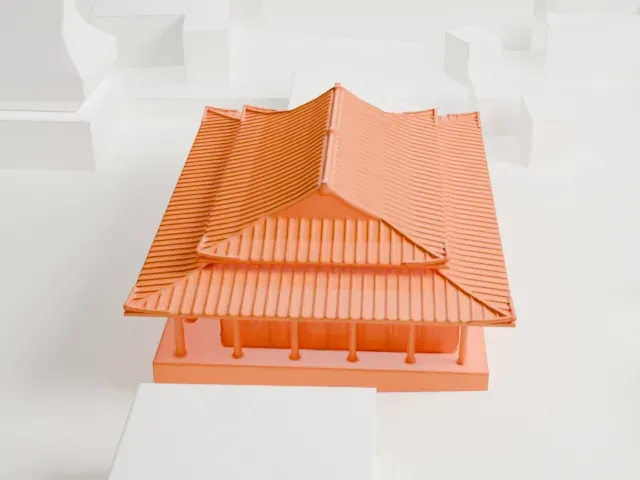 East
-
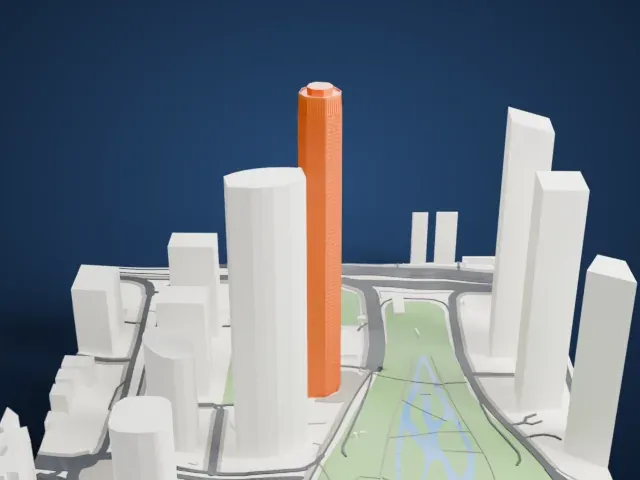
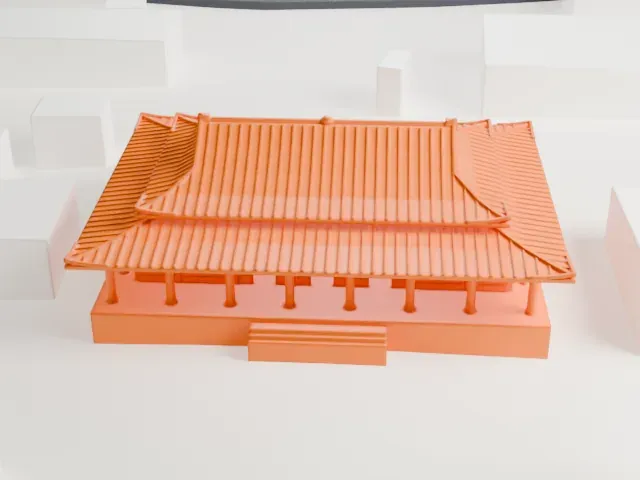 South
-
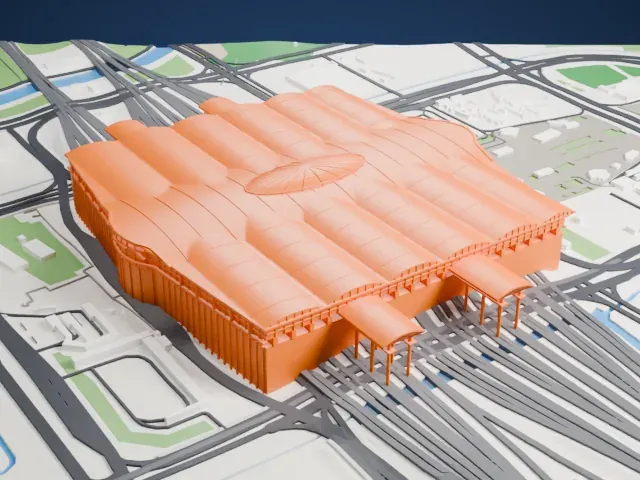
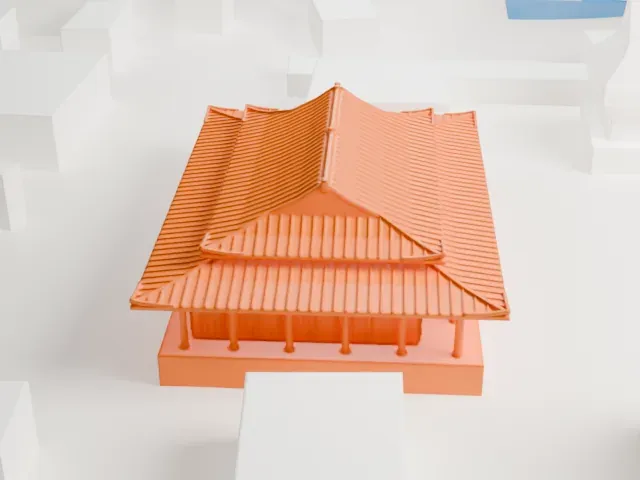 West
The model you print
Guangxiao Temple (Guangzhou) in 3D
The landmark on its own, at its size on a 160 mm print. Print friendly thickens thin parts for a 0.4 mm nozzle; Full detail keeps every part.
- Real height
- 14 m
- On a 160 mm print
- 4 mm
- Scale
- 1:3,750
14 m of Guangxiao Temple (Guangzhou), 4 mm on your shelf
Make this print opens the generator on a 600 m square around the landmark. Buildings print at close to true scale, so the landmark grows with the print size.
- Wide, sweeping eaves
The hall's broad roof overhangs the walls on all sides. Print friendly adapts the thin roof edges to the print scale; Full detail keeps them on a larger print.
- Small hall in a dense district
The hall is small within a crowded district, so a larger print size helps keep its columns and roof tiles visible.
- One piece with the ground
Guangxiao Temple (Guangzhou) is joined to the ground in the exported file, and the four-side check found no floating parts, so nothing needs gluing.
- Pick the detail for your nozzle
In the Buildings settings, set Landmark detail to Print friendly to adapt thin parts and small details to the print scale. Full detail keeps every modeled feature, for larger prints or a finer nozzle.
- Colors
Buildings, roads, water and ground arrive as separate filament slots in the 3MF. Guangxiao Temple (Guangzhou) takes the building color.
- File format
You get a 3MF for Bambu Studio, OrcaSlicer or PrusaSlicer. Any of them can save it as STL if you need one.
About Guangxiao Temple (Guangzhou)
Guangxiao Temple, among the oldest Buddhist temples in Guangzhou, lies in the city that is the capital of Guangdong Province. Because of its geographical position, it often served as a stopover for missionary monks from across Asia. Here Huineng, sixth in the line of Chinese patriarchs of Chan Buddhism, gave his first public Chan teaching and was tonsured, and the Shingon master Amoghavajra taught esoteric Buddhism for the first time.
The site began as the home of Zhao Jiande, king of Nanyue. Yu Fan died in 233, and his family then donated the estate, which became the Zhizhi Temple. The Ming dynasty's Chenghua Emperor gave it the name Guangxiao Temple in 1482, and the temple has kept that name since. The temple declined in the 17th and 18th centuries, although it was restored several times, and many of the main buildings were last rebuilt in that period.
The Daxiongbao Hall was built in 401 and last rebuilt in 1654. It is 35.36 meters (116.0 ft) wide, 24.8 meters (81 ft) deep and 13.6 meters (45 ft) high. Behind it stand the Yifa Pagoda, an octagonal 7.8-meter (26 ft) pagoda from the Tang dynasty, and two iron pagodas built in 963 and 967, and they are the oldest iron towers still standing in China.
About this model
Guangxiao Temple (Guangzhou) is one of more than 6,500 landmark models in Mini Skyline. They are made with AI, and each one is checked in its real surroundings before release. Each model is written as code from public descriptions, plans, photographs and aerial views used only as references; no image or third-party model is copied into it. Everything around it is built from OpenStreetMap and Overture map data. Rights in the building itself, its name and any brands on it are not granted by Mini Skyline; clear them separately before you sell prints. If you would rather print the shape from map data, turn off Landmark models in the Buildings settings.
Mini Skyline is not affiliated with, or endorsed by, the owners of this building or its names and marks.
Same skyline