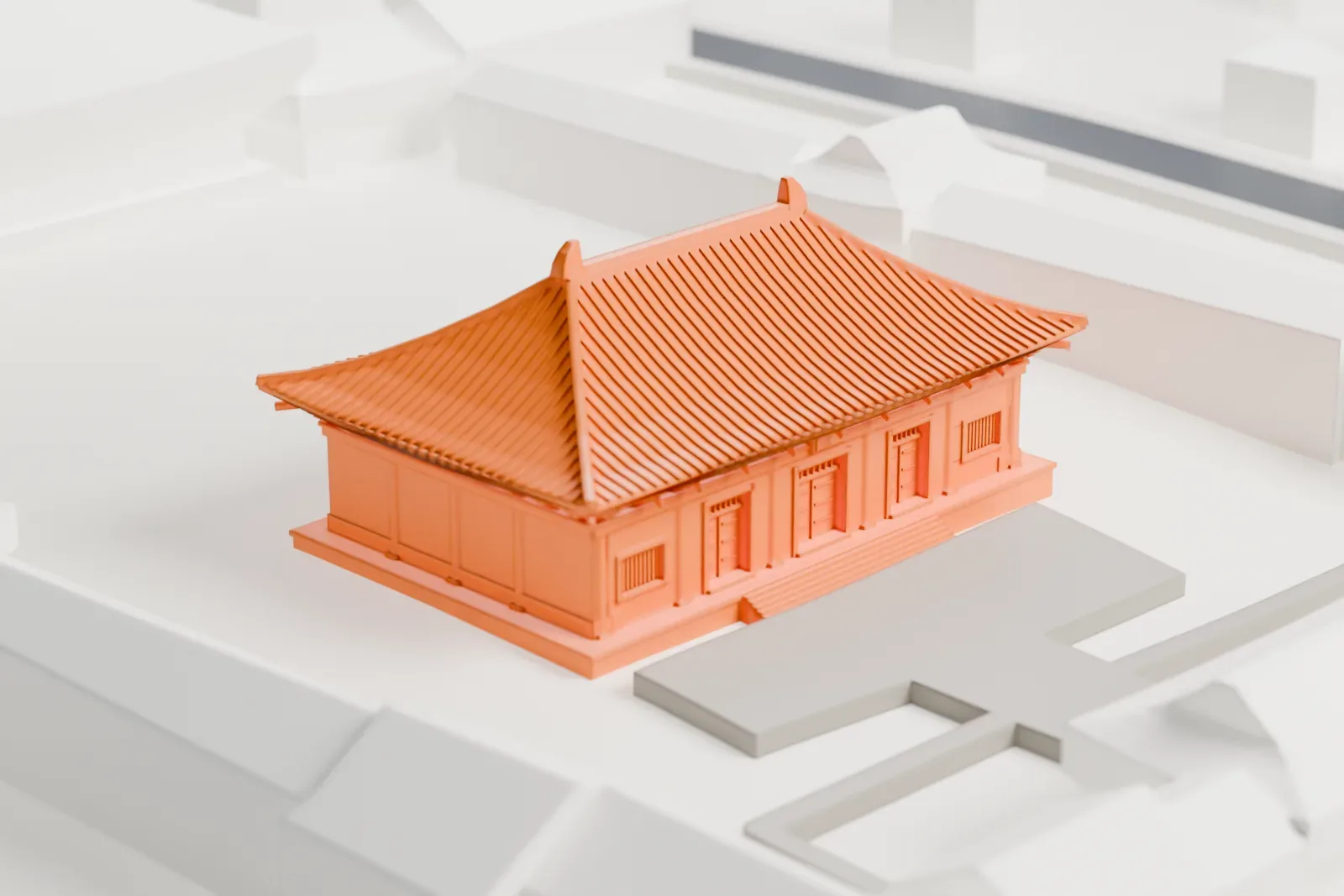
3D print Shanhua Temple
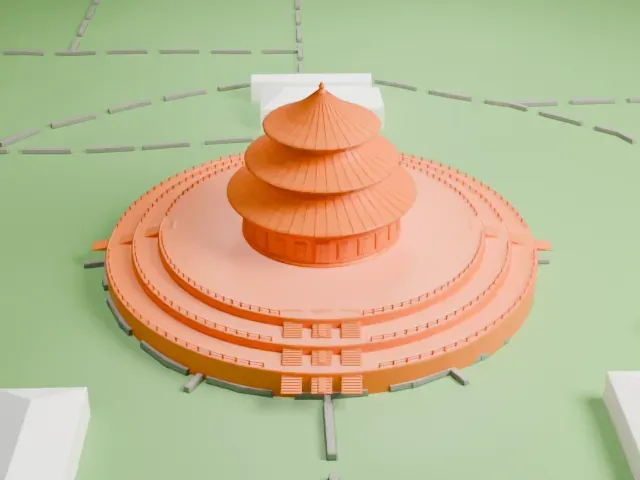
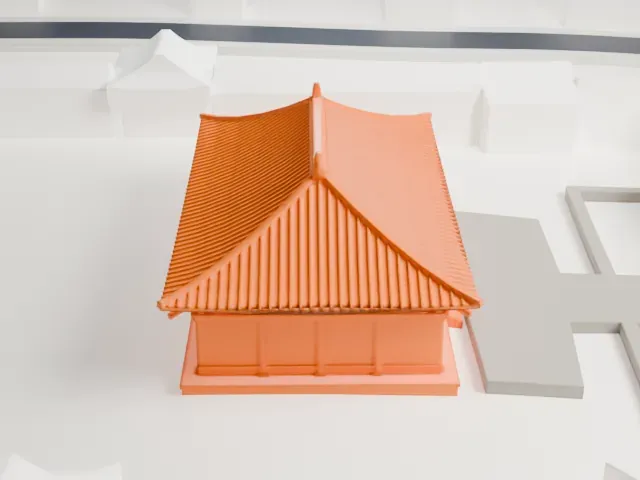
A free, printable model of a hall of Shanhua Temple in Datong, with its broad tiled hip roof, among the courtyards and buildings around it, generated from real map data in your browser.
-
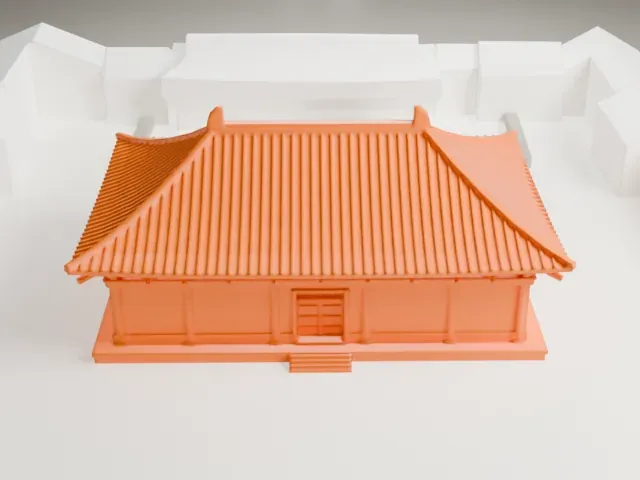 North
-
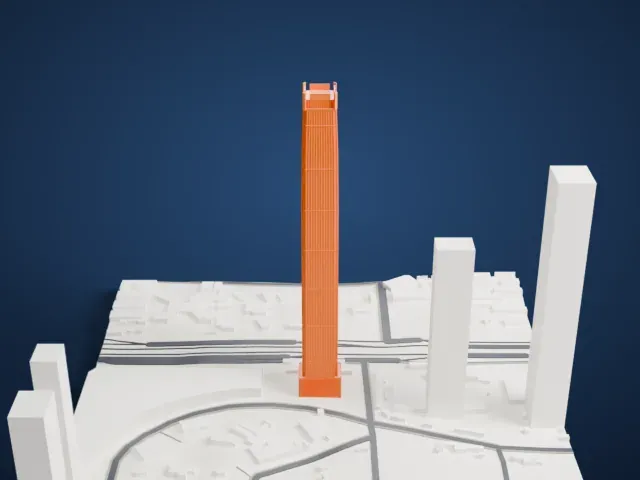
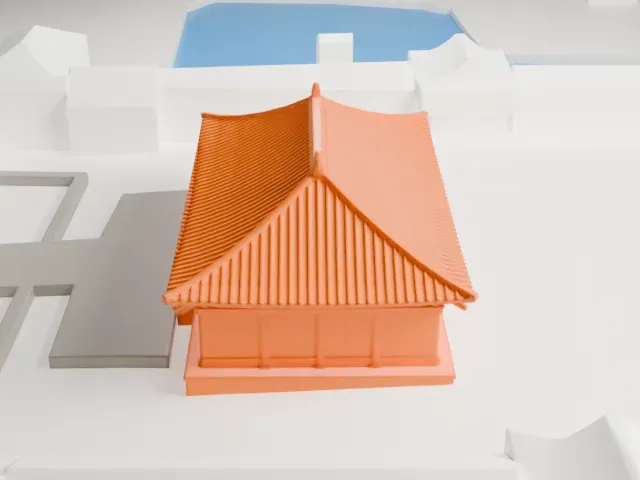 East
-
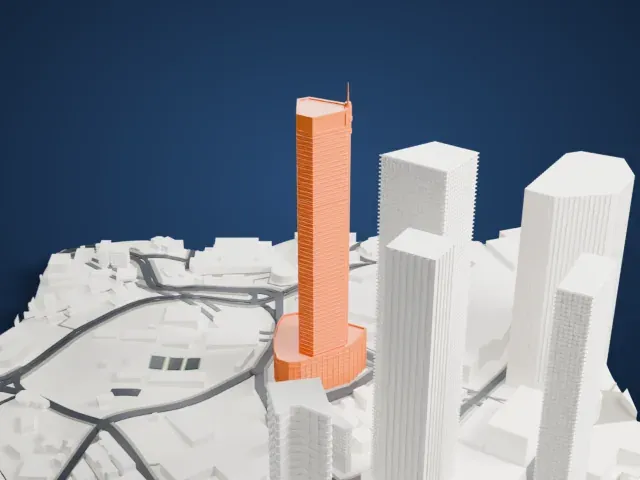
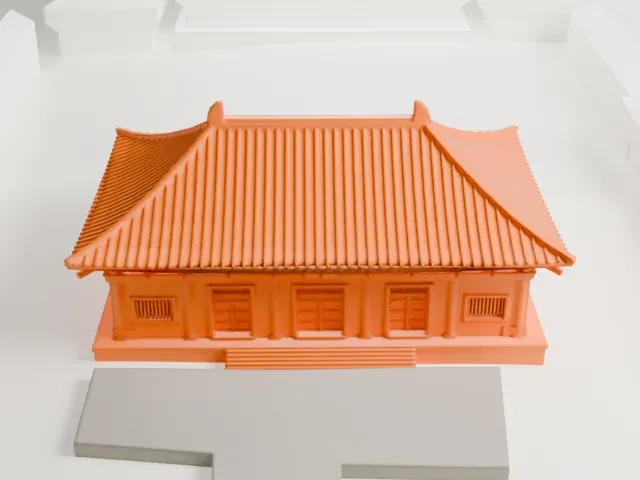 South
-
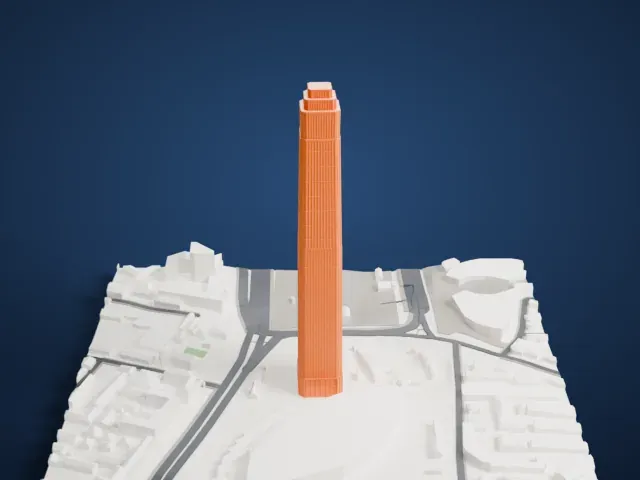
 West
The model you print
Shanhua Temple in 3D
The landmark on its own, at its size on a 160 mm print. Print friendly thickens thin parts for a 0.4 mm nozzle; Full detail keeps every part.
- On a 160 mm print
- 5 mm
- Scale
- 1:3,750
5 mm tall on a 160 mm print
Make this print opens the generator on a 600 m square around the landmark. Buildings print at close to true scale, so the landmark grows with the print size.
- Sweeping tiled roof
The wide hip roof has curved eaves and fine rows of tiles that overhang the walls. A layer height of 0.12–0.16 mm and a larger print keep the tile lines and upturned corners crisp.
- Detail setting for the timber front
The front shows slim columns and paneled doors. Print friendly adapts these thin parts to the print scale; Full detail keeps all of them on a larger print.
- One piece with the ground
Shanhua Temple is joined to the ground in the exported file, and the four-side check found no floating parts, so nothing needs gluing.
- Pick the detail for your nozzle
In the Buildings settings, set Landmark detail to Print friendly to adapt thin parts and small details to the print scale. Full detail keeps every modeled feature, for larger prints or a finer nozzle.
- Colors
Buildings, roads, water and ground arrive as separate filament slots in the 3MF. Shanhua Temple takes the building color.
- File format
You get a 3MF for Bambu Studio, OrcaSlicer or PrusaSlicer. Any of them can save it as STL if you need one.
About Shanhua Temple
Shanhua Temple is a Buddhist temple in Datong, Shanxi Province, China. It was founded in the Tang dynasty's Kaiyuan period (713-741), with Emperor Xuanzong as its patron, and was then known as Kaiyuan Temple. The oldest building still standing is from the 11th century. Repairs over the years were heavy, and three original halls and two rebuilt pavilions survive.
The temple's history is one of damage and repair. During the Five Dynasties period only three or four of its ten buildings escaped destruction, and after the Liao dynasty took over in 960 it assumed its present configuration. The Jin takeover in 1120 damaged it again, and repair work started in 1128 took fifteen years. In 1445 a monk named Dayong received an imperial presentation of sutras, and the temple was first called Shanhua Temple. The Puxian pavilion was destroyed during World War II and rebuilt in 1953.
The northernmost and largest hall, the Daxiongbao Hall, dates from the 11th century Liao dynasty and is among the largest of its type in China. It measures seven bays by five, 40.5 by 25 m, has three doors at the front, and stands on an elevated platform three meters high. Inside are Jin dynasty statues of the Five Tathāgatas and 190 square meters of murals dating from 1708 to 1716. The Main Gate and the Sansheng Hall date from the 12th century Jin dynasty.
About this model
Shanhua Temple is one of more than 6,500 landmark models in Mini Skyline. They are made with AI, and each one is checked in its real surroundings before release. Each model is written as code from public descriptions, plans, photographs and aerial views used only as references; no image or third-party model is copied into it. Everything around it is built from OpenStreetMap and Overture map data. Rights in the building itself, its name and any brands on it are not granted by Mini Skyline; clear them separately before you sell prints. If you would rather print the shape from map data, turn off Landmark models in the Buildings settings.
Mini Skyline is not affiliated with, or endorsed by, the owners of this building or its names and marks.
Keep exploring