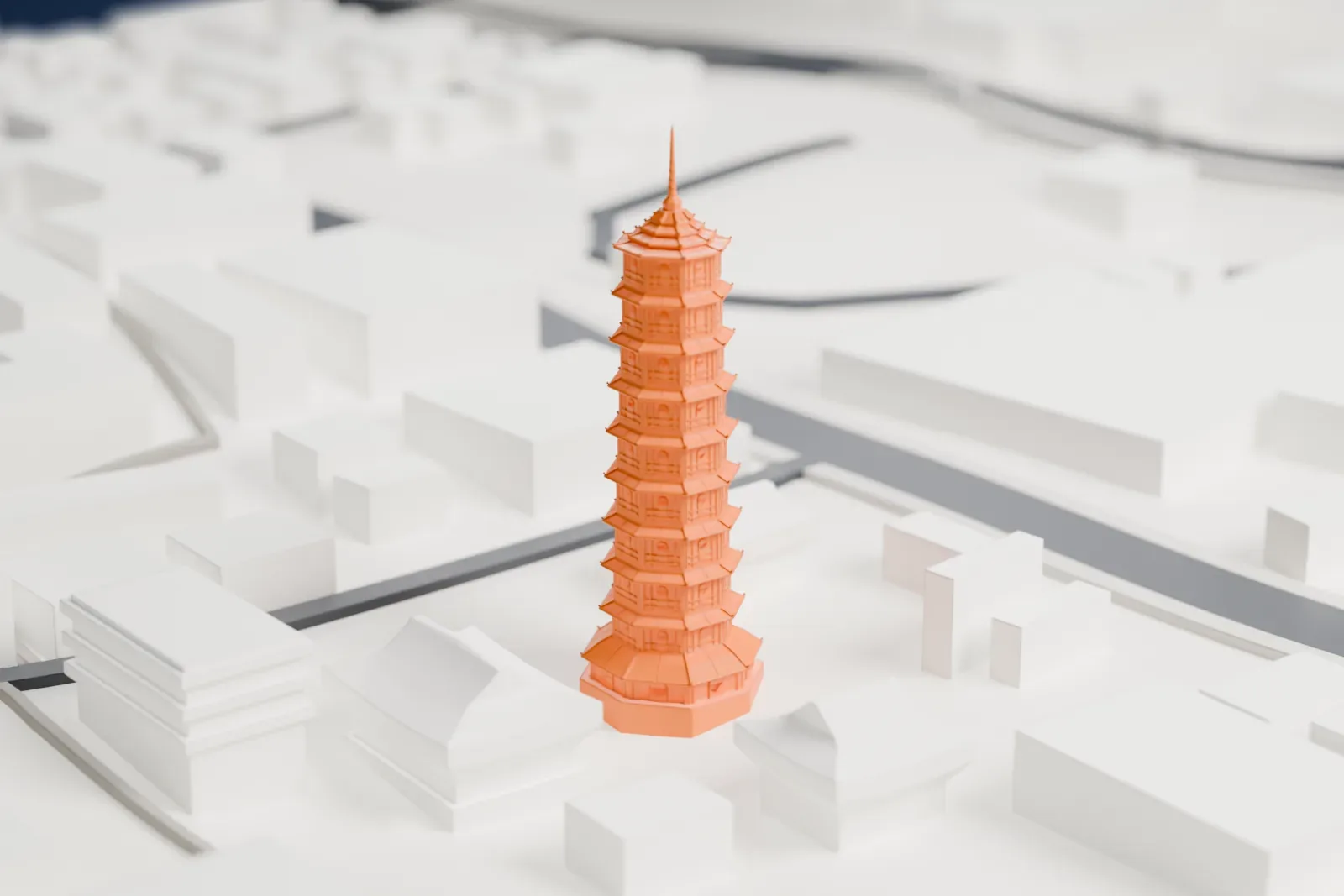
3D print the Temple of the Six Banyan Trees
A free, printable model of the Flower Pagoda at Guangzhou's Temple of the Six Banyan Trees, with the curved-roof halls and buildings around it, generated from real map data in your browser.
-
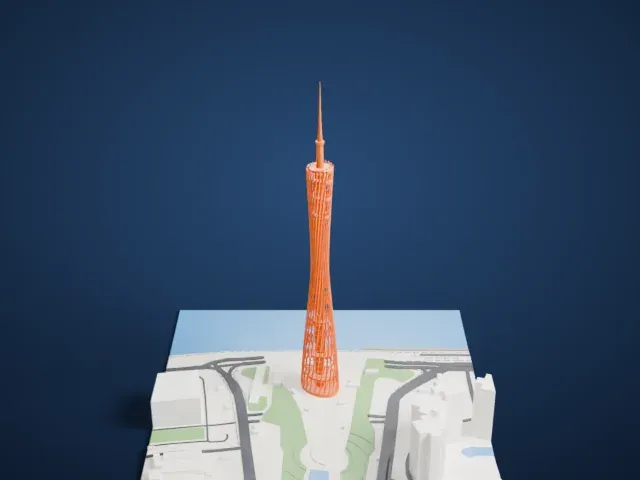
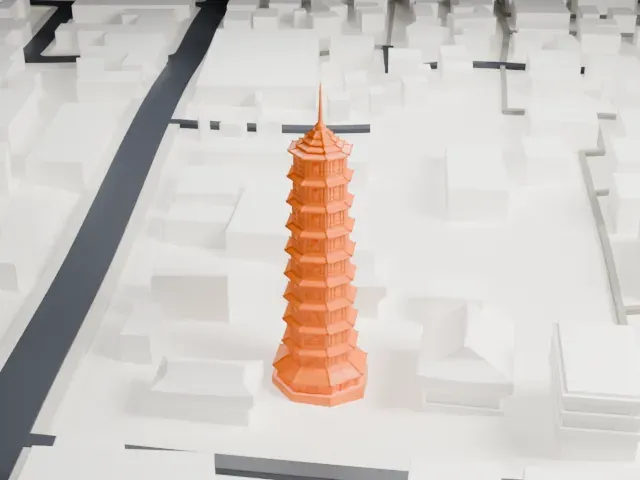 North
-
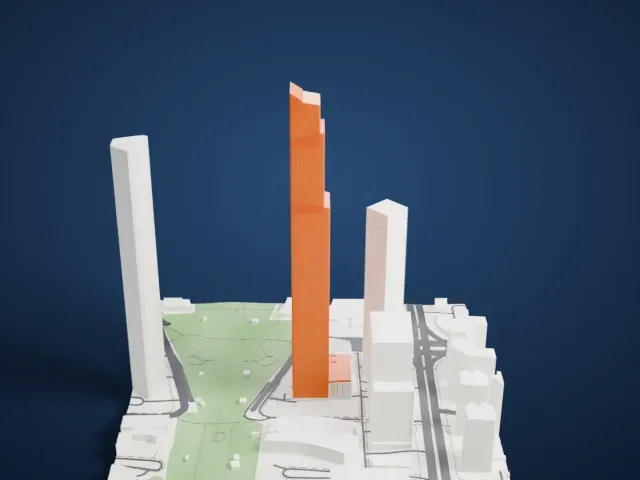
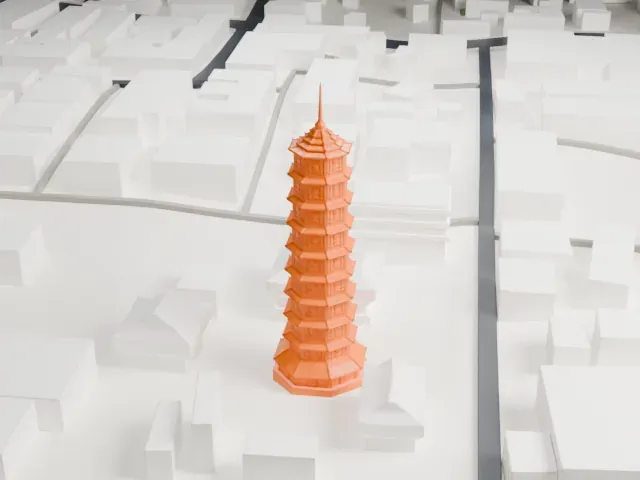 East
-
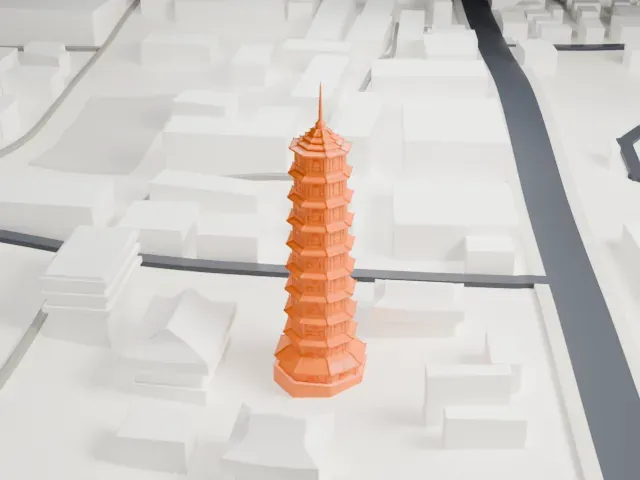 South
-
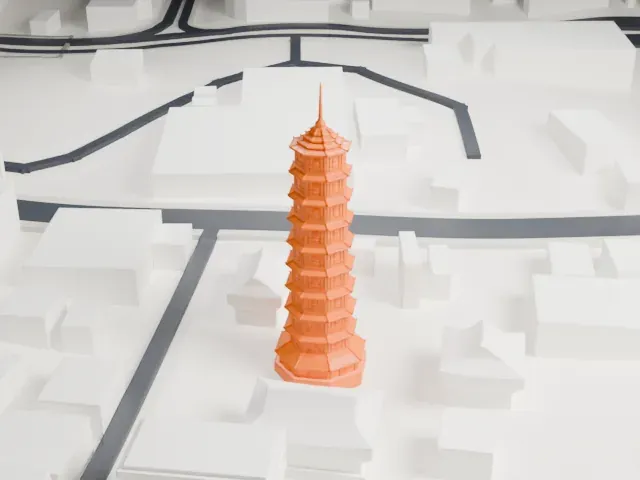 West
The model you print
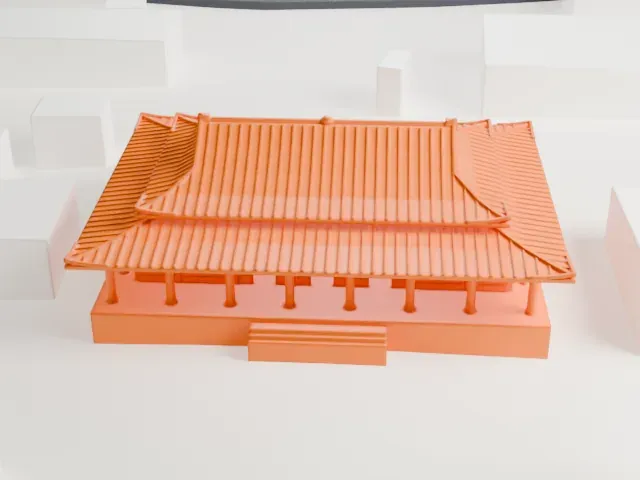
Temple of the Six Banyan Trees in 3D
The landmark on its own, at its size on a 160 mm print. Print friendly thickens thin parts for a 0.4 mm nozzle; Full detail keeps every part.
- On a 160 mm print
- 16 mm
- Scale
- 1:3,750
16 mm tall on a 160 mm print
Make this print opens the generator on a 600 m square around the landmark. Buildings print at close to true scale, so the landmark grows with the print size.
- Slender spire on top
The pagoda ends in a thin spire above many stacked eaves. Print friendly adapts the thin tip; for Full detail, print larger and slowly, with a 0.12–0.16 mm layer height.
- Many layered roof edges
The repeated roof tiers around the tower form fine ledges and corners. A bigger print size keeps them crisp.
- One piece with the ground
The Temple of the Six Banyan Trees is joined to the ground in the exported file, and the four-side check found no floating parts, so nothing needs gluing.
- Pick the detail for your nozzle
In the Buildings settings, set Landmark detail to Print friendly to adapt thin parts and small details to the print scale. Full detail keeps every modeled feature, for larger prints or a finer nozzle.
- Colors
Buildings, roads, water and ground arrive as separate filament slots in the 3MF. The Temple of the Six Banyan Trees takes the building color.
- File format
You get a 3MF for Bambu Studio, OrcaSlicer or PrusaSlicer. Any of them can save it as STL if you need one.
About the Temple of the Six Banyan Trees
Guangzhou's Temple of the Six Banyan Trees, also known as Liurong Temple, is a Buddhist temple first built in AD 537. It began life as the Baozhuangyan Temple, founded by the monk Tanyu on the orders of Emperor Wu of the Liang. Its purpose was to hold the relics of Cambodian Buddhist saints that had been brought to Panyu, the place known today as Guangzhou.
A fire destroyed the temple during the Northern Song dynasty, and it was rebuilt. Around then the poet Su Shi wrote a poem called "Six Banyans" (Liu Rong) after a visit, and the temple took its new name from it. Its main structure is the Flower Pagoda, built in 1097 and named for its colorful exterior. Where the earlier structure had a square base, the new pagoda was given an octagonal plan. After another fire early in the Ming dynasty it was rebuilt in 1373, and it was restored in 1900.
Because the temple is close to the foreign consulates in Guangzhou, families adopting children from China regularly visit it. Typically, newly adopted children are blessed there before the statue of Guanyin. The name Liurong echoes the title of Su Shi's poem, Liu Rong.
About this model
The Temple of the Six Banyan Trees is one of more than 6,500 landmark models in Mini Skyline. They are made with AI, and each one is checked in its real surroundings before release. Each model is written as code from public descriptions, plans, photographs and aerial views used only as references; no image or third-party model is copied into it. Everything around it is built from OpenStreetMap and Overture map data. Rights in the building itself, its name and any brands on it are not granted by Mini Skyline; clear them separately before you sell prints. If you would rather print the shape from map data, turn off Landmark models in the Buildings settings.
Mini Skyline is not affiliated with, or endorsed by, the owners of this building or its names and marks.
Same skyline