3D print Tikal Temple I
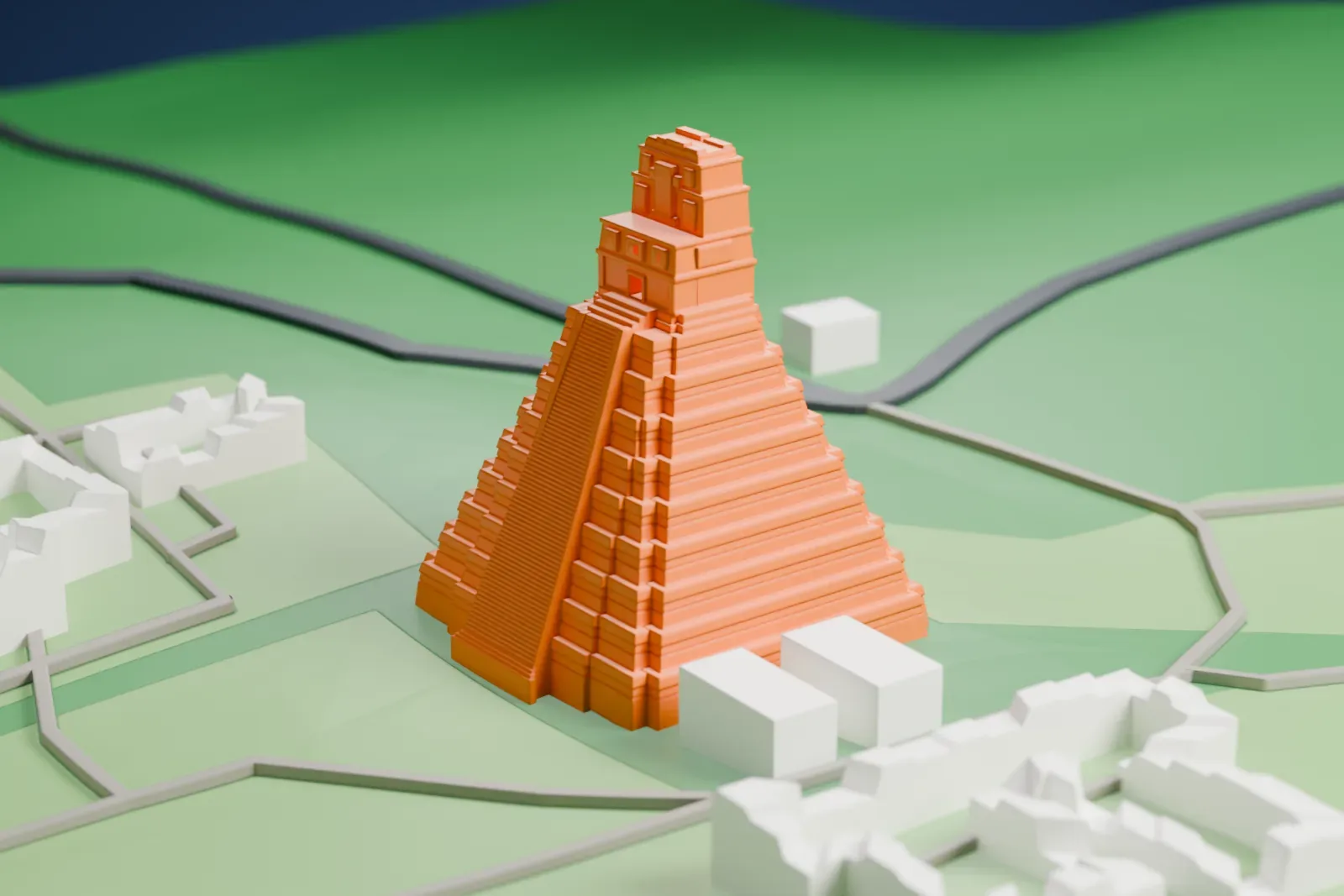
A free, printable model of Tikal Temple I and the clearings, paths and low structures around it, generated from real map data in your browser.
-
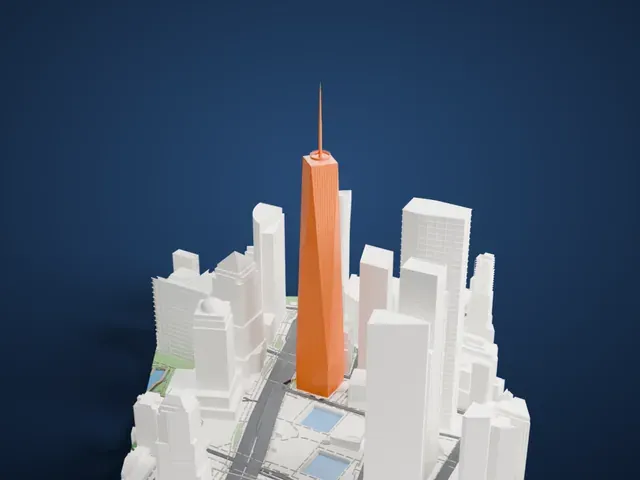
 North
-
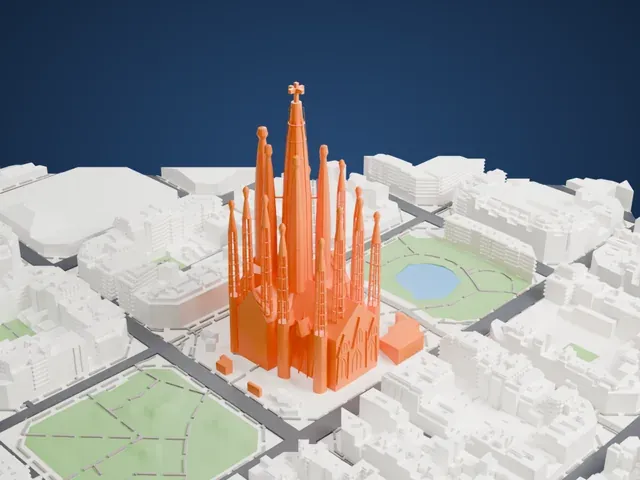
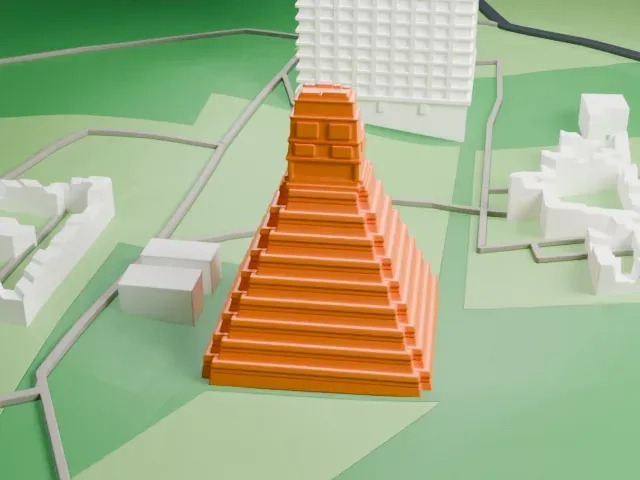 East
-
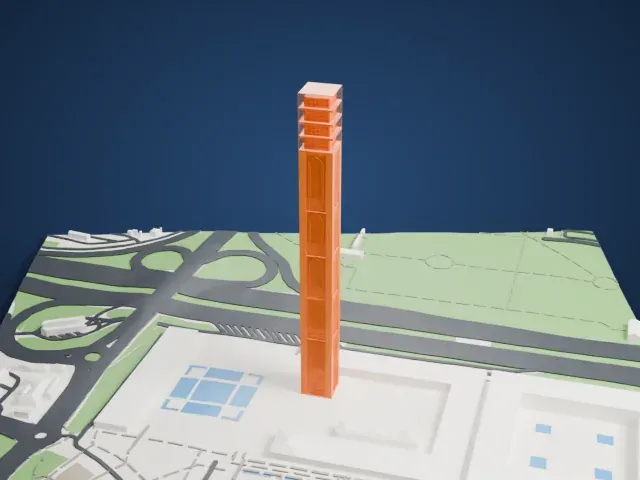
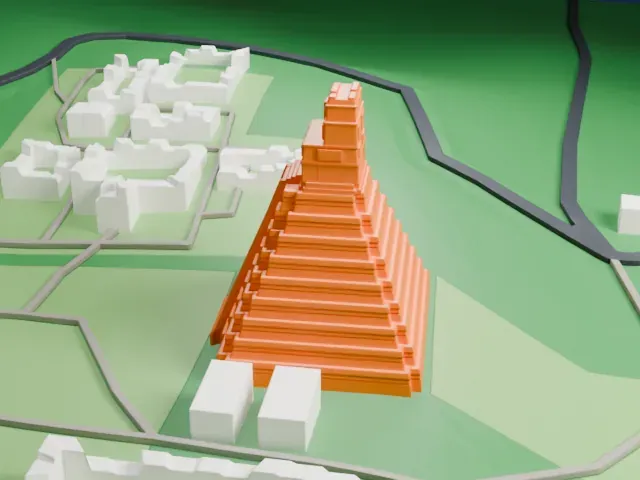 South
-
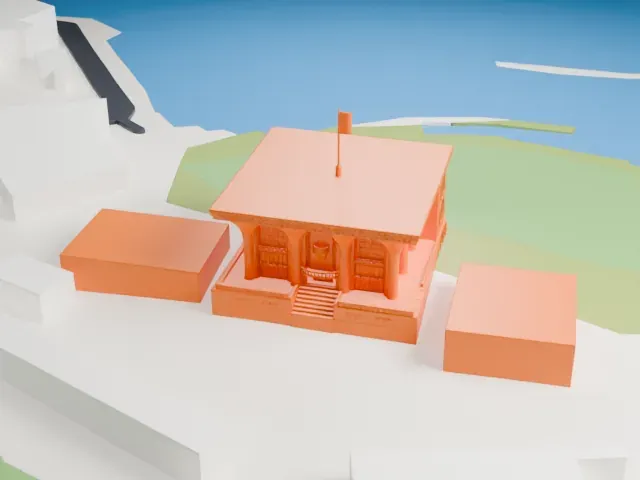
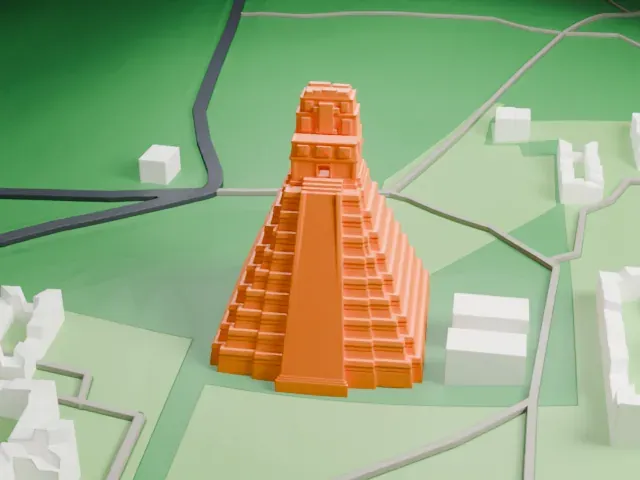 West
The model you print
Tikal Temple I in 3D
The landmark on its own, at its size on a 160 mm print. Print friendly thickens thin parts for a 0.4 mm nozzle; Full detail keeps every part.
- Real height
- 55 m
- On a 160 mm print
- 13 mm
- Scale
- 1:3,750
55 m of Tikal Temple I, 13 mm on your shelf
Make this print opens the generator on a 600 m square around the landmark. Buildings print at close to true scale, so the landmark grows with the print size.
- Narrow stepped terraces
The pyramid is a stack of many shallow steps. A 0.12-0.16 mm layer height keeps the stair edges crisp, and a larger print size keeps the step lines distinct.
- Small summit shrine
The top of the pyramid is the smallest and tallest part. Print slowly with good cooling there, and choose Full detail on a large print to keep the shrine's features.
- One piece with the ground
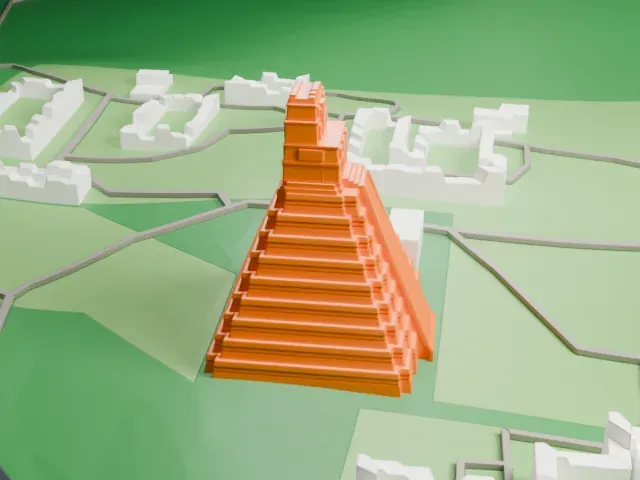
Tikal Temple I is joined to the ground in the exported file, and the four-side check found no floating parts, so nothing needs gluing.
- Pick the detail for your nozzle
In the Buildings settings, set Landmark detail to Print friendly to adapt thin parts and small details to the print scale. Full detail keeps every modeled feature, for larger prints or a finer nozzle.
- Colors
Buildings, roads, water and ground arrive as separate filament slots in the 3MF. Tikal Temple I takes the building color.
- File format
You get a 3MF for Bambu Studio, OrcaSlicer or PrusaSlicer. Any of them can save it as STL if you need one.
About Tikal Temple I
Tikal Temple I is one of the principal buildings of Tikal, a city that ranks among the largest of the Maya in pre-Columbian Mesoamerica. It lies in northern Guatemala, in the Petén Basin region, inside a World Heritage Site, on the Great Plaza's eastern side. It is also called the Temple of the Great Jaguar, after a lintel showing a king on a jaguar throne, and the Temple of Ah Cacao, named for the ruler who was buried inside.
The temple is a funerary monument for Jasaw Chan K'awiil I, who ruled from AD 682-734. Archaeologists located his tomb deep within the structure: the tomb was built first and the temple raised over it. The work was supervised by the king's son and heir. The tomb was discovered in 1962.
Temple I is a stepped limestone pyramid in the Petén style, dated to approximately 732 AD. It rises in nine stepped levels, possibly symbolizing the nine levels of the underworld, and stands 55 meters (180 ft) above the Great Plaza. A steep staircase climbs to the summit shrine, which carries a roof comb, a feature that marks Maya architecture.
About this model
Tikal Temple I is one of more than 6,500 landmark models in Mini Skyline. They are made with AI, and each one is checked in its real surroundings before release. Each model is written as code from public descriptions, plans, photographs and aerial views used only as references; no image or third-party model is copied into it. Everything around it is built from OpenStreetMap and Overture map data. Rights in the building itself, its name and any brands on it are not granted by Mini Skyline; clear them separately before you sell prints. If you would rather print the shape from map data, turn off Landmark models in the Buildings settings.
Mini Skyline is not affiliated with, or endorsed by, the owners of this building or its names and marks.
Keep exploring