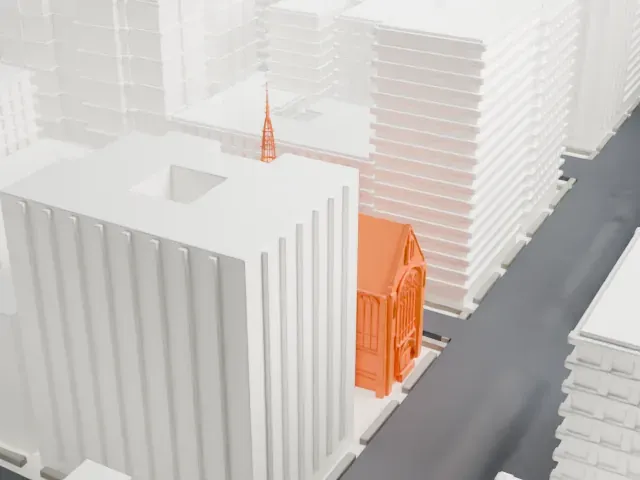
3D print the Times Square Theater
A free, printable model of the Times Square Theater and the tall towers that surround it in Midtown, generated from real map data in your browser.
-
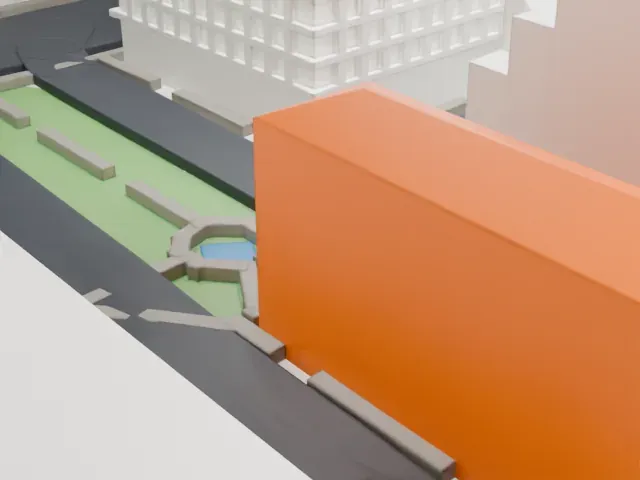
 North
-
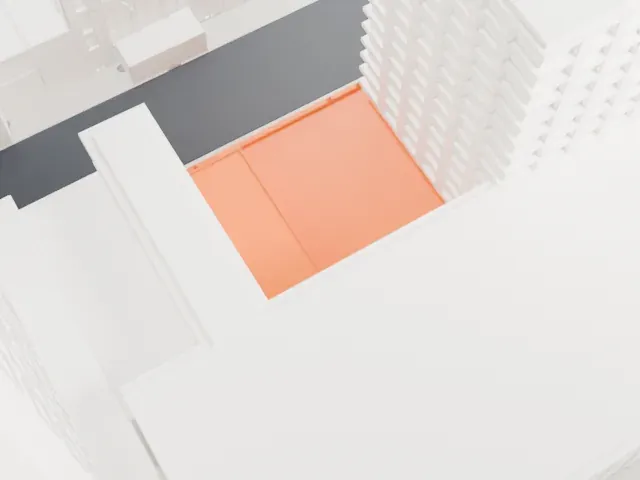 East
-
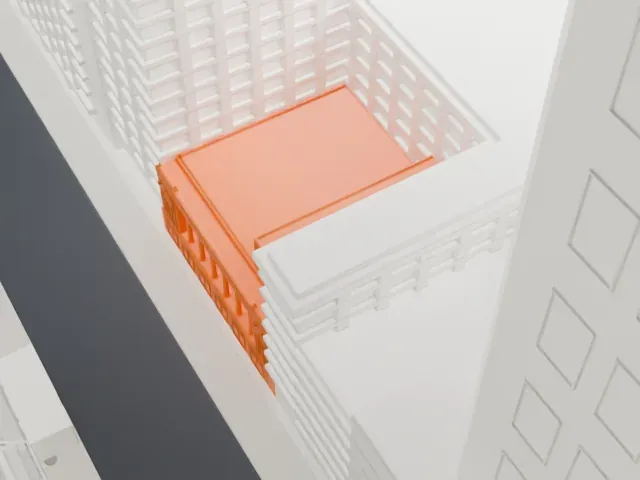 South
-
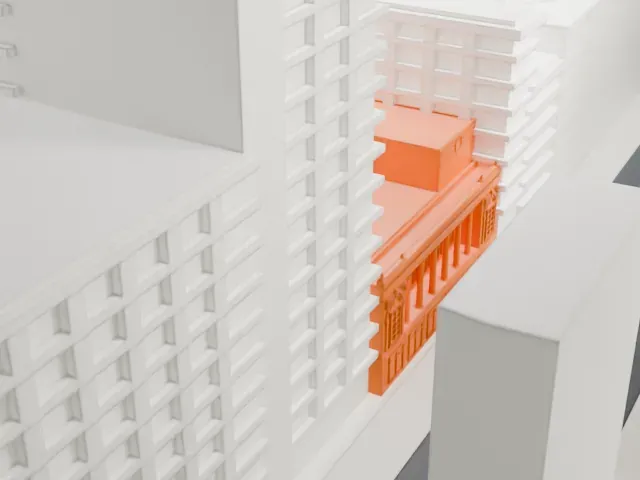 West
The model you print
Times Square Theater in 3D
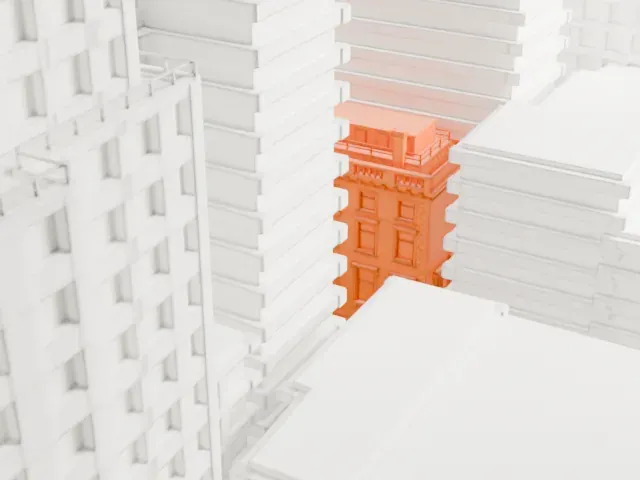
The landmark on its own, at its size on a 160 mm print. Print friendly thickens thin parts for a 0.4 mm nozzle; Full detail keeps every part.
- On a 160 mm print
- 6 mm
- Scale
- 1:3,750
6 mm tall on a 160 mm print
Make this print opens the generator on a 600 m square around the landmark. Buildings print at close to true scale, so the landmark grows with the print size.
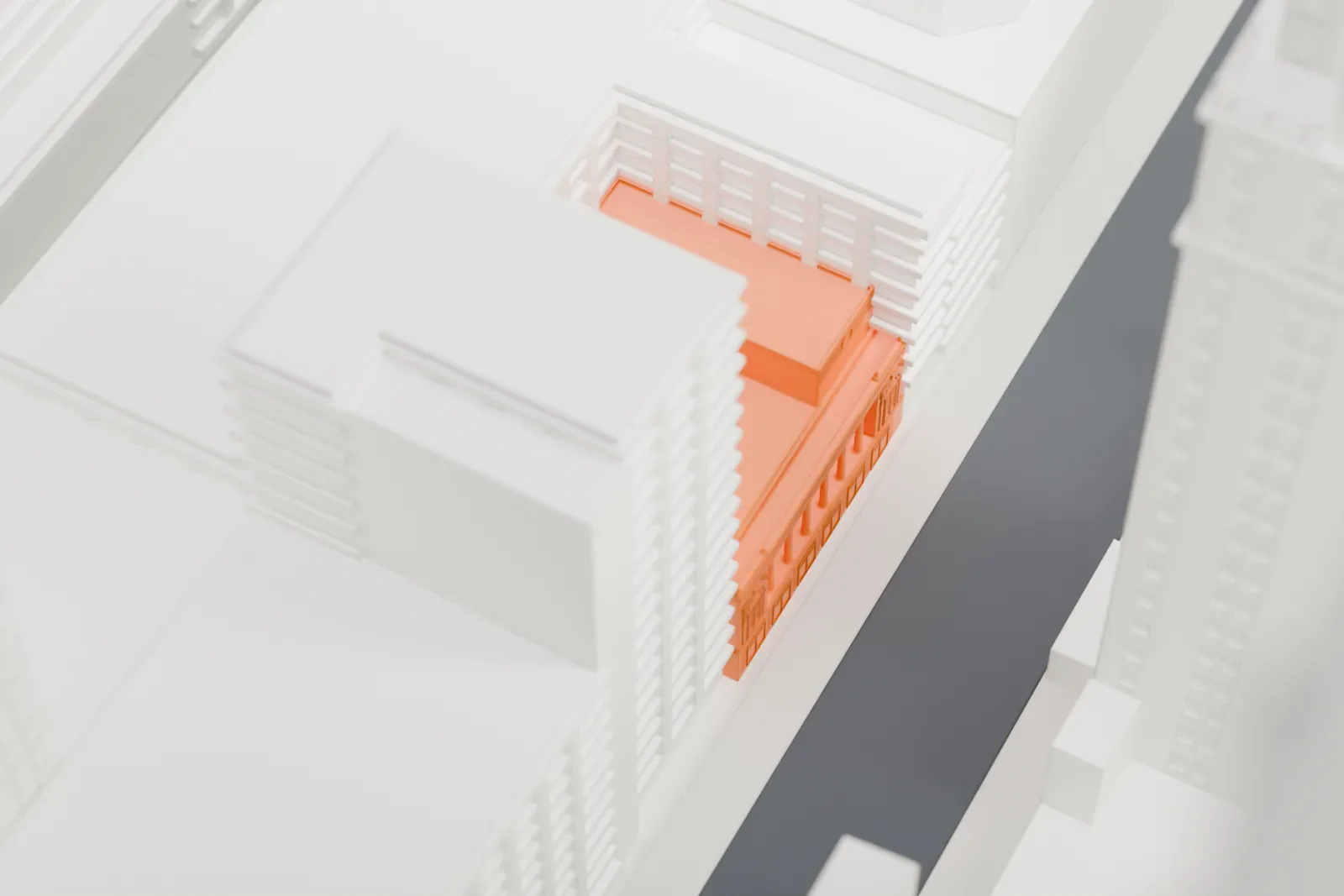
- Small frontage between towers
Only a small part of this model shows between the tall buildings, and its thin colonnade columns are the finest detail. Print friendly adapts them at small sizes; Full detail keeps them, best on a larger print.
- One piece with the ground
The Times Square Theater is joined to the ground in the exported file, and the four-side check found no floating parts, so nothing needs gluing.
- Pick the detail for your nozzle
In the Buildings settings, set Landmark detail to Print friendly to adapt thin parts and small details to the print scale. Full detail keeps every modeled feature, for larger prints or a finer nozzle.
- Colors
Buildings, roads, water and ground arrive as separate filament slots in the 3MF. The Times Square Theater takes the building color.
- File format
You get a 3MF for Bambu Studio, OrcaSlicer or PrusaSlicer. Any of them can save it as STL if you need one.
About the Times Square Theater
Once both a Broadway house and a movie theater, the Times Square Theater is on West 42nd Street (numbers 215–217), near Times Square in Midtown Manhattan's Theater District. It was built in 1920. Eugene De Rosa designed it, and the brothers Edgar and Archibald Selwyn developed it.
The theater was designed at the same time as the Apollo Theatre next to it, which has since been demolished. The two shared a symmetrical limestone facade on 42nd Street with a central colonnade. The auditorium inside was fan-shaped and seated 1,155 people, colored in silver, green and black, with murals, box seats and a shallow balcony.
Its first night was September 30, 1920, with The Mirage, a play by Edgar Selwyn. In its first decade it mostly hosted legitimate shows, among them The Front Page and Private Lives. The last stage show was in 1933, and it turned into a cinema the following year. For the next five decades the Brandt family ran it, showing westerns and action films. In 1990 New 42nd Street took it over, but the building proved hard to lease because it had no rear entrance.
About this model
The Times Square Theater is one of more than 6,500 landmark models in Mini Skyline. They are made with AI, and each one is checked in its real surroundings before release. Each model is written as code from public descriptions, plans, photographs and aerial views used only as references; no image or third-party model is copied into it. Everything around it is built from OpenStreetMap and Overture map data. Rights in the building itself, its name and any brands on it are not granted by Mini Skyline; clear them separately before you sell prints. If you would rather print the shape from map data, turn off Landmark models in the Buildings settings.
Outside the United States this design may still be protected; check the rules where you sell.
Mini Skyline is not affiliated with, or endorsed by, the owners of this building or its names and marks.
Same skyline