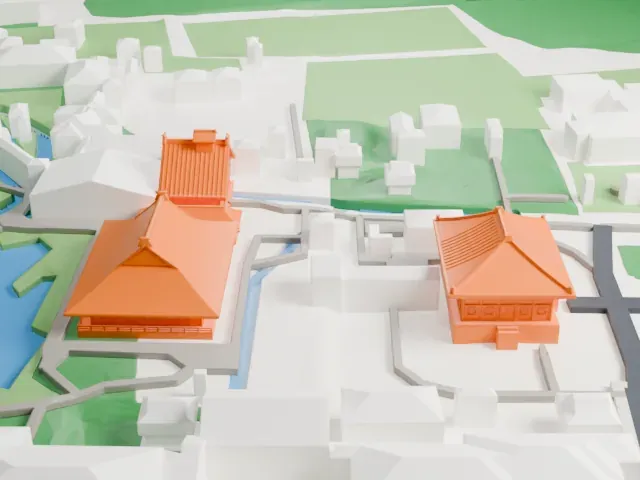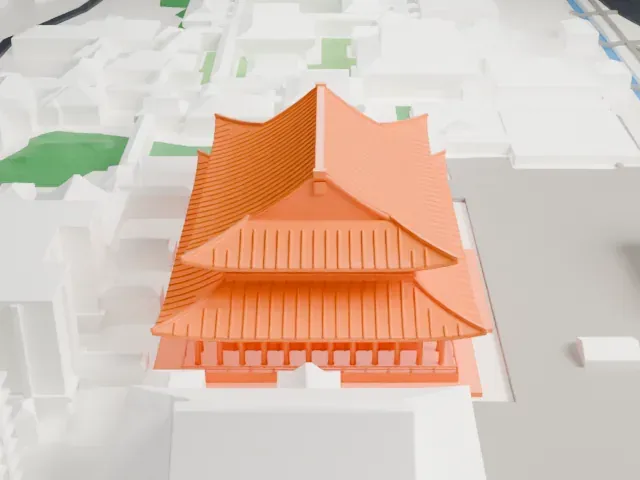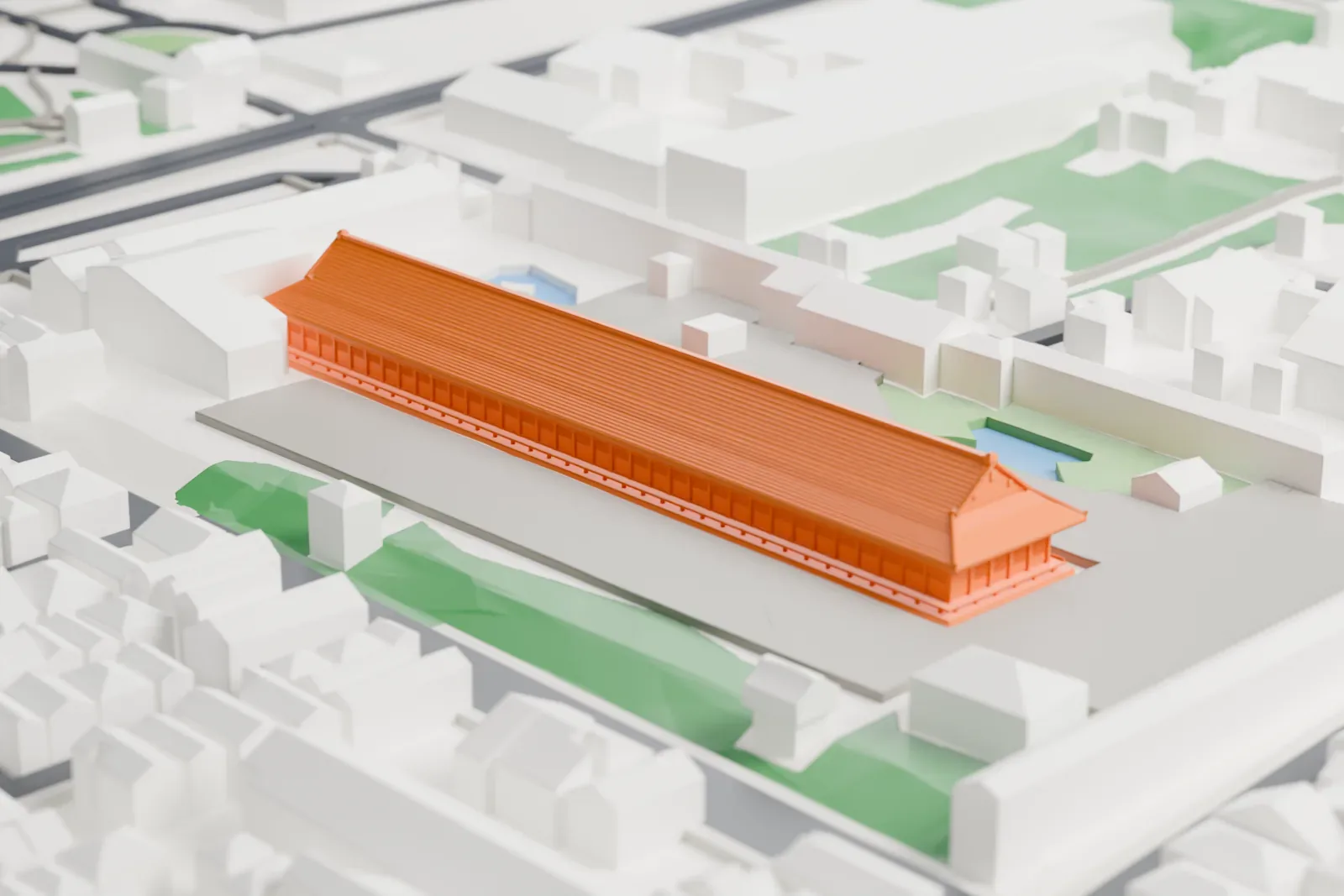
3D print Sanjūsangen-dō
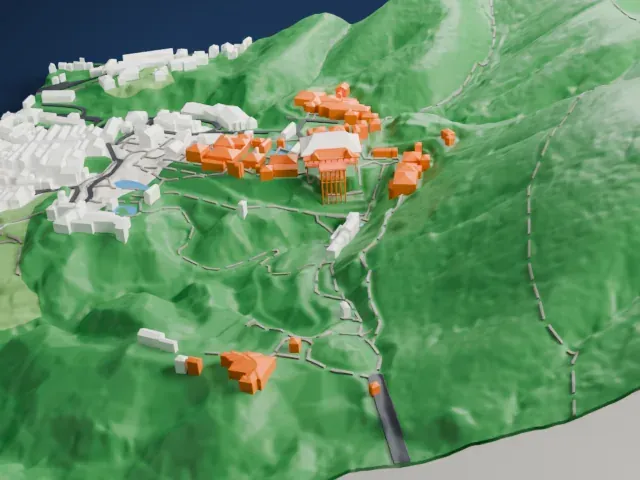
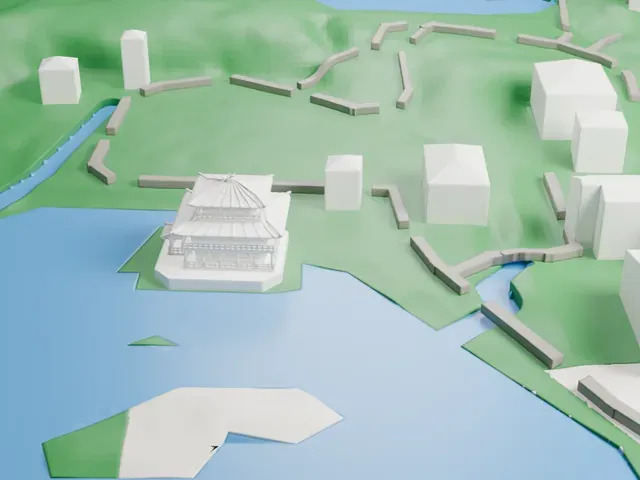
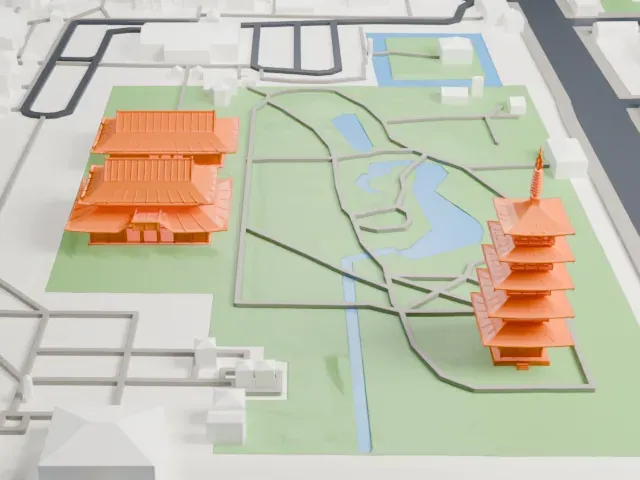
A free, printable model of Sanjūsangen-dō and the temple grounds, ponds, streets and houses around it in Kyoto, generated from real map data in your browser.
-
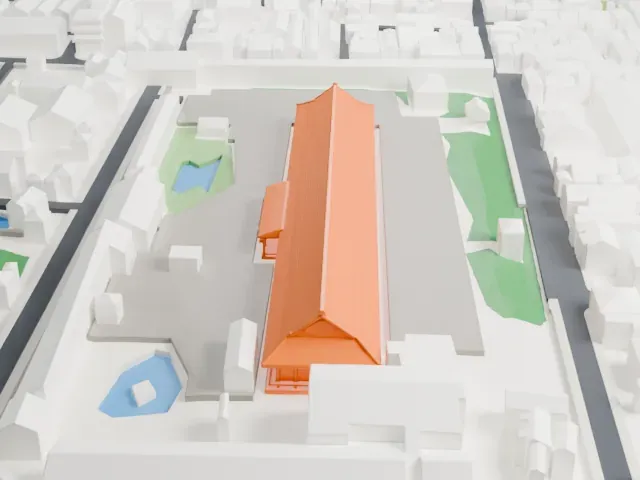 North
-
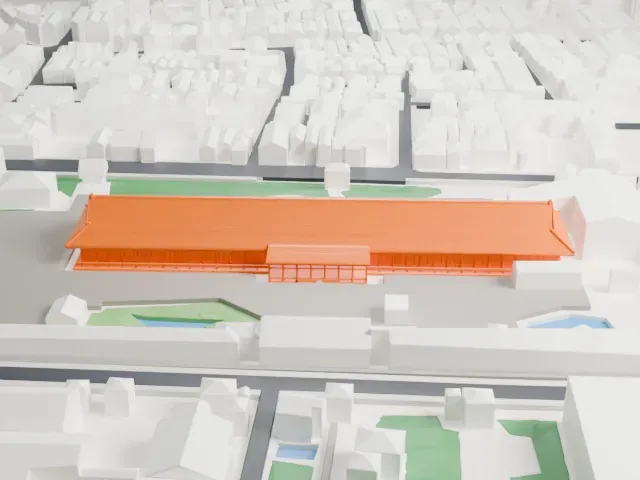 East
-
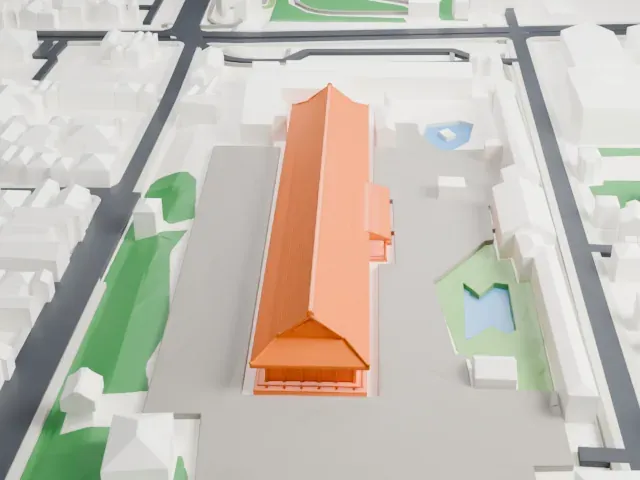 South
-
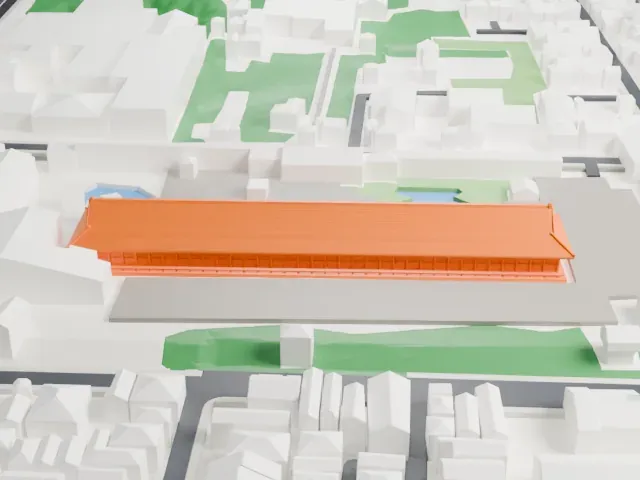 West
© OpenStreetMap contributors · Terrain in Japan: 出典:国土地理院 (GSI elevation data via Mapterhorn)
The model you print
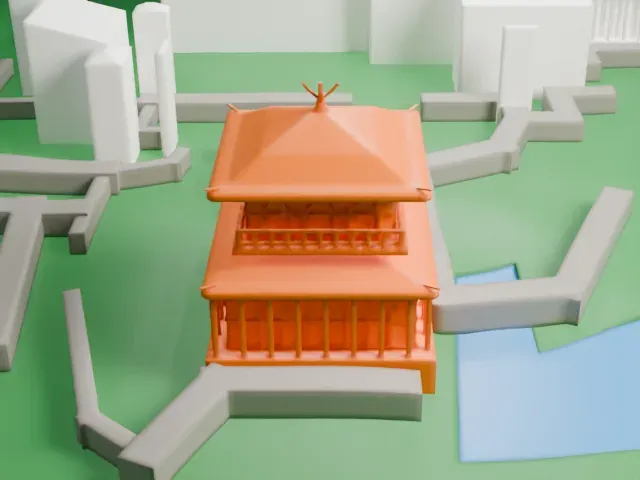
Sanjūsangen-dō in 3D
The landmark on its own, at its size on a 160 mm print. Print friendly thickens thin parts for a 0.4 mm nozzle; Full detail keeps every part.
- On a 160 mm print
- 5 mm
- Scale
- 1:3,750
5 mm tall on a 160 mm print
Make this print opens the generator on a 600 m square around the landmark. Buildings print at close to true scale, so the landmark grows with the print size.
- Long, low tiled roof
The hall is a single long roof with fine ridge lines. A layer height of 0.12–0.16 mm keeps the tile rows crisp, and Full detail on a larger print preserves more of the eaves.
- One piece with the ground
Sanjūsangen-dō is joined to the ground in the exported file, and the four-side check found no floating parts, so nothing needs gluing.
- Pick the detail for your nozzle
In the Buildings settings, set Landmark detail to Print friendly to adapt thin parts and small details to the print scale. Full detail keeps every modeled feature, for larger prints or a finer nozzle.
- Colors
Buildings, roads, water and ground arrive as separate filament slots in the 3MF. Sanjūsangen-dō takes the building color.
- File format
You get a 3MF for Bambu Studio, OrcaSlicer or PrusaSlicer. Any of them can save it as STL if you need one.
About Sanjūsangen-dō
Sanjūsangen-dō is a Tendai-sect Buddhist temple in Kyoto's Higashiyama district, Japan. Its name means temple of thirty-three bays, and its official name is Rengeō-in. Taira no Kiyomori established it in 1164 for Go-Shirakawa, a cloistered emperor, and it is part of the Myōhō-in temple complex.
The temple is best known for its very long main hall, called the hondō, which dates from 1266 and is designated a National Treasure of Japan. A fire destroyed the original buildings in 1249. Emperor Go-Saga ordered the hondō rebuilt, with work starting in 1251. The temple is 120 meters long.
Inside, life-size Thousand-armed Kannon statues stand in 10 rows and 50 columns on either side of a large seated main statue by the Kamakura sculptor Tankei. Of these statues, 124 were rescued from the fire and 876 were made later, in the 13th century. The figures are Japanese cypress covered with gold leaf. The hall also holds 28 guardian deities and statues of Fūjin and Raijin.
About this model
Sanjūsangen-dō is one of more than 6,500 landmark models in Mini Skyline. They are made with AI, and each one is checked in its real surroundings before release. Each model is written as code from public descriptions, plans, photographs and aerial views used only as references; no image or third-party model is copied into it. Everything around it is built from OpenStreetMap and Overture map data. Rights in the building itself, its name and any brands on it are not granted by Mini Skyline; clear them separately before you sell prints. If you would rather print the shape from map data, turn off Landmark models in the Buildings settings.
Mini Skyline is not affiliated with, or endorsed by, the owners of this building or its names and marks.
Same skyline