3D print Tenryū-ji
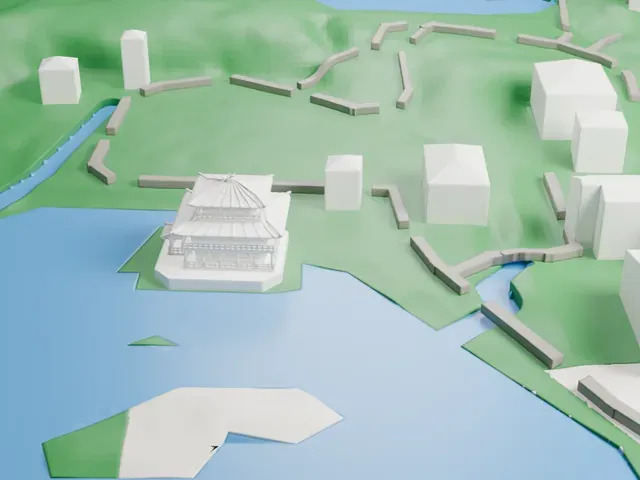
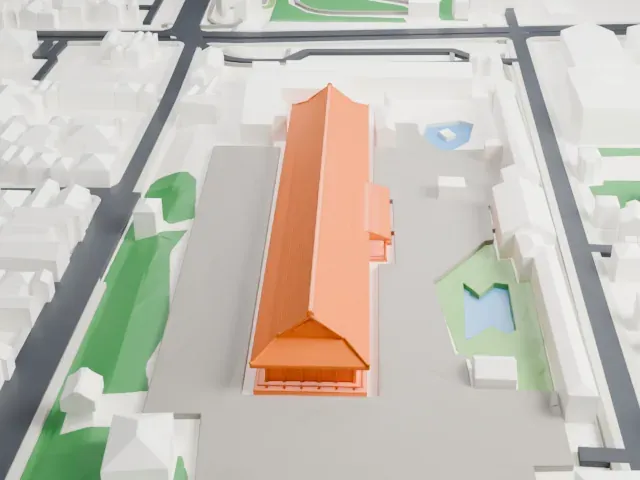
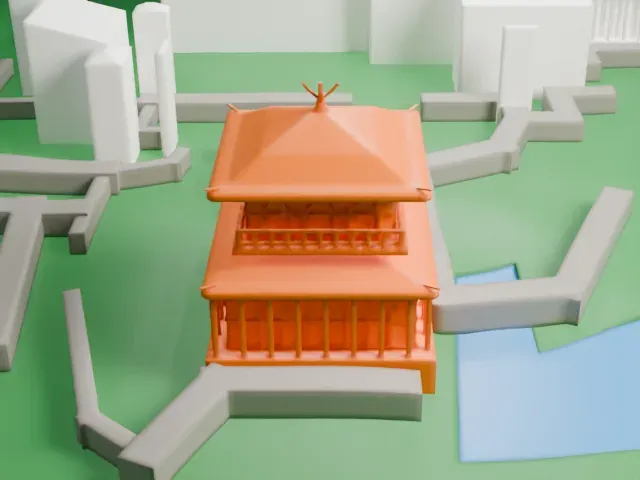
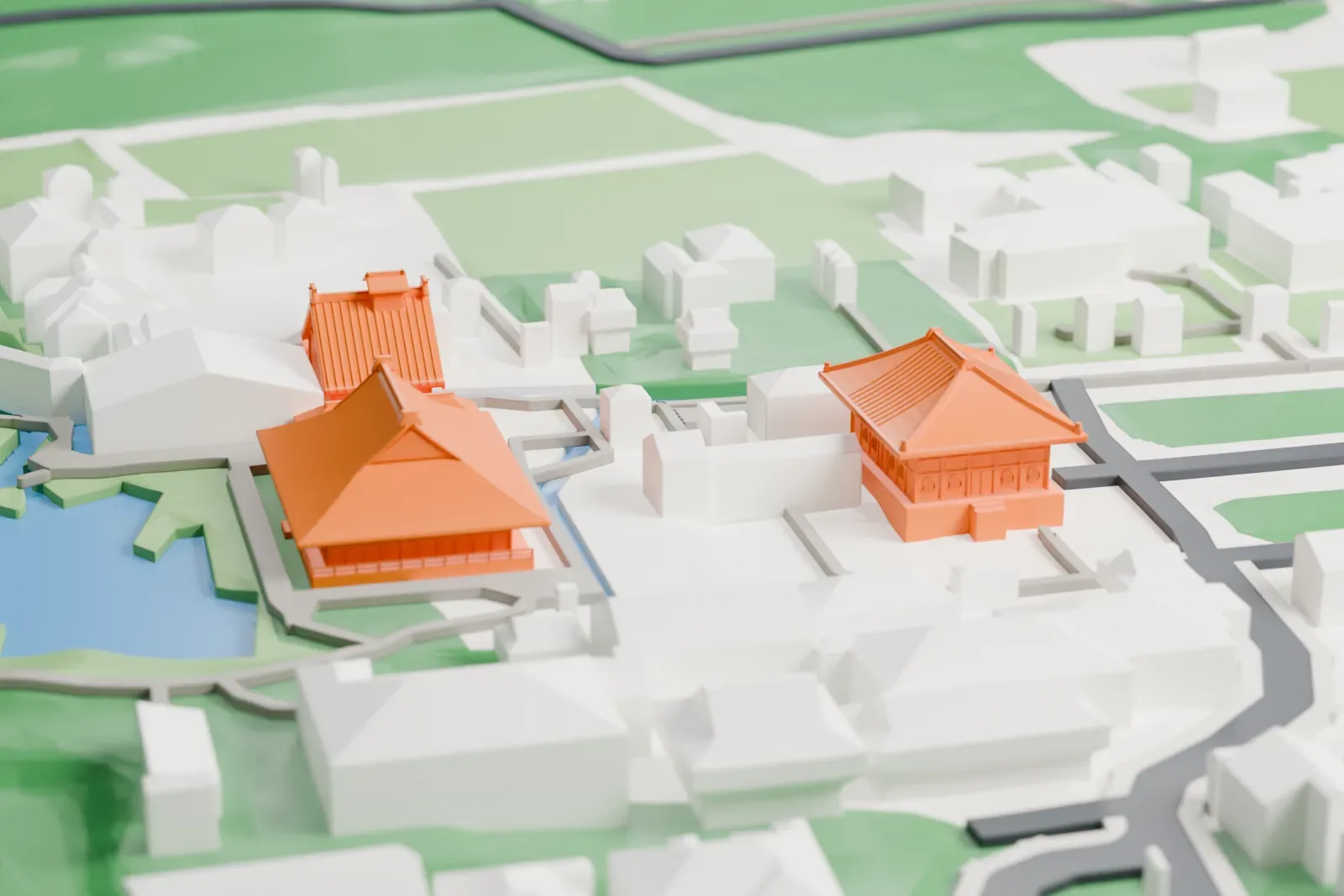
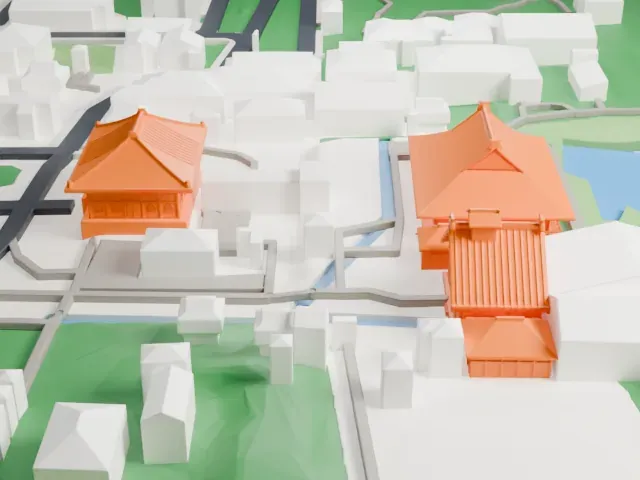
A free, printable model of Tenryū-ji's temple halls beside their pond, with the surrounding streets and buildings, generated from real map data in your browser.
-
 North
-
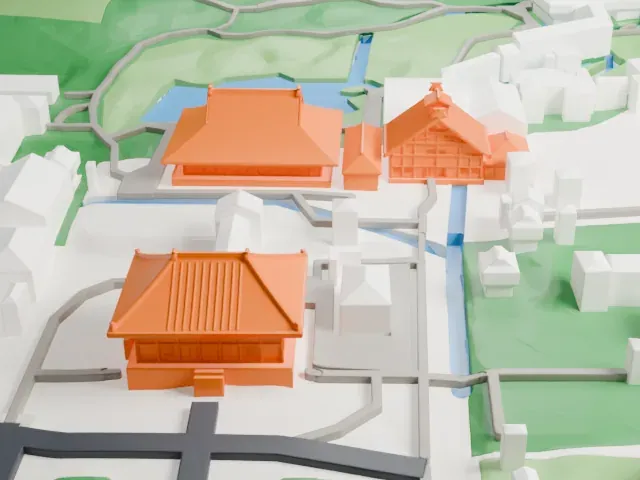 East
-
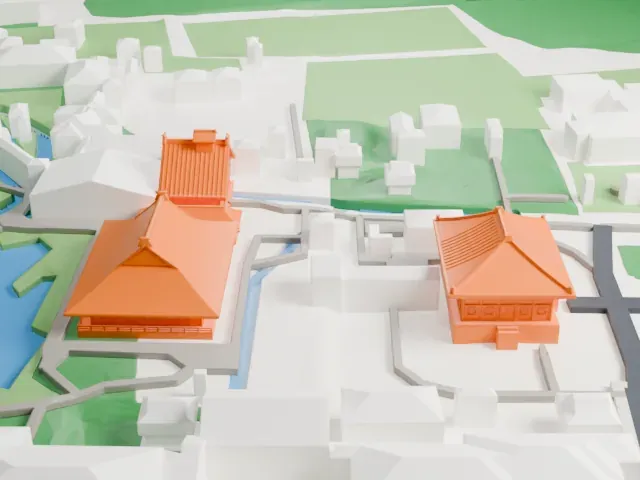 South
-
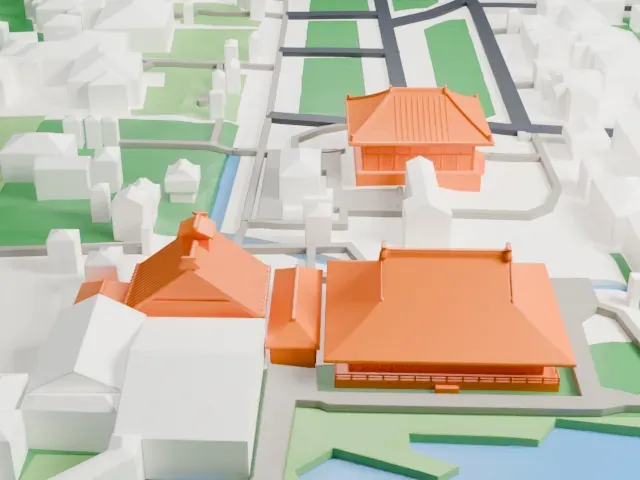 West
© OpenStreetMap contributors · Terrain in Japan: 出典:国土地理院 (GSI elevation data via Mapterhorn)
The model you print
Tenryū-ji in 3D
The landmark on its own, at its size on a 160 mm print. Print friendly thickens thin parts for a 0.4 mm nozzle; Full detail keeps every part.
- On a 160 mm print
- 5 mm
- Scale
- 1:3,750
5 mm tall on a 160 mm print
Make this print opens the generator on a 600 m square around the landmark. Buildings print at close to true scale, so the landmark grows with the print size.
- Broad overhanging temple roofs
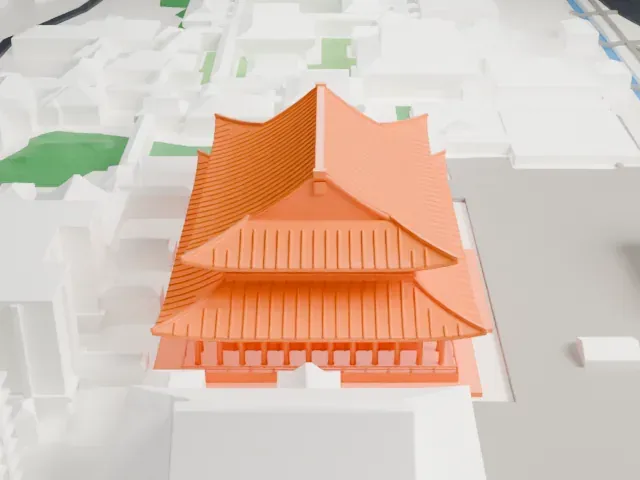
The halls have wide roofs with deep eaves and fine ridge lines. Print friendly adapts the thin eave edges to the print scale; Full detail keeps them, which suits larger prints with 0.12–0.16 mm layers.
- One piece with the ground
Tenryū-ji is joined to the ground in the exported file, and the four-side check found no floating parts, so nothing needs gluing.
- Pick the detail for your nozzle
In the Buildings settings, set Landmark detail to Print friendly to adapt thin parts and small details to the print scale. Full detail keeps every modeled feature, for larger prints or a finer nozzle.
- Colors
Buildings, roads, water and ground arrive as separate filament slots in the 3MF. Tenryū-ji takes the building color.
- File format
You get a 3MF for Bambu Studio, OrcaSlicer or PrusaSlicer. Any of them can save it as STL if you need one.
About Tenryū-ji
Tenryū-ji stands in Ukyō Ward, Kyoto, and is the head temple of the branch of Rinzai Zen Buddhism that carries its name. Ashikaga Takauji founded it in 1339, mainly to honor Gautama Buddha, and Musō Soseki was its first chief priest. Construction was finished in 1345. Its links to the Ashikaga family and to Emperor Go-Daigo earned it high esteem, and it holds first rank among the temples known as Kyoto's Five Mountains.
Fire has repeatedly damaged the site. It burned six times in the Middle Ages, was lost to another fire in 1815, and was badly damaged in the Kinmon Incident of 1864. All of the original buildings are gone, and most of the standing structures date from rebuilding in the later Meiji period. The teaching hall, at the center of the grounds, is a reconstruction from 1900, and the one-storey Chokushi Gate is the oldest structure on the grounds.
Musō Soseki also created the garden, which has a circular promenade around Sōgen Pond and has the national designation Special Place of Scenic Beauty. At its largest the grounds covered roughly 33 hectares (82 acres), about 330,000 square meters, with some 150 sub-temples. In 1994 the temple was registered as part of the UNESCO World Heritage Site "Historic Monuments of Ancient Kyoto".
About this model
Tenryū-ji is one of more than 6,500 landmark models in Mini Skyline. They are made with AI, and each one is checked in its real surroundings before release. Each model is written as code from public descriptions, plans, photographs and aerial views used only as references; no image or third-party model is copied into it. Everything around it is built from OpenStreetMap and Overture map data. Rights in the building itself, its name and any brands on it are not granted by Mini Skyline; clear them separately before you sell prints. If you would rather print the shape from map data, turn off Landmark models in the Buildings settings.
Mini Skyline is not affiliated with, or endorsed by, the owners of this building or its names and marks.
Same skyline